

Alexander in America: Reflections from the Birmingham Museum of Art - Silver & Ceremony: South Asia, 1830–1900
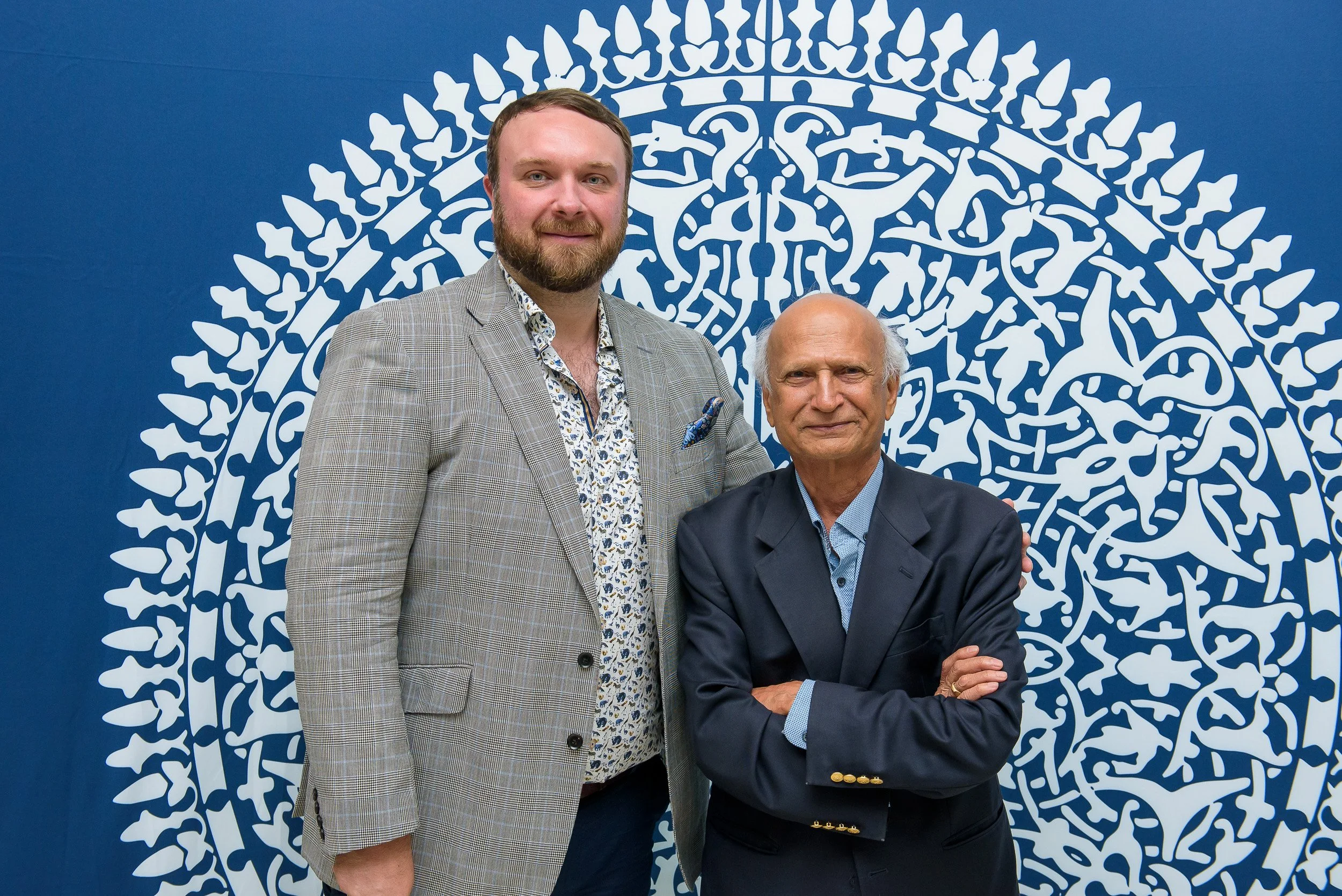
This summer marked an especially meaningful journey for me as I travelled to Birmingham, Alabama, to attend the opening of Silver & Ceremony: South Asia, 1830–1900 at the Birmingham Museum of Art.
As I walked through the beautifully curated exhibition space, I was filled with a profound sense of pride and gratitude; not only for the opportunity to witness it in person, but also for the major role I played in bringing this extraordinary collection of Harish K. Patel to life.
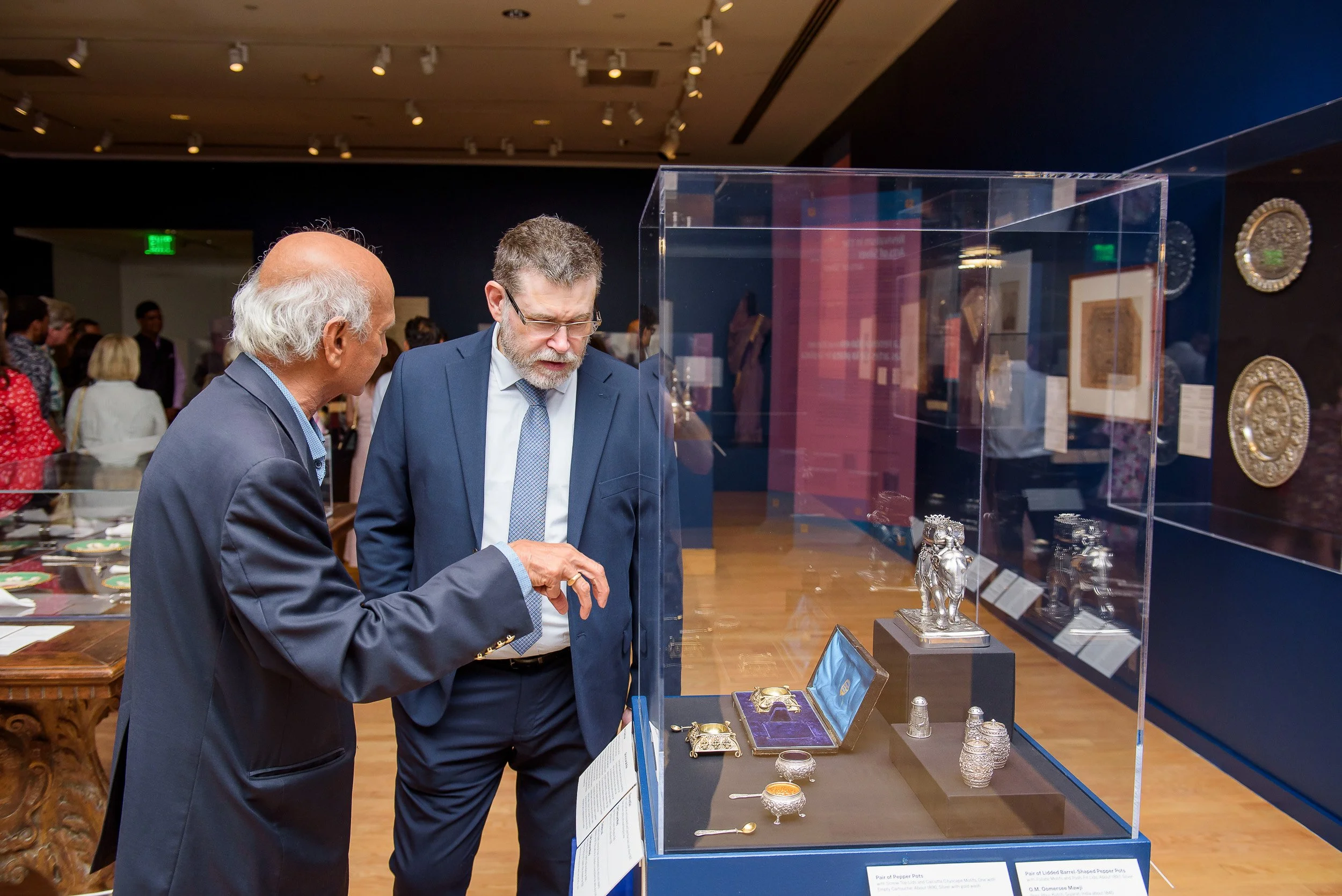
The exhibition is a rich celebration of 19th-century South Asian craftsmanship. From intricate silverware to ceremonial objects, each piece is presented with great care, allowing visitors to appreciate the depth of skill, symbolism, and cultural context they embody.
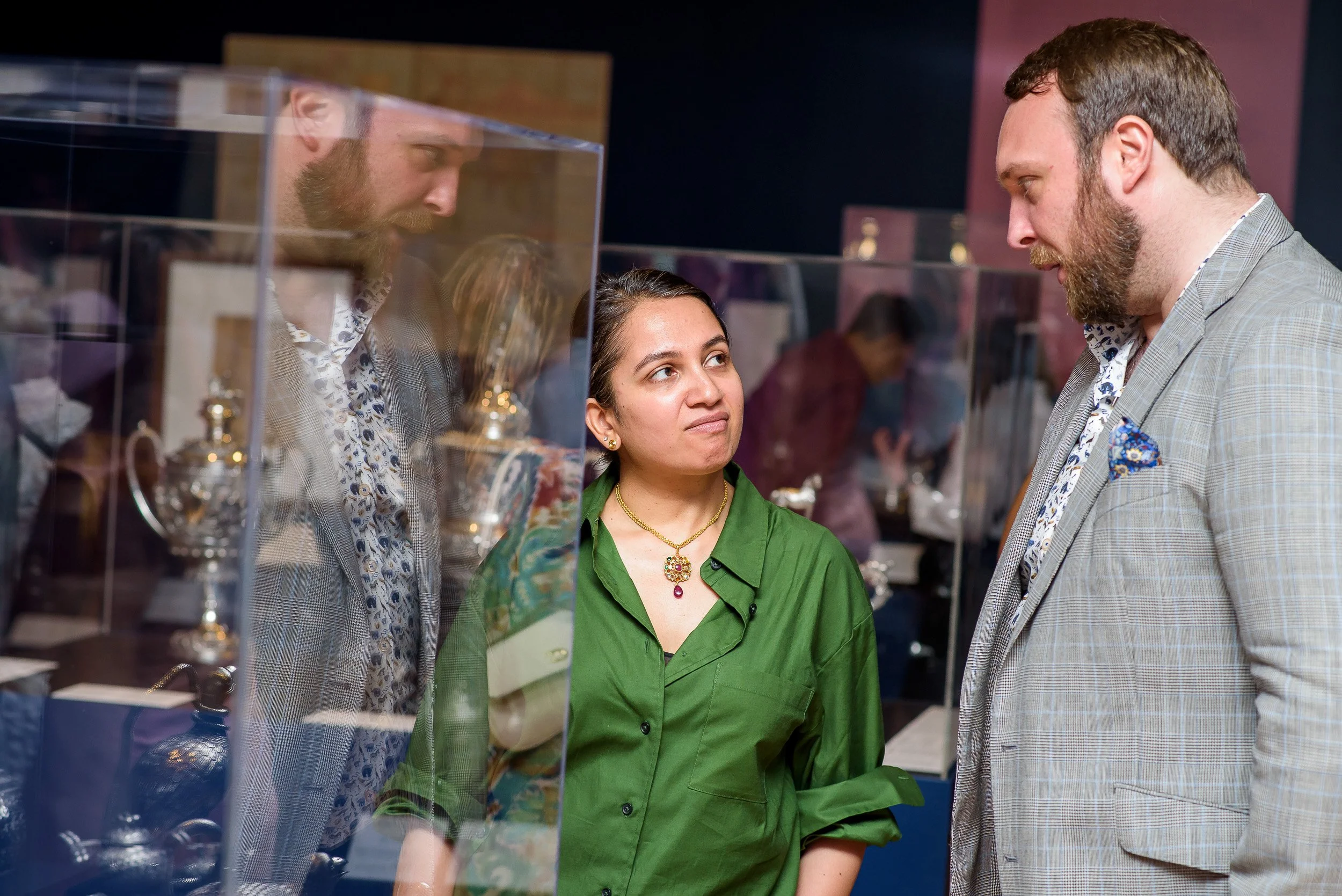
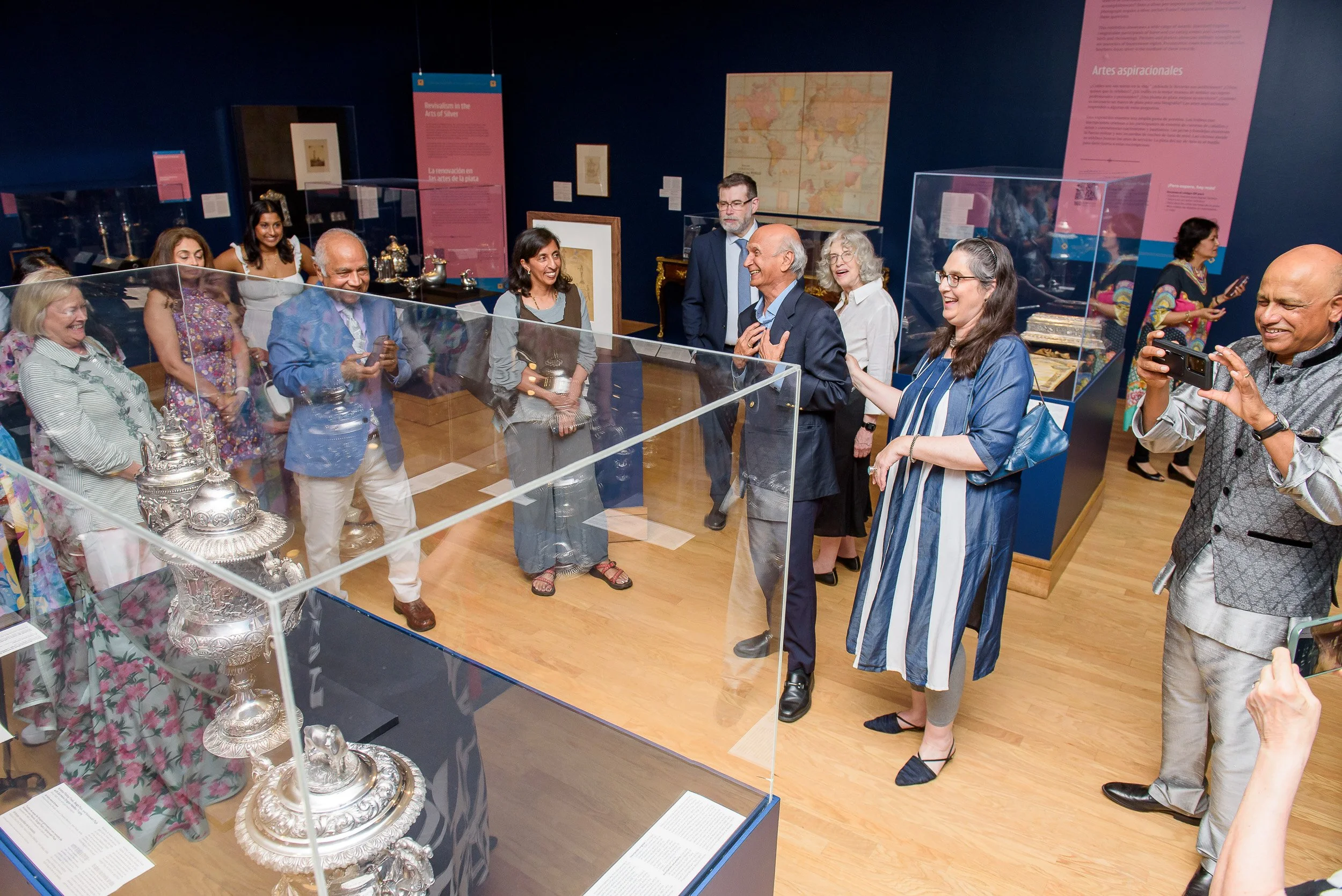
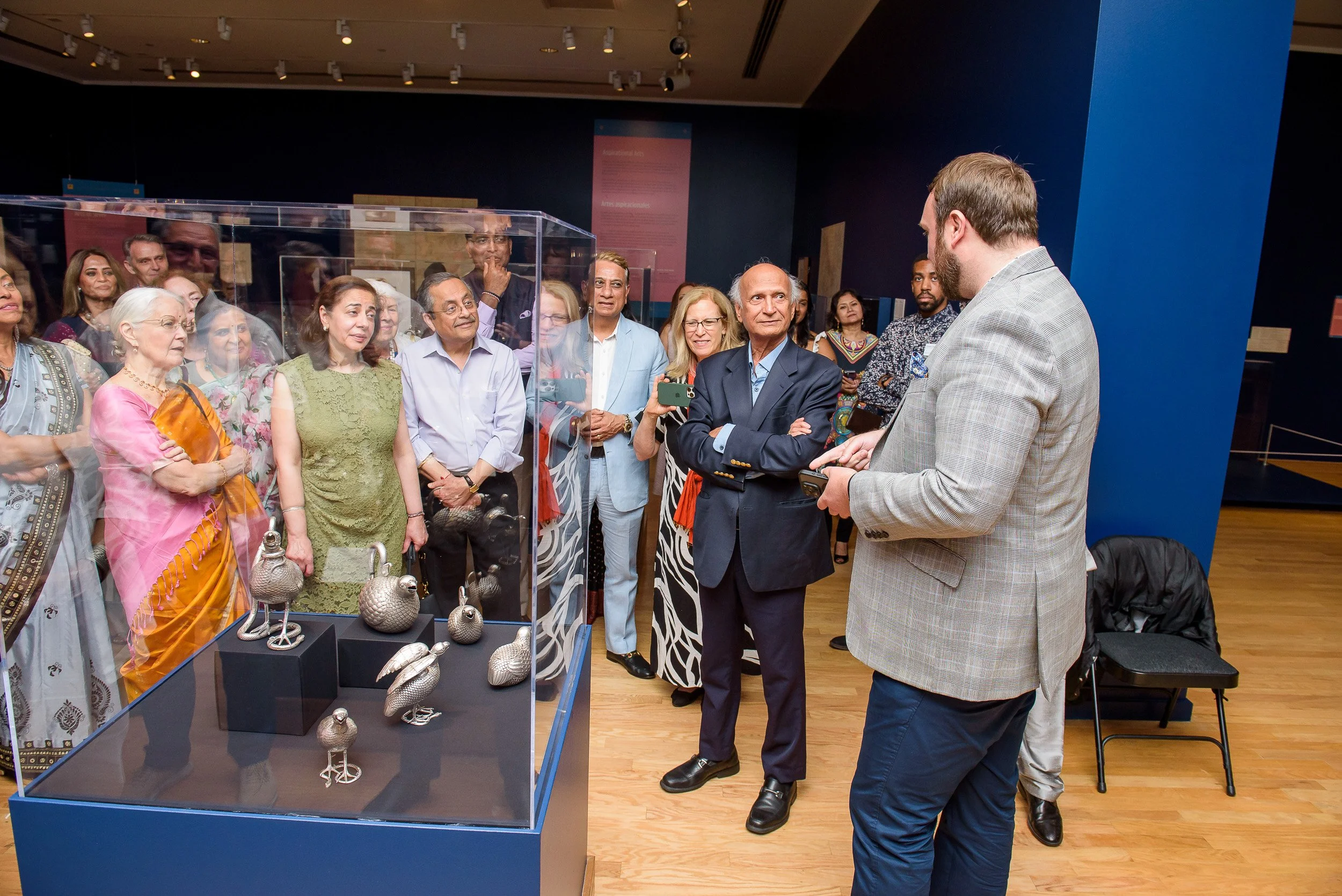
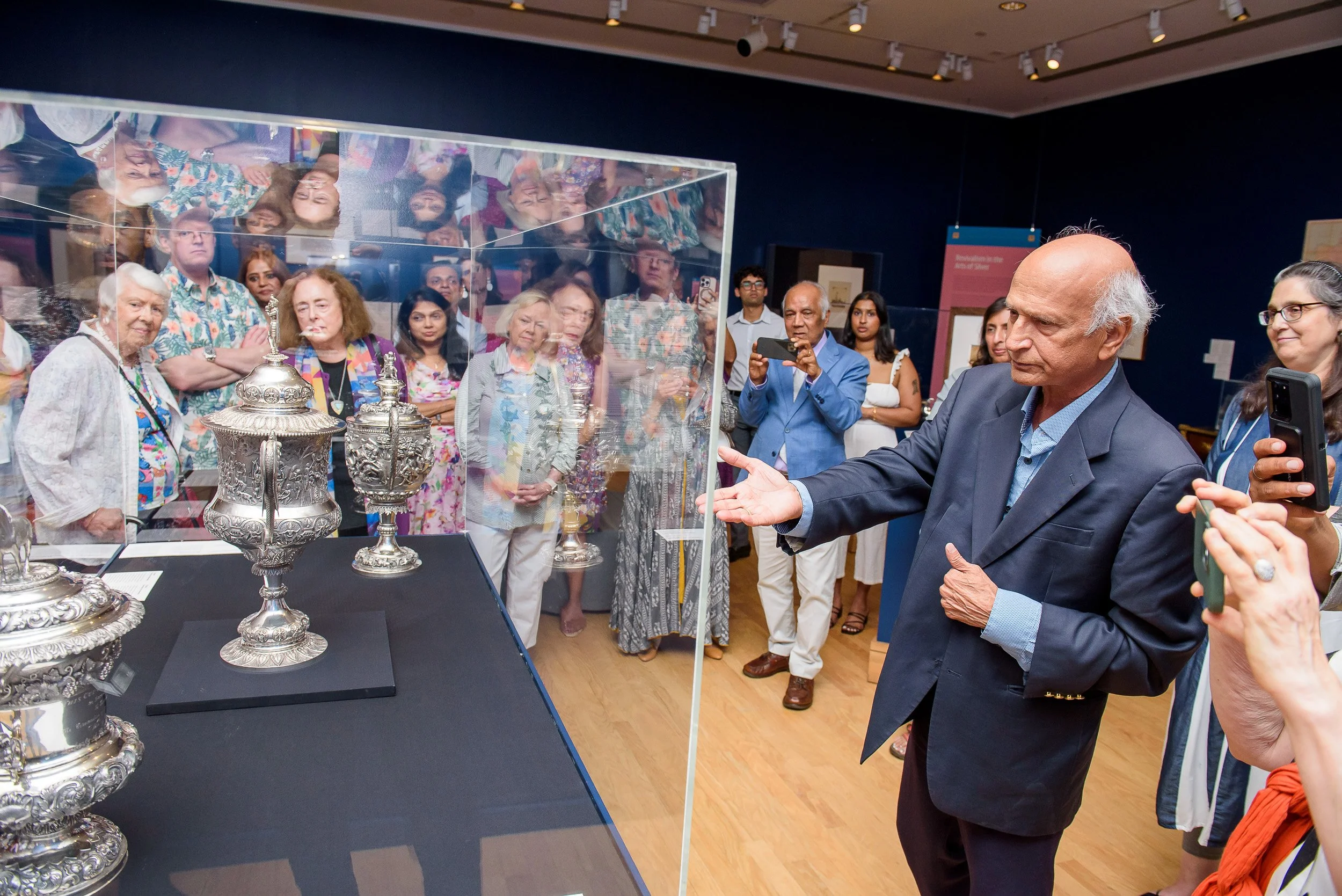
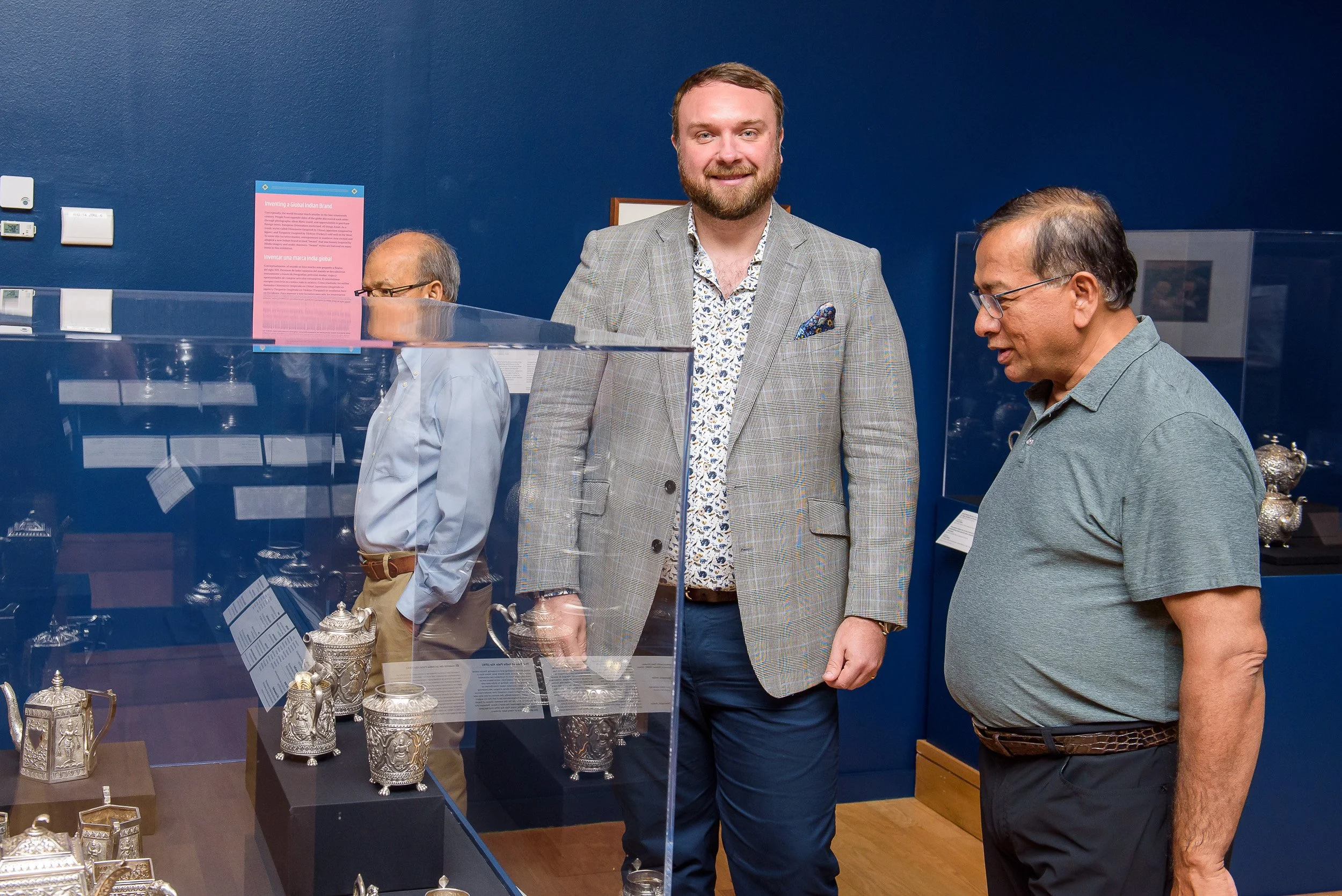
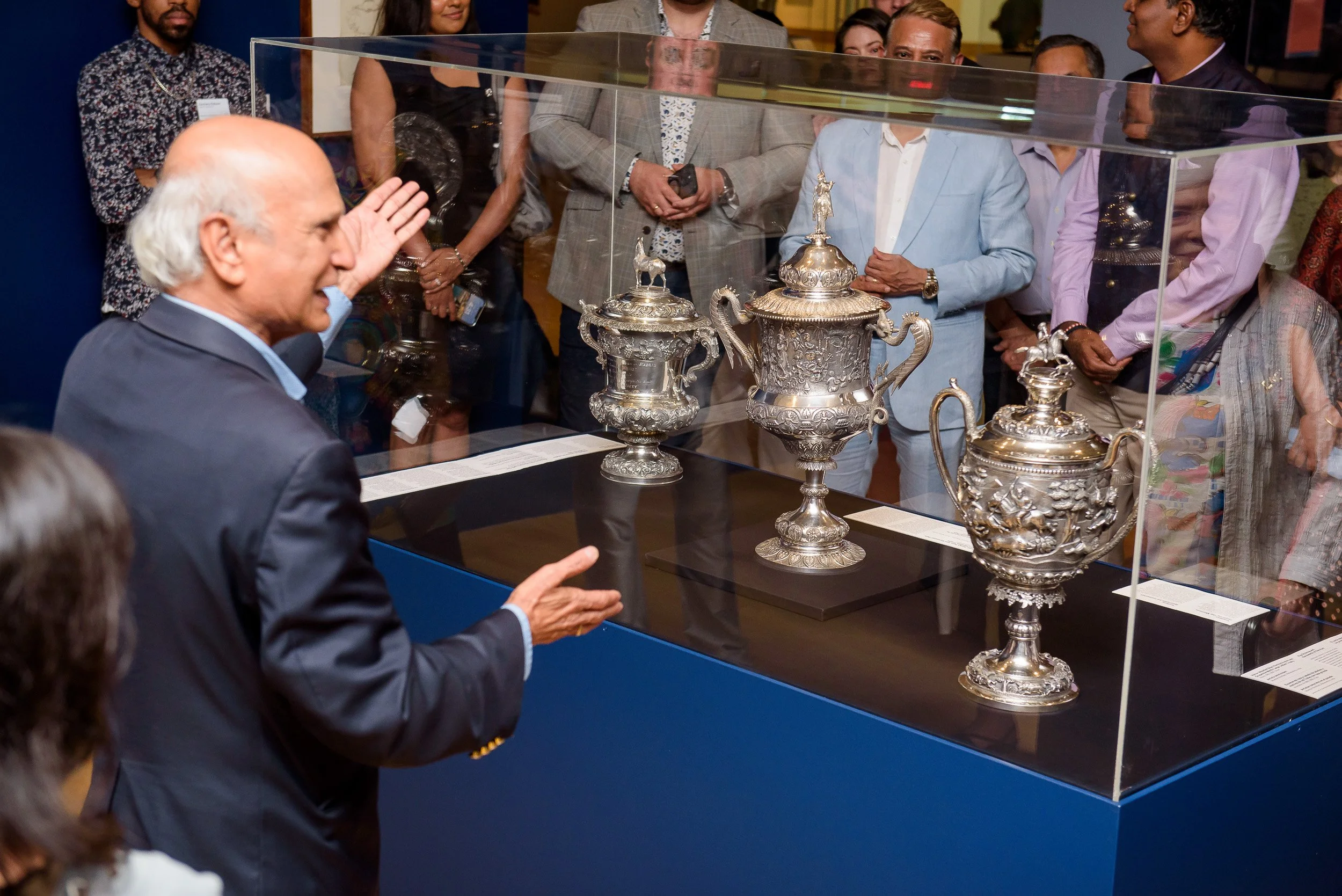
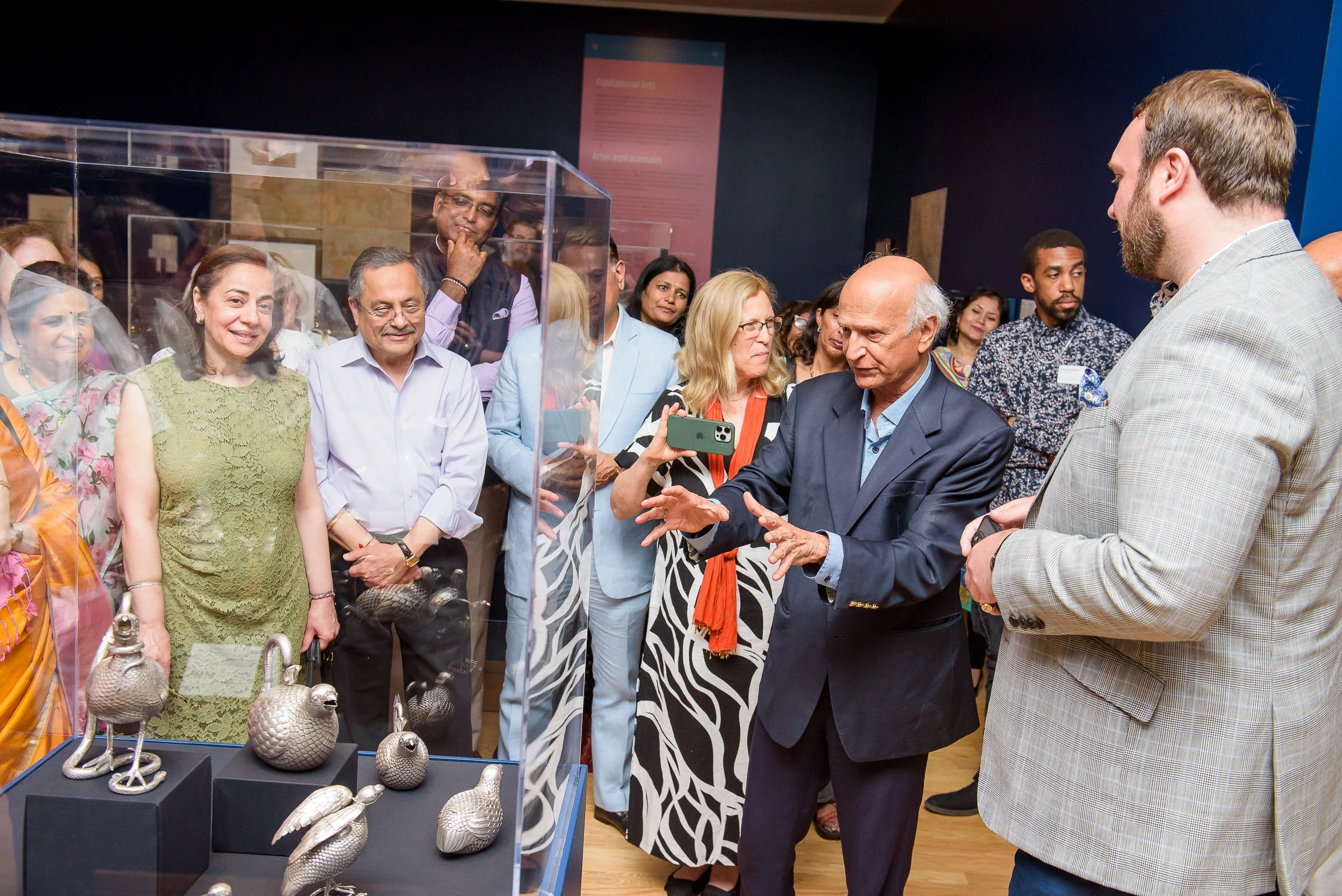
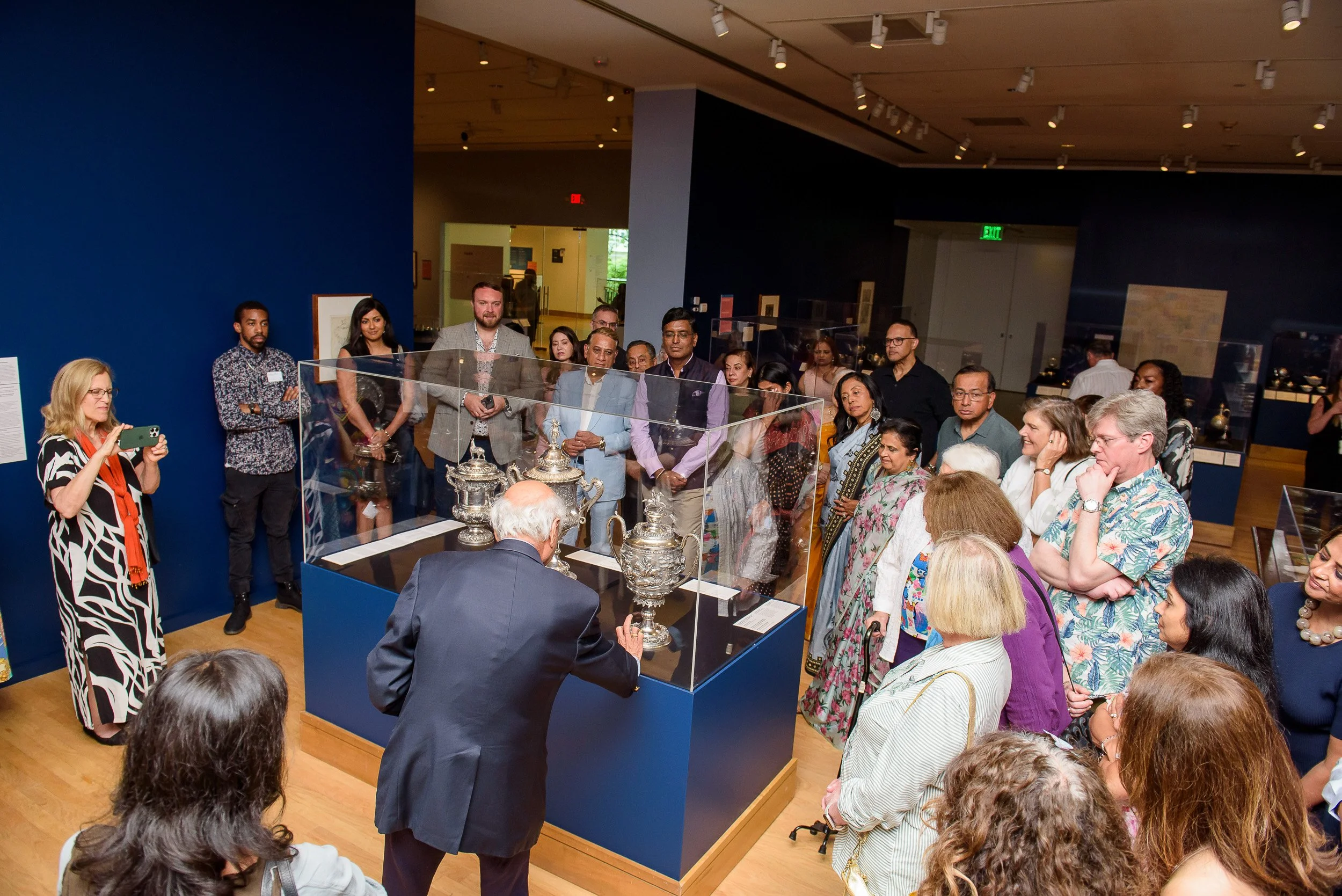
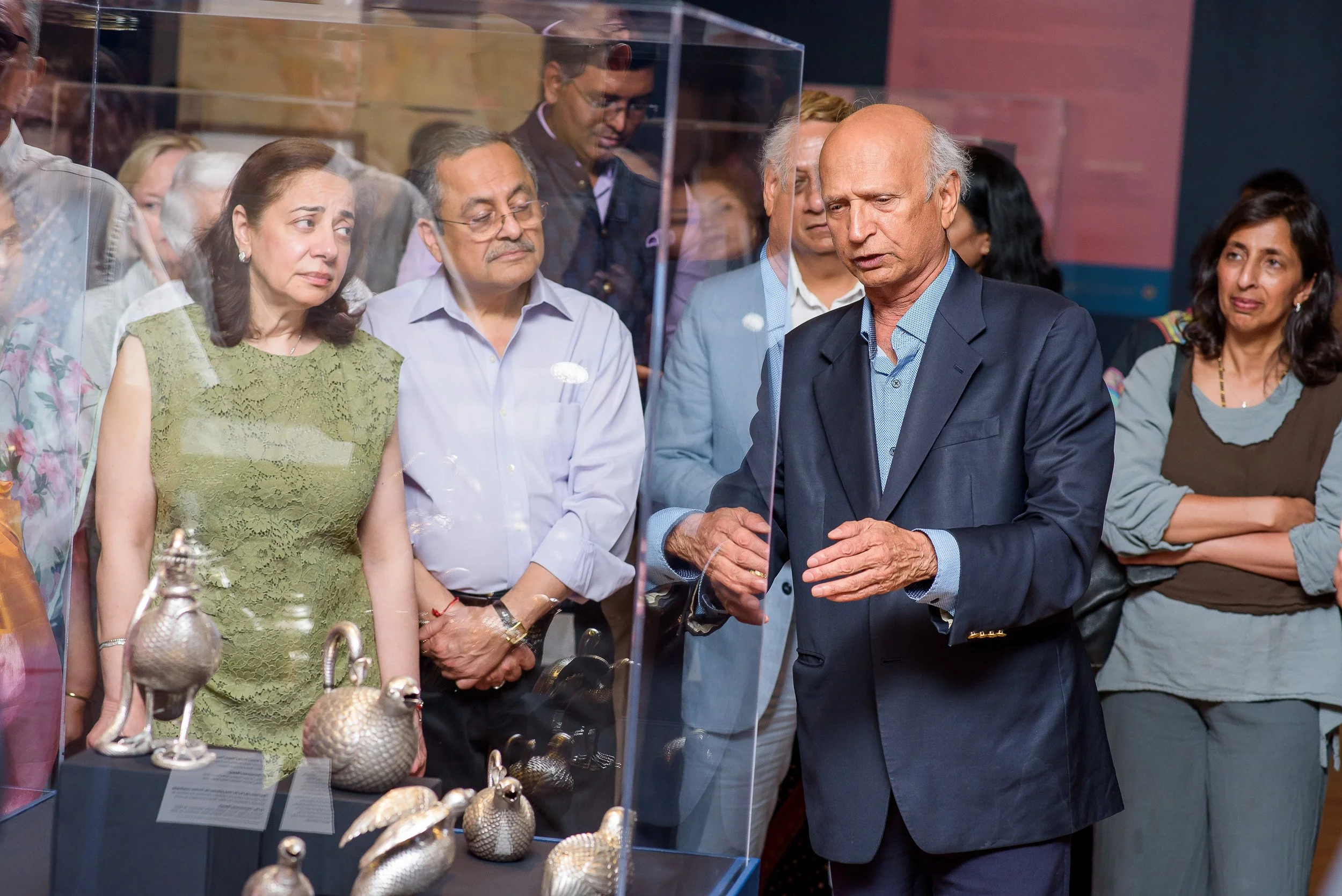
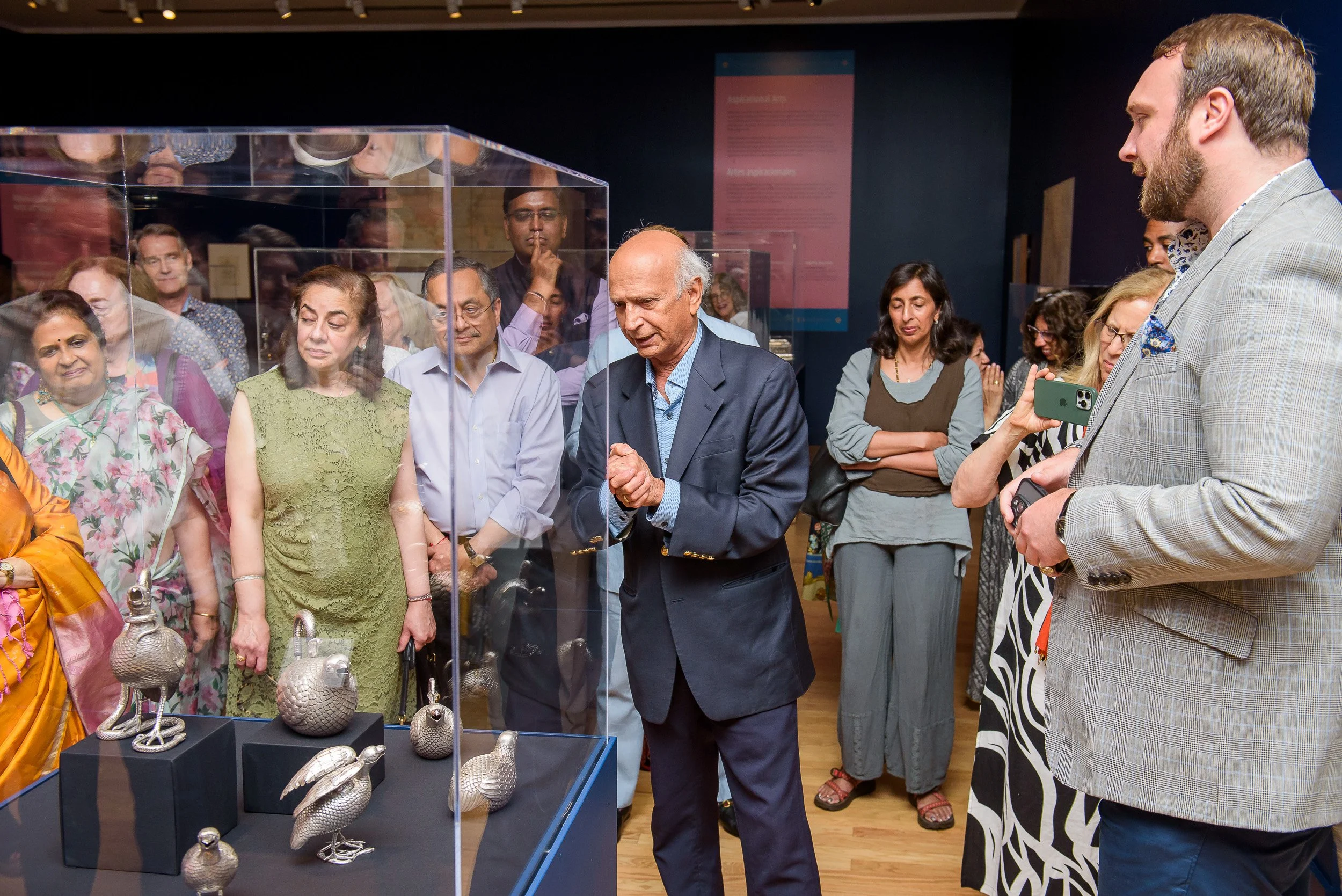
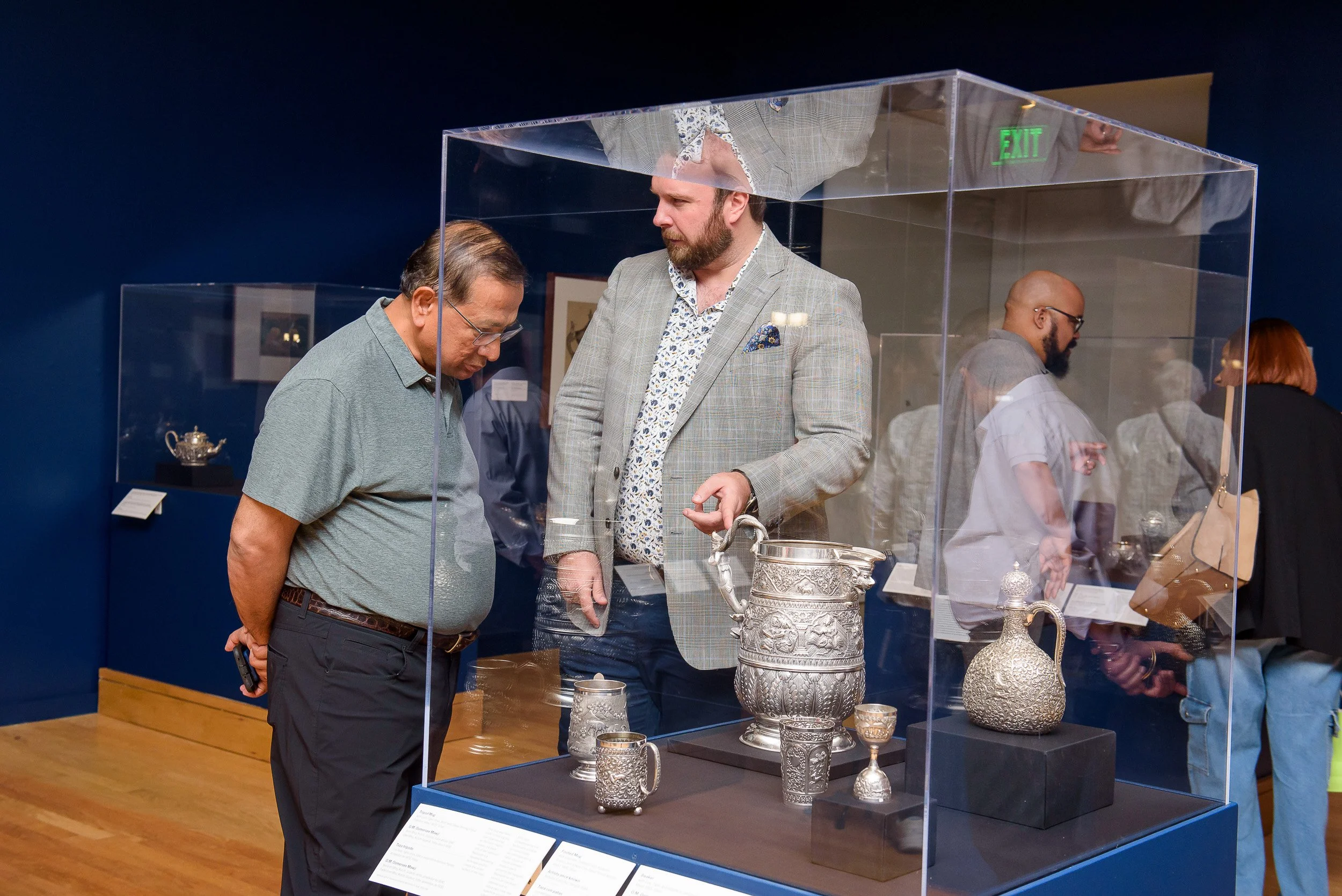
For me, this is not just an exhibition; it is deeply personal. Each object on display carries with it more than just historical value. It carries memory. Over the course of more than a decade, I’ve built a connection with each piece: some found during summer wanderings in the south of France, others uncovered on quiet early mornings with coffee in hand, or during fog-laced starts in northern Italy; still slightly groggy from the Tiggnanello the night before, yet compelled by the thrill of the hunt.
Behind every acquisition lies a vivid recollection. These are not just artefacts of colonial and regional history; they are fragments of my own path; snapshots of time, place, and personal growth.
Each piece in Silver & Ceremony reflects more than just its era. It holds my passion for history, my pursuit of knowledge, and the countless hours spent researching, learning, and sourcing. This project has been about connection; connection to Indian culture, to craftsmanship, and to my own journey as a scholar and curator.
Silver & Ceremony stands as both a tribute to South Asia's artistic legacy and a reflection of my own evolution. I am deeply grateful to Harish K. Patel and to the Birmingham Museum of Art for their vision, trust, and generosity—for allowing me the privilege of contributing to something so meaningful.

19th Century Indian Cutch silver three piece tea set, modeled as Black Francolins standing on snakes, textured all over with a scalloped pattern and with large feathers detailed on the wings; the large francolin as teapot with its head hinging open along the beak to serve as spout and the serpent's tail entwined around its neck serving as handle with ivory insulators; small francolin with hinged head and raised wings as milk jug, the other as sugar bowl with hinged back. The base of the teapots foot is stamped O.M BHUJ.

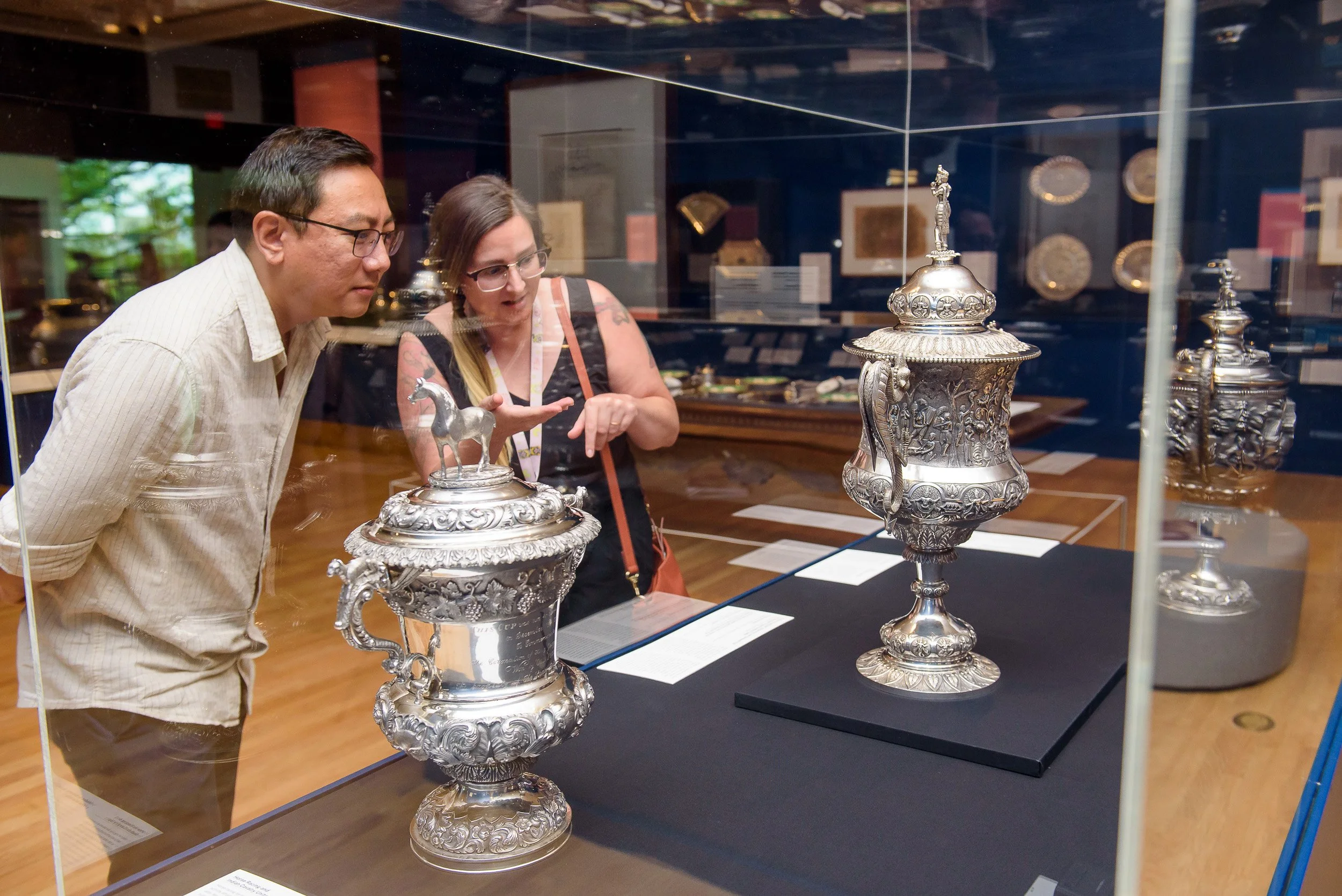
19th Century Indian Colonial silver presentation trophy cup and cover, the massive campana-shaped body on a circular stepped foot chased with flowers and scrolling foliage, the body chased with a band of trailing vine on a matted background, the lower part also chased with scrolling leaves incorporating elephant and tiger's heads, extremely fine, crisp and detailed.
The base bearing the Hallmark "GG&Co" for George Gordon & Co.
Reference Number: A3109

19th Century Indian silver cup & cover, body is profusely and beautifully repousse' decorated with a religious processions with men carrying idols, a typical scenes from the Meenakshi Amman temple in southern India, handles mounted with mythical dragons and finial depicting Krishna playing a flute.
Unmarked, but acid test shows a 900+ silver standard, dates to 1880's, in style and quality strongly suggests it was probably made by P. Orr & Sons.
Reference Number: A5553

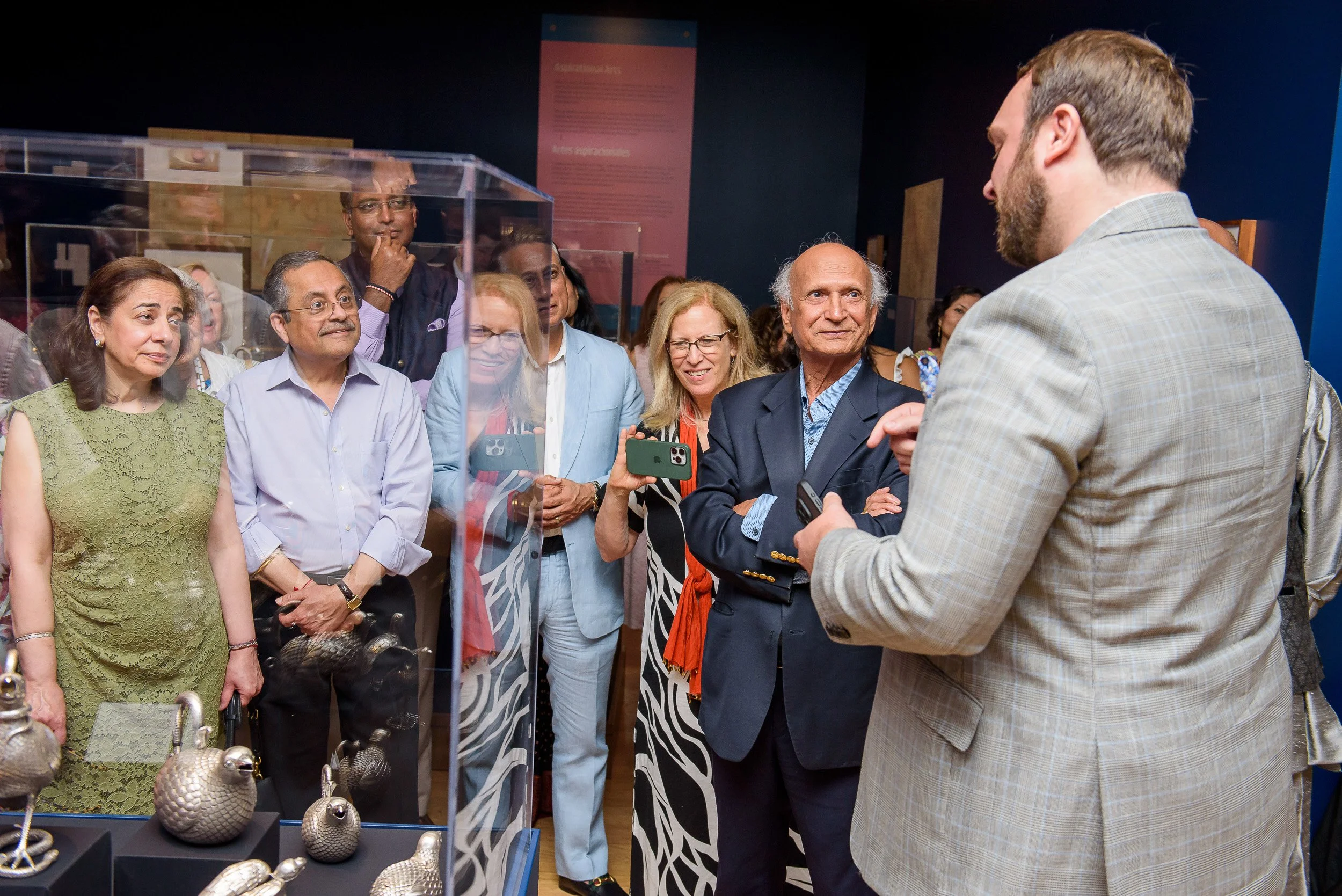
20th Century Indian Magnificent Cutch silver three piece tea service, modeled as seated, well-rounded quails, realistically decorated with detailed feathers and richly gilded interior.
Enough of one mark was left to decipher the rectangular shapes with the letters “O.M BARODA”, but the attribution is nevertheless confirmed in terms of style and exceptional quality. Equally distinctive is the circle within each base struck with the marks (see comparisons with base of the set in the Virginia Art Museum, figs. 4-5).
Hallmarked English Import silver (.9584 Britannia standard), Sheffield, year 1967 (Z), Importer F.D (F Drury Ltd, Gilleyfield Avenue, Dore, Sheffield).
Reference Number: A5297