

 Image 1 of 21
 Image 2 of 21
 Image 3 of 21
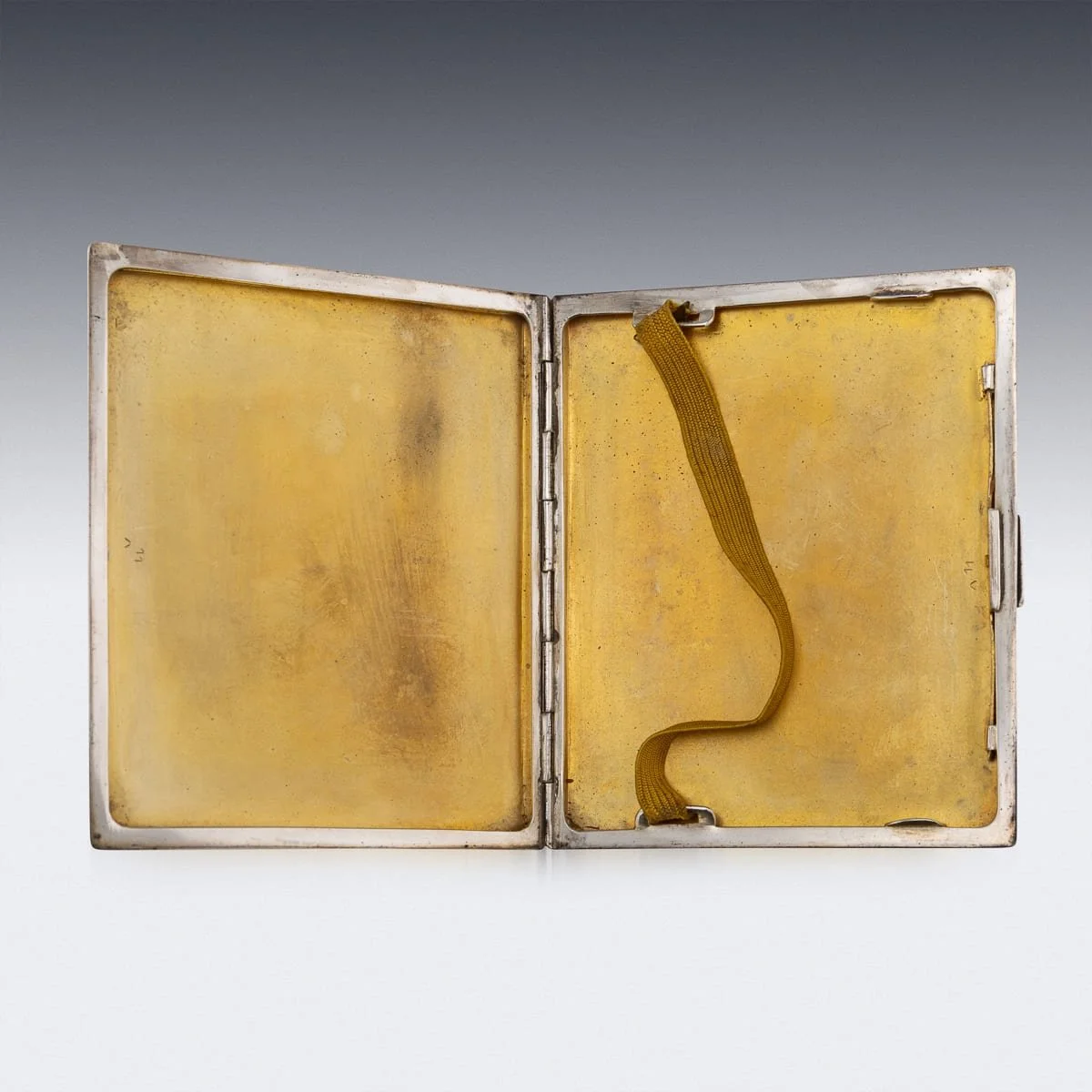 Image 4 of 21
 Image 5 of 21
 Image 6 of 21
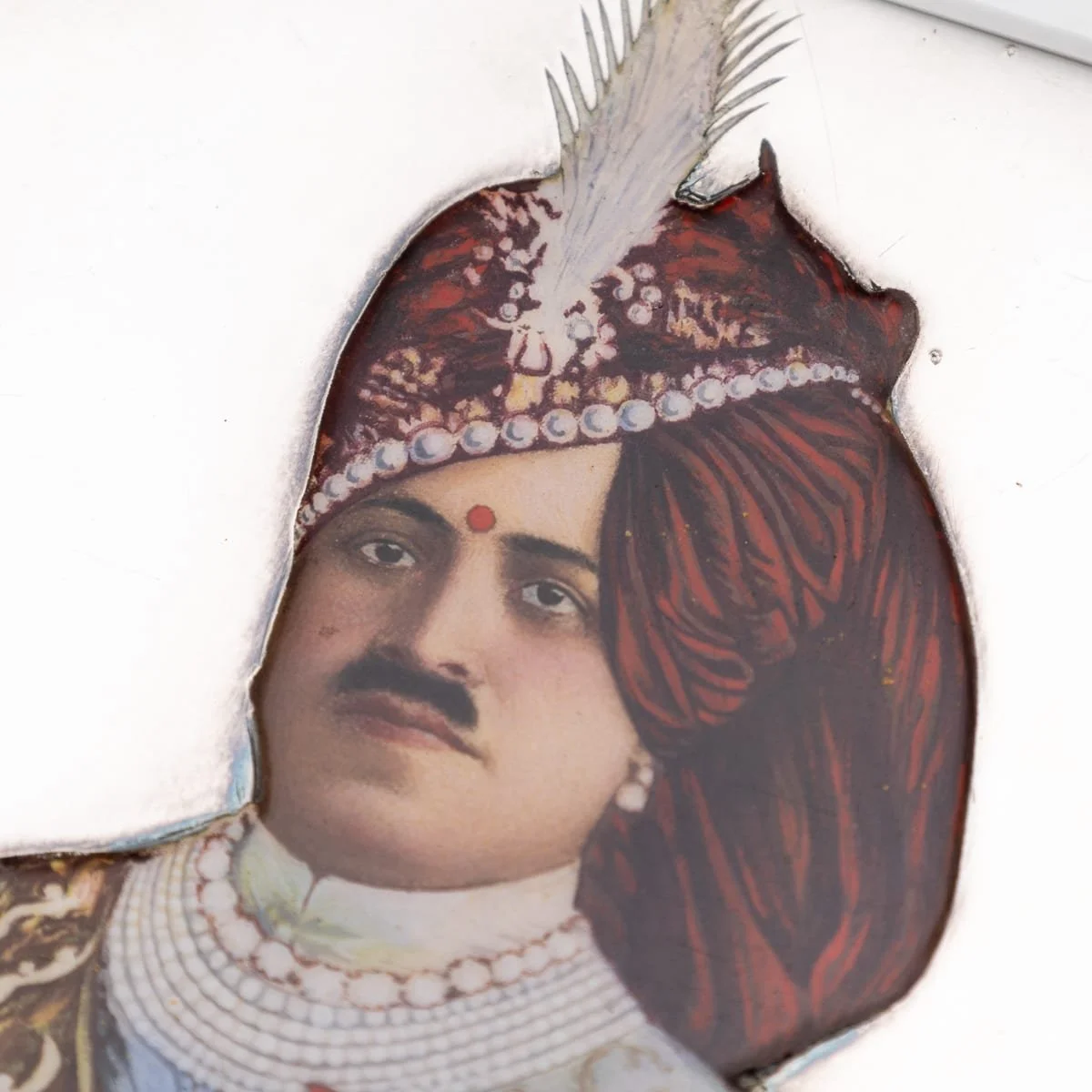 Image 7 of 21
 Image 8 of 21
 Image 9 of 21
 Image 10 of 21
 Image 11 of 21
 Image 12 of 21
 Image 13 of 21
 Image 14 of 21
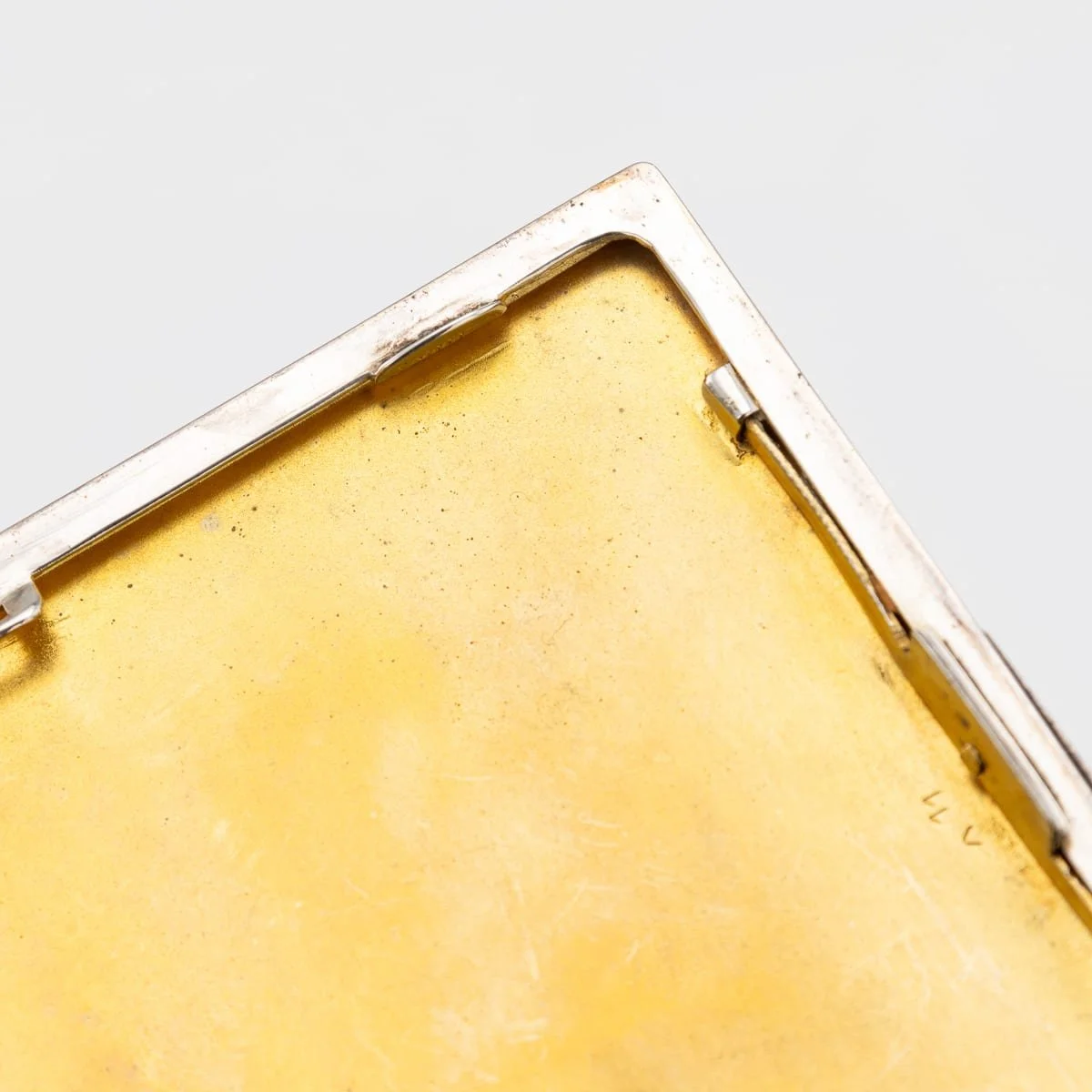 Image 15 of 21
 Image 16 of 21
 Image 17 of 21
 Image 18 of 21
 Image 19 of 21
 Image 20 of 21
 Image 21 of 21
ADDITIONAL INFORMATION
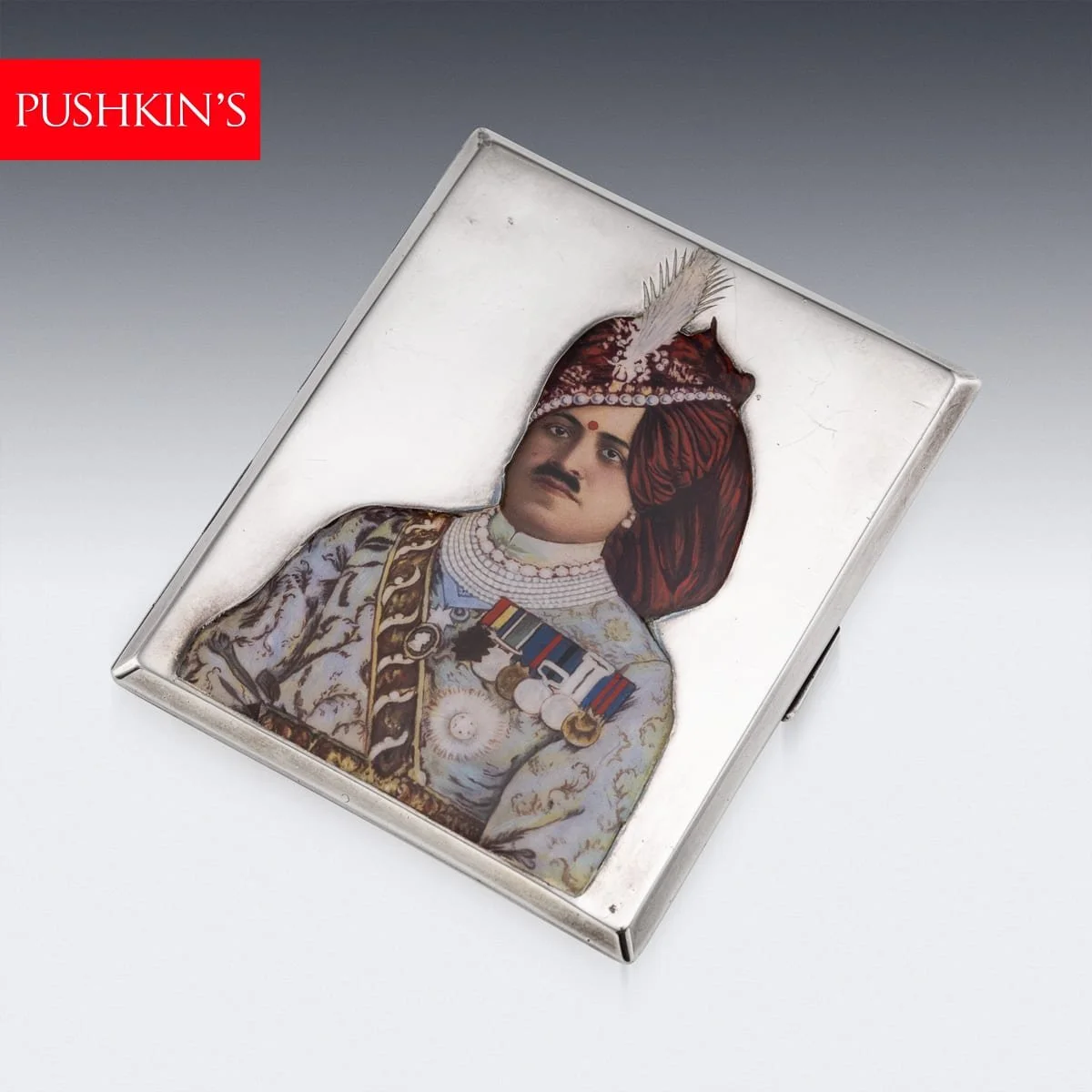
The medals and decorations depicted upon the Maharaja's chest are of particular historical interest. The prominent radiating breast star recalls the insignia of the Most Exalted Order of the Star of India, one of the highest orders of chivalry awarded under the British Raj. Digvijaysinhji was appointed Knight Commander of the Order of the Star of India (KCSI) in 1935, subsequently receiving the higher distinction of Knight Grand Commander (GCSI) in 1947. He was also appointed Knight Grand Commander of the Order of the Indian Empire (GCIE) in 1939, further recognising his importance as a ruling Indian prince. The colourful medal ribbons signify individual military campaigns, royal commemorations and distinguished service. Among his recorded awards was the India General Service Medal with Waziristan clasp, earned through his military service on India's North West Frontier between 1922 and 1924. Its green ribbon, distinguished by a broad central blue stripe, is associated with the campaign service undertaken by British and Indian forces. He was also awarded the King George V Silver Jubilee Medal of 1935, commemorating the 25th anniversary of George V's accession, identifiable by its dark crimson ribbon edged with narrow blue and white stripes. The King George VI Coronation Medal of 1937, recognising the coronation of George VI and Queen Elizabeth, bears a predominantly blue ribbon with narrow white and red stripes towards its edges. His wider decorations subsequently included several Second World War awards. The 1939–1945 Star features dark blue, red and light blue stripes symbolising the Navy, Army and Air Force respectively. The Africa Star incorporates sandy buff colouring representing the North African desert, alongside the colours of the armed services, whilst the Pacific Star employs green and yellow to evoke the jungles and beaches of the Pacific campaign. The War Medal 1939–1945 uses the red, white and blue of the British Union Flag. These distinctive colours make the medal group especially decorative within the composition.
Maharaja Digvijaysinhji was one of the most distinguished Indian rulers of the twentieth century. Born in 1895, he was the nephew and adopted heir of the legendary cricketer Maharaja Ranjitsinhji, whom he succeeded as ruler of Nawanagar in 1933. Educated in both India and England, he embarked upon a military career in the British Indian Army in 1919, eventually attaining the honorary rank of Lieutenant General. He served as President of the Chamber of Princes from 1937 to 1943 and was an influential figure in Indian political and diplomatic affairs.
Perhaps his greatest legacy, however, was his extraordinary humanitarian work during the Second World War. At Balachadi, near his capital of Jamnagar, he established a settlement providing accommodation, education, medical attention and security for approximately 650 Polish refugee children. His remarkable compassion earned him the affectionate title “The Good Maharaja”, by which he remains celebrated in Poland today. In recognition of these efforts, he was posthumously awarded the Commander's Cross of the Order of Merit of the Republic of Poland in 2011, whilst a public square in Warsaw, known as the Square of the Good Maharaja, commemorates his remarkable generosity.
CONDITION
In Excellent Condition - Please refer to photographs.
SIZE
Height: 9.7 cm // 3.82 inches
Width: 8.3 cm // 3.27 inches
Depth: 1 cm // 0.39 inches
Weight: 173g