
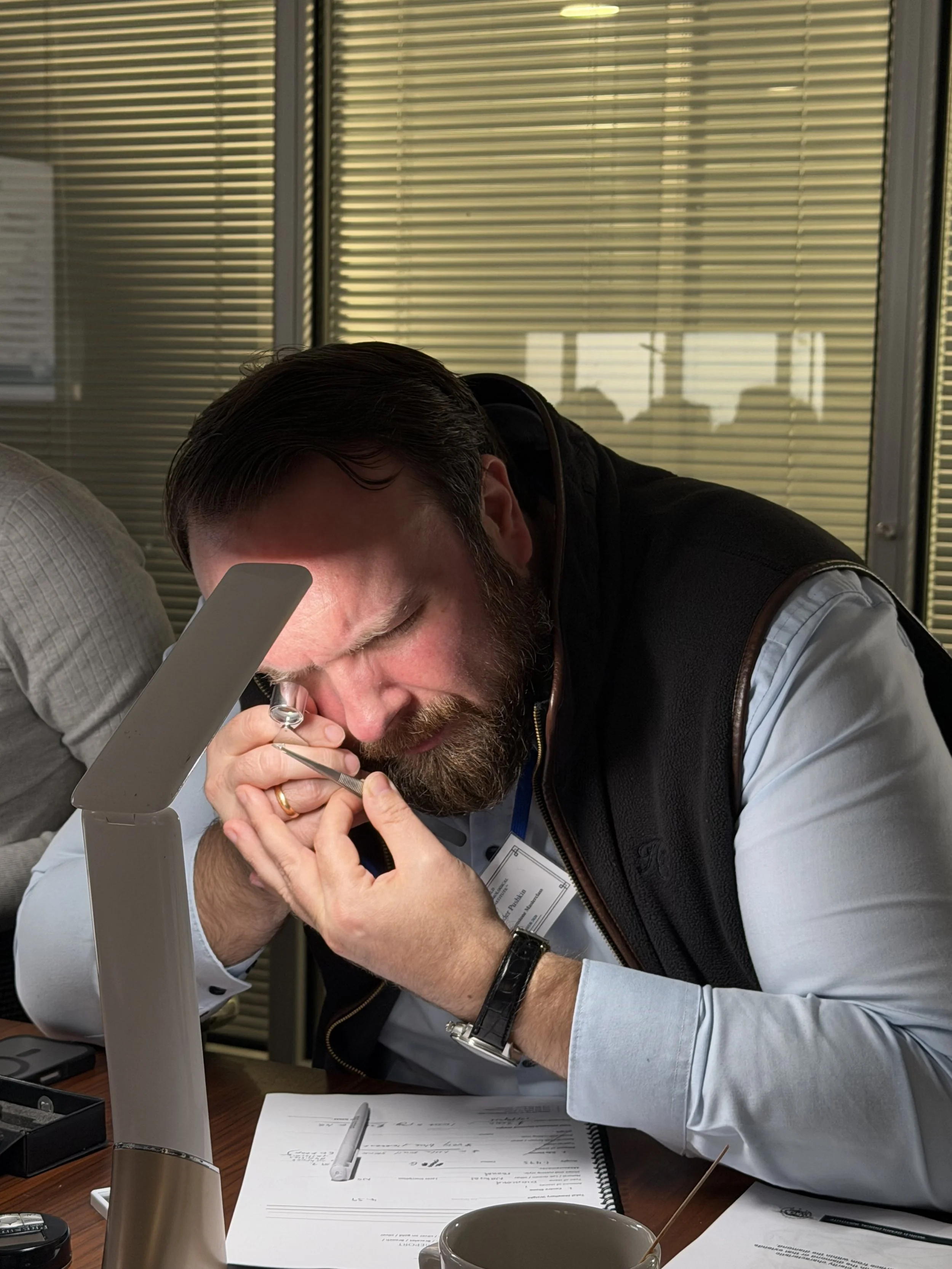
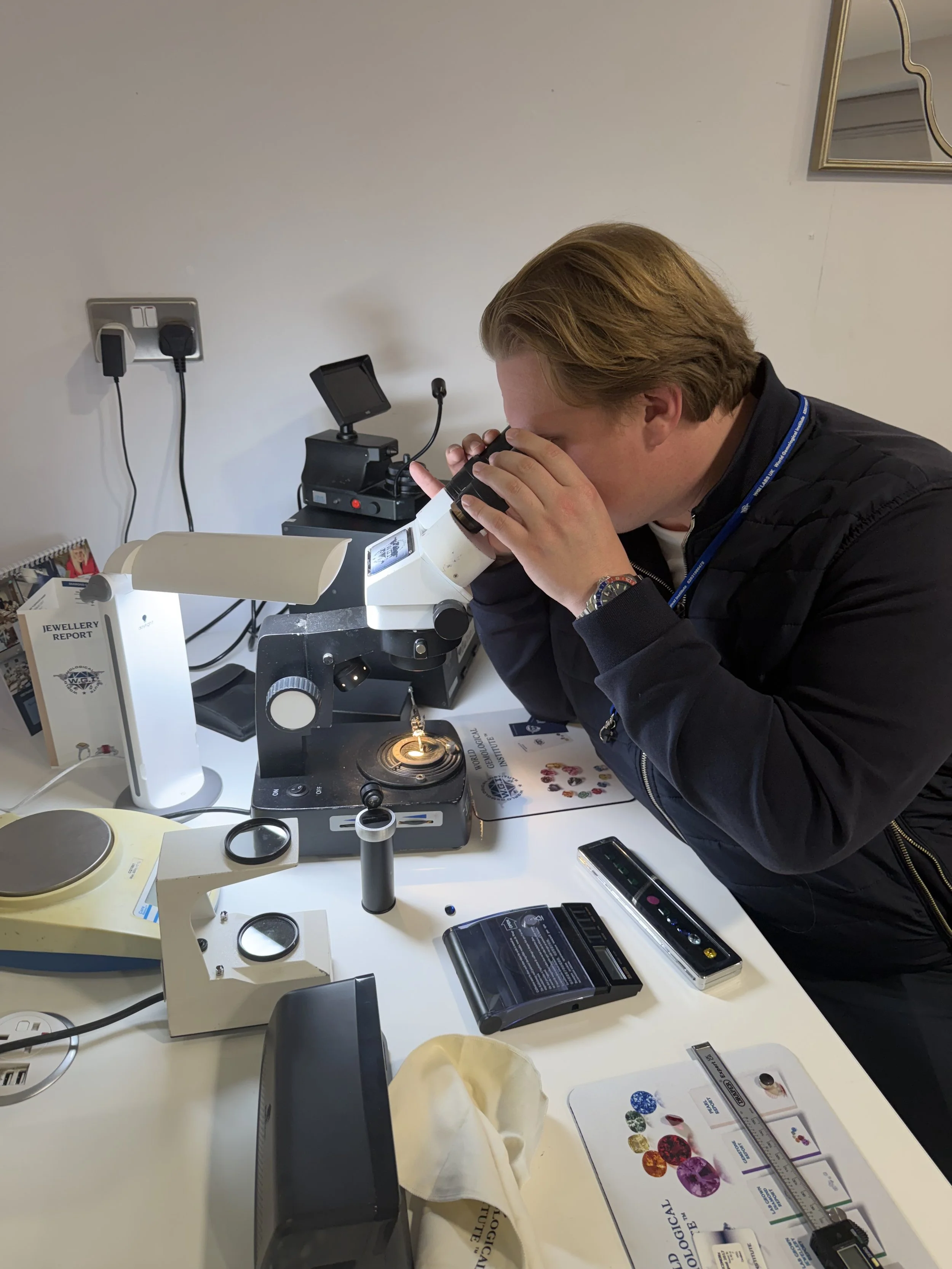
Pushkin’s is proud to announce that our entire team has successfully completed a Diamond & Gemstone Masterclass with the World Gemological Institute.
This achievement represents an important milestone in our continued commitment to gemological knowledge, expertise and excellence in fine jewellery. The masterclass has further strengthened our team's understanding of diamond and gemstone identification, grading, authenticity and treatments. This specialist knowledge plays an essential role not only in how we source and purchase gemstones, but also in how we examine, assess and authenticate the stones we offer to our customers.
At Pushkin’s, we stand behind the authenticity of every gemstone we sell. Our team's enhanced expertise supports our commitment to ensuring that each stone is genuine and accurately represented. Through careful assessment, gemological knowledge and independent laboratory verification where appropriate, we aim to give our customers complete confidence in their purchases.
We believe that purchasing fine jewellery should be an experience built on trust, transparency and education. Understanding exactly what you are buying is just as important as appreciating its beauty.
With this in mind, we have prepared a comprehensive guide to gemstone treatments, explaining the differences between natural, untreated and enhanced gemstones, and how these distinctions can influence their appearance, durability and value.
NATURAL VS. UNTREATED VS. ENHANCED GEMSTONES
One of the most common misconceptions in the gemstone world is that a treated gemstone is somehow not genuine. In reality, a naturally formed gemstone remains natural even after it has undergone treatment. Treatments are widely used throughout the jewellery industry to improve colour, clarity or overall appearance. However, there are important distinctions between the terms used to describe gemstones.
Natural gemstones: Gemstones formed through geological processes within the Earth, rather than manufactured in a laboratory. A natural sapphire remains a natural sapphire even if it has been heated.
Untreated gemstones: Gemstones that have not undergone artificial enhancement to alter their natural colour or clarity, beyond conventional cutting and polishing.
Unheated gemstones: Gemstones that have not undergone artificial heat treatment. The term does not necessarily exclude other forms of enhancement.
Treated or enhanced gemstones: Natural gemstones that have undergone processes such as heating, fracture filling, irradiation, dyeing or diffusion to improve their appearance.
Laboratory grown gemstones: Gemstones created under controlled laboratory conditions. They have essentially the same chemical composition and crystal structure as their natural counterparts but a different origin.
Simulants or imitations: Materials that resemble another gemstone but have different chemical or physical properties. For example, cubic zirconia may imitate diamond, but it is not diamond.
These distinctions are essential when evaluating a gemstone. An untreated gemstone can command a premium, particularly when its natural colour and clarity are exceptional. Nevertheless, an appropriately treated natural gemstone can still be beautiful, durable and desirable. The important question is not simply whether a gemstone has been treated, but what treatment it has received, whether that treatment is stable, and whether it has been accurately disclosed.
EMERALDS: THE TRADITION OF OILING AND CLARITY ENHANCEMENT
Emeralds are among the most treasured coloured gemstones, celebrated for their rich green hues. They belong to the beryl mineral family, with their characteristic green colour arising principally from trace amounts of chromium and/or vanadium. Unlike many other precious gemstones, emeralds commonly contain internal inclusions and fractures. These natural characteristics are part of their geological formation and frequently influence their transparency. For generations, emeralds have been treated with oils and other filling substances to improve their apparent clarity.
Oiling involves introducing a transparent substance, traditionally an oil such as cedarwood oil, into fractures that reach the gemstone's surface. The filling substance reduces the visibility of these fractures by minimising the optical difference between the fracture and the surrounding emerald. Other materials, including natural and artificial resins, may also be used. Importantly, these treatments do not remove the fractures themselves. They simply make them less noticeable. Both the presence and extent of clarity enhancement can influence an emerald's value.
The GIA classifies detected emerald clarity enhancement according to its degree:
F1 — Minor: A slight improvement in apparent clarity.
F2 — Moderate: A more noticeable degree of clarity enhancement.
F3 — Significant: Enhancement that has a substantial effect on the gemstone's appearance.
An emerald with no evidence of clarity enhancement may be especially desirable when it also possesses exceptional colour and quality. However, colour remains the most important quality factor when evaluating emeralds, followed by considerations including transparency, cut and carat weight.
Oils and some other filling materials can deteriorate, migrate or be removed over time, particularly when exposed to heat, chemicals or inappropriate cleaning methods. For this reason, emeralds require careful handling, and ultrasonic or steam cleaning is generally unsuitable for fracture filled examples.
At Pushkin’s, we believe that understanding an emerald's clarity enhancement is essential to appreciating both its beauty and its true value.
SAPPHIRES: THE ROLE OF HEAT TREATMENT
Sapphires belong to the corundum mineral family, which also includes rubies. With a hardness of 9 on the Mohs scale, sapphire is an exceptionally scratch-resistant gemstone and a popular choice for jewellery intended for regular wear. Heat treatment is one of the most established methods of enhancing sapphire. By exposing a sapphire to carefully controlled temperatures, gem cutters and treaters can improve its colour, reduce certain inclusions and increase its apparent transparency. For example, heating may transform pale or less desirable blue sapphires into stones displaying more attractive, saturated colours.
A naturally formed sapphire remains a natural sapphire after heat treatment. Conventional heat treatment is generally considered stable and permanent under normal wearing conditions. This makes properly heat treated sapphires suitable for many types of jewellery, including engagement rings.
Fine quality sapphires displaying exceptional natural colour without evidence of heating are comparatively scarce. According to GIA, confirmation from an independent gemological laboratory that no evidence of heat has been detected can contribute to a sapphire's rarity and value. This is particularly relevant for exceptional stones from historically significant sources, such as Kashmir. However, geographic origin should never be assumed solely from a sapphire's appearance. A reputable laboratory may provide an opinion on origin when the available gemological evidence permits. Not all sapphire enhancements involve conventional heating alone. Lattice diffusion is a process in which certain elements are introduced into the gemstone's crystal structure during high temperature treatment to modify its colour. For example, beryllium diffusion can significantly alter the colour of some sapphires. This is distinct from traditional heat treatment and should be clearly identified and disclosed where detected.
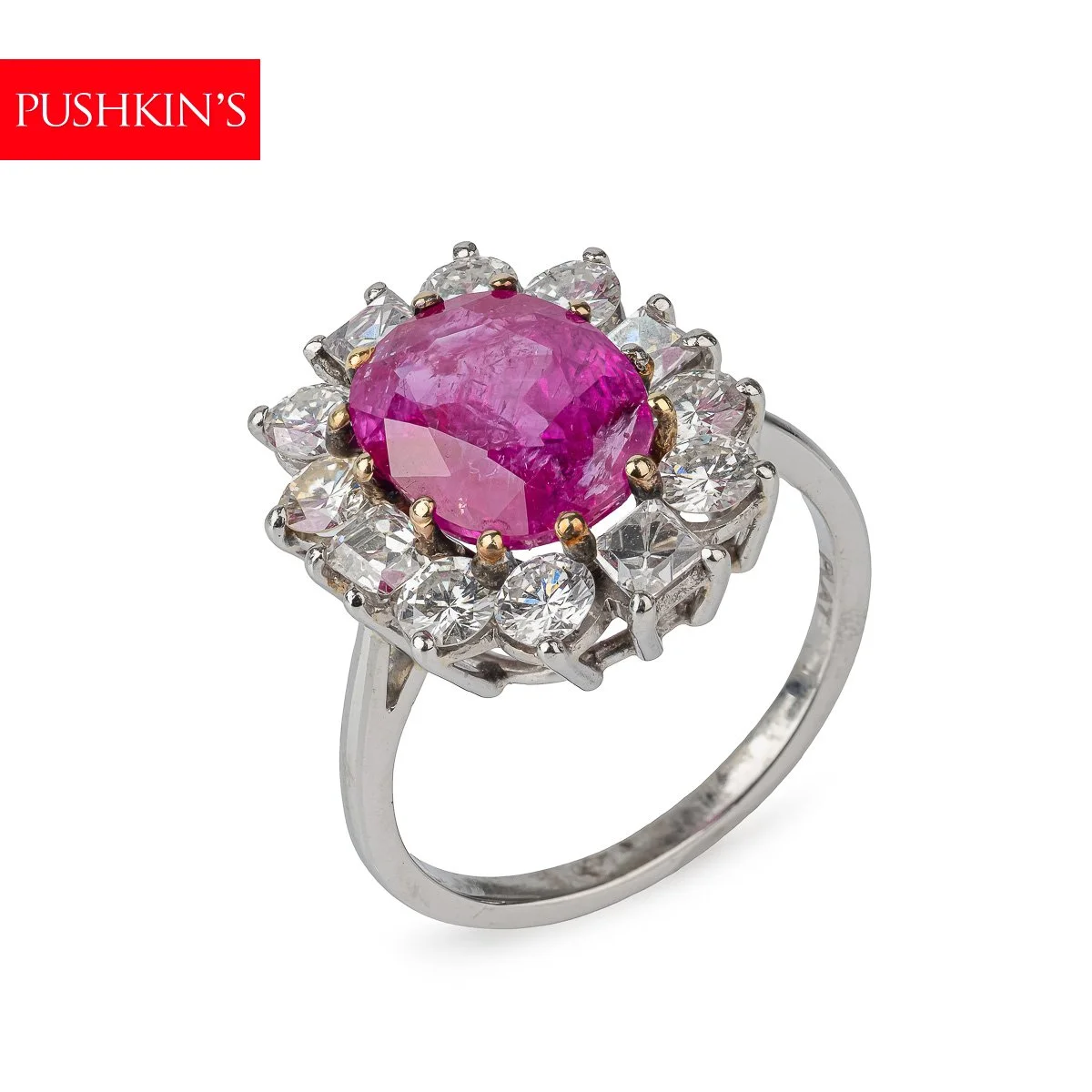
A stunning vintage '950' platinum and gold cluster ring set with a striking oval cut natural unheated Burmese ruby, with 12 natural diamonds totalling 2.75 carats encircling the stone, alternating between round brilliant cut and square French cut. The oval cut in particular is a popular choice to showcase the inherent brilliance and flow of a Burmese ruby, and is a perfect choice for a cluster ring such as this.
Burmese rubies have been long sought after for their pure and highly saturated colour and this 5.58 carat vivid pinkish red ruby is no exception. These are typically formed in a crystalline limestone rock which is low in iron, resulting in a more intense ruby, with particularly more purple tones than rubies from other sources. The colour is caused by trace amounts of chromium, which results in an inner fluorescence that gives an enchanting glow, particularly in sunlight. This fluorescence works to stifle any darker areas, known as extinction, producing the vivid colour that Burmese rubies are so famed for.
Hallmarked 950 platinum inside the band and GCS certified.
Reference Number: AC12877
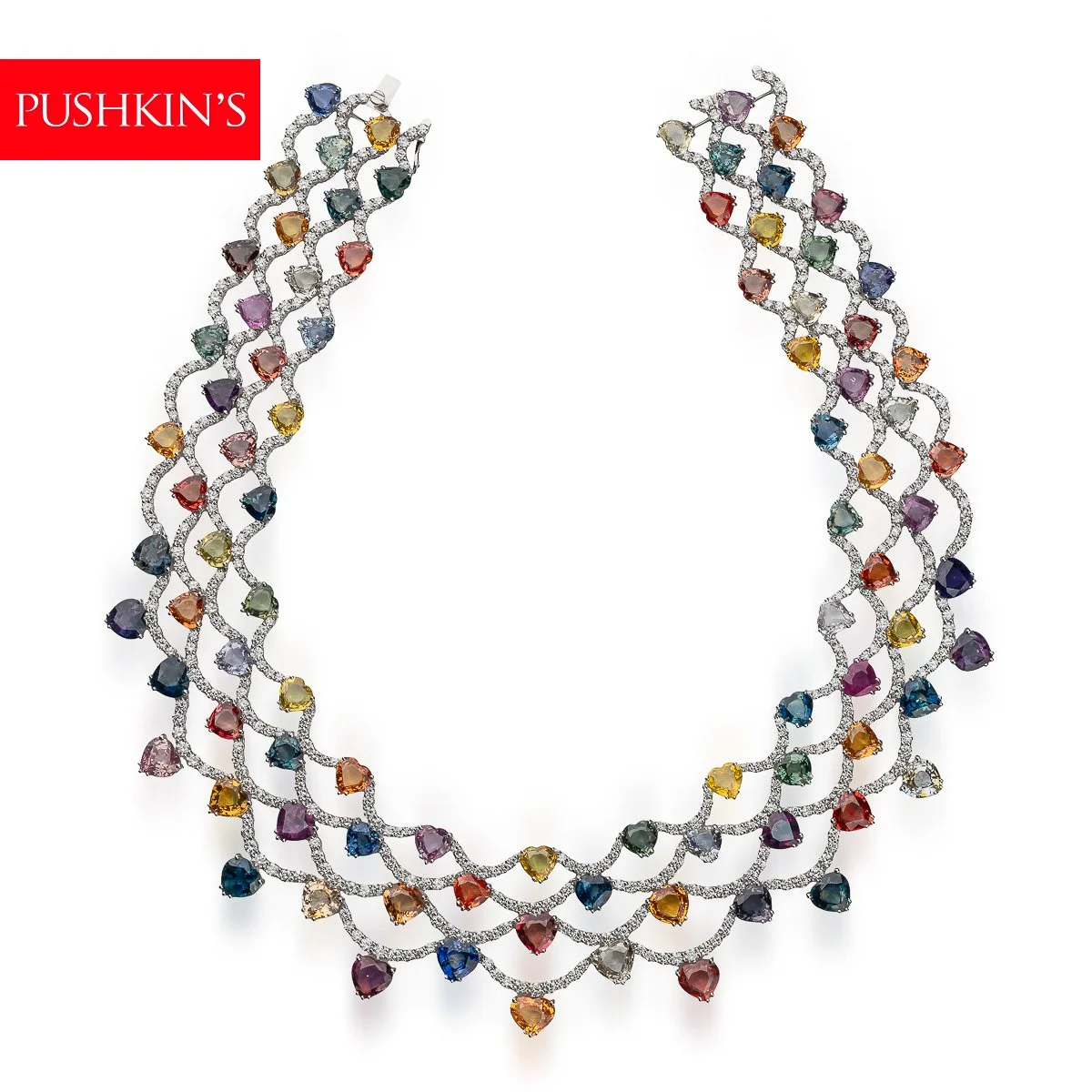
A truly exquisite and intricately crafted 18k gold collar necklace with fancy sapphires and round brilliant cut natural diamonds. The necklace is designed in a cascading lattice structure, with diamond-set scrolls, each wave suspending equally sized vibrant heart shaped sapphires that weigh an impressive 148.37 carats. The scalloped design allows the necklace to drape delicately around the neckline, with the rows gently graduating towards the centre front to create a dramatic effect.
The regal fancy sapphires create a kaleidoscope effect of varying colours, ranging from deep cornflower and teal blues, to fiery orange, pigeon blood red, golden champagne and canary yellow, soft pastel pink and green tones. Each stone is carefully claw set and individually matched to create a harmonious spectrum of colour. The brilliant cut diamonds provide a bright contrast to the rich gemstones and the curved structure allows light to pass freely through the piece, maximising light return and enhancing its vividness. A statement piece of striking presence, equally suited to a black-tie occasion or as the focal point of an evening ensemble.
Certificate available upon request.
Reference Number: AC12876
RUBIES: HEATING, GLASS FILLING AND FRACTURE HEALING
Rubies are the red variety of corundum and are prized for their vivid colour, brilliance and durability. As with sapphires, heat treatment is common in the ruby market. Controlled heating may reduce unwanted purplish tones, improve transparency or alter certain internal inclusions. For many natural rubies, this is a stable enhancement. However, not all ruby treatments are equal, and understanding the differences is particularly important.
Conventional heating can enhance a ruby's natural appearance without introducing significant foreign filling materials. The resulting changes are generally stable during normal wear. Fine quality rubies with independent laboratory confirmation of no evidence of heating may command a substantial premium because of their relative rarity.
Some heavily fractured rubies are treated with lead rich glass to fill internal cracks and improve transparency. While this can dramatically improve the gemstone's appearance, the filling material is more vulnerable to damage than the ruby itself. Exposure to heat, acids, certain chemicals or unsuitable cleaning procedures may damage or alter the glass. In heavily filled examples, significant amounts of glass may be present, making accurate identification particularly important.
Another treatment involves high temperature processing with flux materials, which can help heal certain fractures within corundum. Unlike simple glass filling, fracture healing may involve the recrystallisation of corundum within fissures. These stones can have different durability characteristics from heavily glass filled ruby composites. For buyers, distinguishing between conventional heating, flux assisted treatment and extensive glass filling is essential. A ruby should never be judged on colour alone. Its treatment history can substantially influence its durability, value and appropriate care.
DIAMONDS: UNDERSTANDING CLARITY AND COLOUR ENHANCEMENTS
Diamonds are renowned for their brilliance and exceptional hardness. However, natural diamonds can also undergo treatments designed to improve their apparent clarity or modify their colour. The GIA identifies several important diamond treatments.

Laser drilling
Laser drilling is used to improve the appearance of certain dark inclusions. A laser creates a microscopic channel from the diamond's surface to an internal inclusion, allowing chemical treatment to remove or lighten the dark material. The resulting drill hole remains within the diamond and can be identified through gemological examination. Laser drilling is considered permanent, and GIA grading reports disclose this treatment.
Fracture filling
Fracture filling involves introducing a transparent, glass-like substance into surface-reaching fractures to make them less visible. Although this can improve apparent clarity, the treatment is not considered permanent or sufficiently stable for ordinary GIA diamond grading. Heat, chemicals, ultrasonic cleaning and jewellery repair procedures can affect the filling. For this reason, GIA does not issue standard diamond grading reports for fracture-filled diamonds.
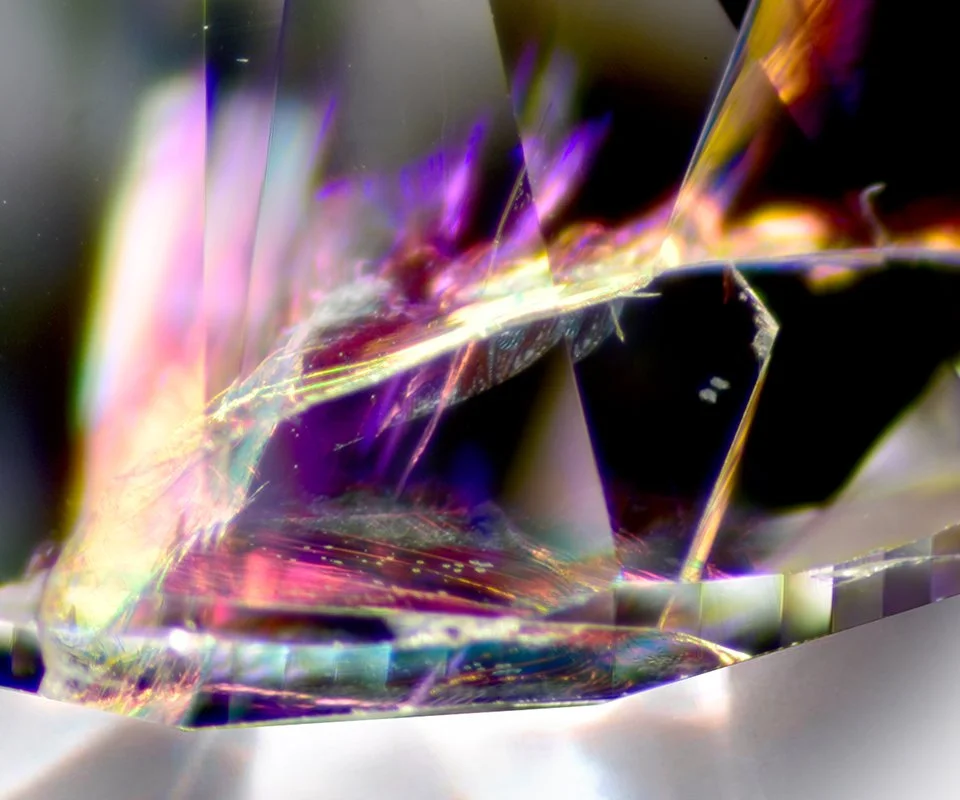
A fracture filled diamond.
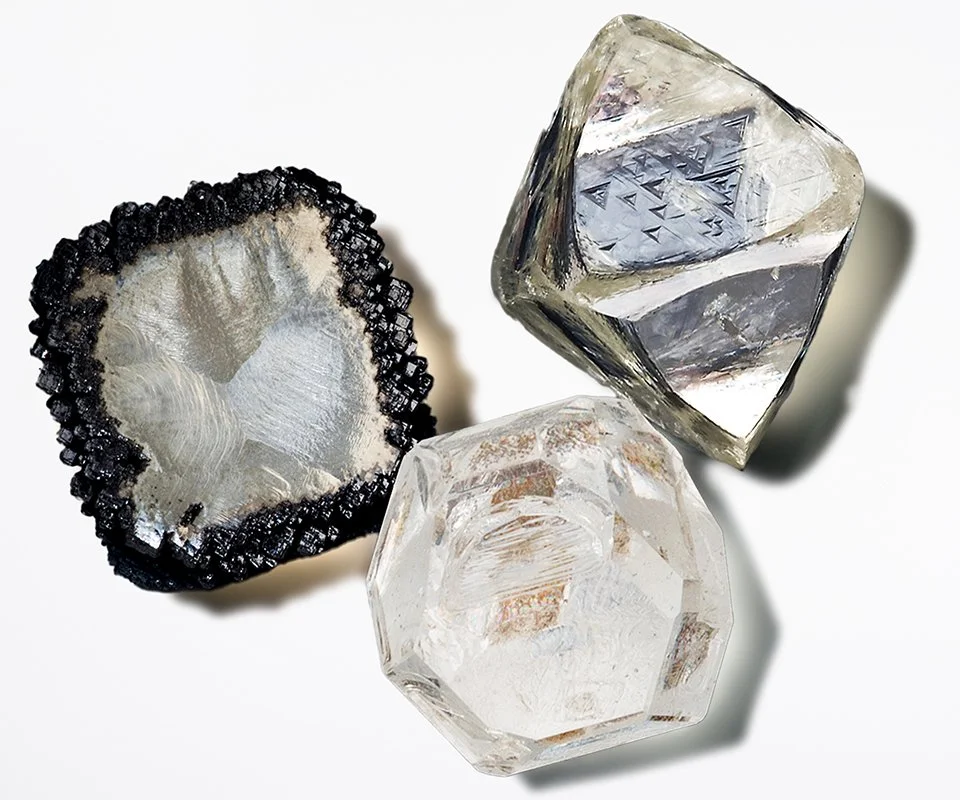
Rough diamonds from various origins: laboratory grown CVD rough diamond (left), laboratory grown HPHT rough diamond (middle), natural rough diamond (right).
High Pressure, High Temperature (HPHT) treatment
HPHT treatment subjects a diamond to very high temperatures and pressures to modify its colour. Depending on the diamond's original characteristics, this process may reduce brownish coloration or produce other colours, including yellow or greenish hues. HPHT colour treatment is generally stable under normal wearing conditions. Importantly, HPHT treatment of a natural diamond is different from using HPHT technology to grow a laboratory created diamond. One process enhances an existing diamond; the other produces a diamond in a laboratory.
Irradiation and annealing
Irradiation can alter a diamond's colour, sometimes producing vivid shades of blue, green, yellow, pink or other colours. Controlled heating, known as annealing, may follow irradiation to modify the resulting colour further. These treatments are generally stable during ordinary wear, although some irradiated diamonds may be sensitive to the high temperatures used during jewellery repairs.
Diamond coatings
Surface coatings can temporarily alter the appearance or colour of a diamond. Unlike stable treatments such as HPHT, coatings may scratch, deteriorate or be affected by heat and chemicals. Because coatings are not considered permanent, GIA does not issue standard grading reports for coated diamonds. An important consideration: GIA issues reports for diamonds with certain stable treatments, including laser drilling and HPHT, with those treatments disclosed. It does not issue standard grading reports for diamonds with unstable treatments such as fracture filling or coating. This is one reason independent gemological documentation can be so valuable when purchasing diamonds.
PARAÍBA TOURMALINE: EXCEPTIONAL COLOUR AND COMPLEX TREATMENTS
Paraíba tourmaline is among the most distinctive coloured gemstones, admired for its striking electric blue, turquoise and vivid green hues. Its remarkable coloration is primarily associated with copper, while manganese can also influence the gemstone's colour. Originally discovered in Brazil in the late 1980s, copper bearing tourmalines with comparable characteristics have subsequently been identified in Nigeria and Mozambique. Today, the trade term Paraíba tourmaline is not restricted exclusively to gemstones originating from Brazil.
Heat treatment is frequently used to improve the colour of copper bearing tourmaline. Some stones naturally display vivid blue-green colours, while others may initially exhibit more purplish or pinkish tones. Heating can reduce the influence of certain manganese related colour components, allowing more desirable blue or green hues to become prominent.
An important distinction is that heat treatment in tourmaline can be difficult or impossible to detect conclusively. GIA advises that the colour of Paraíba tourmaline should be considered potentially heat modified, even when conventional gemological evidence is inconclusive. Consequently, claims that a Paraíba tourmaline is definitively unheated should be treated with care. When evaluating these gemstones, colour, transparency, size, origin and reliable laboratory analysis are all important considerations.

TANZANITE: TRANSFORMED BY HEAT
Tanzanite is the blue-to-violet variety of the mineral zoisite, commercially mined in the Merelani Hills of northern Tanzania. It is celebrated for its remarkable pleochroism, meaning it can display different colours when viewed from different crystal directions. Controlled heating can reduce this brownish coloration, revealing the vivid violet and blue tones associated with the gemstone.
Unlike some rubies and sapphires, heat treatment in tanzanite generally has little effect on market pricing because it is so widely accepted. GIA also notes that determining whether tanzanite has been heated can be challenging, particularly because some natural geological heating can produce similar effects. The resulting enhancement is generally stable under ordinary wearing conditions. However, tanzanite is more vulnerable to damage from impact and sudden temperature changes than ruby or sapphire. For tanzanite, the richness of colour, clarity, cutting quality and carat weight are particularly relevant when assessing overall quality.
OTHER GEMSTONES AND THEIR COMMON TREATMENTS
Beyond the traditional precious gemstones, many other gem materials may undergo enhancement. Understanding these processes can help buyers recognise the difference between normal industry practices and treatments requiring additional care.
JADEITE JADE
Jadeite may undergo bleaching, dyeing or polymer impregnation to improve colour and appearance.
A commonly used classification system distinguishes:
Type A jadeite: Natural jadeite that has not undergone significant enhancement beyond traditional surface waxing.
Type B jadeite: Jadeite that has been acid bleached and subsequently impregnated with polymer.
Type C jadeite: Jadeite that has been artificially dyed.
Some jadeite may undergo combinations of these treatments. The distinction matters because treatments can influence value, stability and long term appearance.
PEARLS
Pearls require a different understanding of the term natural. Natural pearls develop within mollusks without deliberate human intervention, whereas cultured pearls form within mollusks following human-assisted initiation. Both are genuine pearl materials, but their formation processes differ. Pearls may undergo bleaching to produce a more uniform colour, dyeing to change their appearance or other processes to enhance colour and lustre. These treatments should not be confused with the distinction between natural and cultured pearls. Because pearls consist of delicate organic and mineral components, they require protection from chemicals, excessive heat and abrasive cleaning.
TOPAZ
Topaz is available in an impressive variety of colours, although some are achieved through enhancement. Blue topaz, for example, is commonly produced by irradiating pale or colourless material, frequently followed by controlled heating. Certain topaz varieties may also receive metallic surface coatings that create unusual iridescent or multicoloured appearances. These coatings are more vulnerable to scratches and wear than the gemstone itself.
CORAL
Coral is an organic gem material that may be bleached, dyed or coated with protective resins to modify or intensify its appearance. Some coral treatments involve multiple processes, such as bleaching followed by dyeing or coating. Because coral is sensitive to heat and chemicals, gentle care is essential.
QUARTZ
Quartz includes several popular gemstone varieties, including amethyst and citrine.Some quartz gemstones are treated with irradiation, heating or metallic surface coatings to modify their colours. Coated quartz can exhibit striking colours, but these surface treatments may be susceptible to scratching or abrasion.
AMBER
Amber is fossilised tree resin and is valued for its warm colours, transparency and fascinating internal features. Heating amber in oil can darken its colour or improve its apparent transparency. The process can also create distinctive reflective inclusions, sometimes described as a spangled appearance. Amber is sensitive to heat, chemicals and scratching, and should be handled accordingly.
AMETHYST
Amethyst, the purple variety of quartz, may be heated to lighten excessively dark material or reduce undesirable brownish coloration. The treatment can modify the gemstone's colour without changing its mineral identity. Like other varieties of quartz, certain amethysts may also experience colour changes following prolonged exposure to intense light or heat.
CITRINE
Citrine is the yellow-to-orange variety of quartz. Some citrine is naturally coloured, while much of the material available commercially is produced through heating suitable varieties of amethyst or other quartz. The resulting gemstone remains quartz, but its enhanced colour should be understood when evaluating the stone.
HOW GEMSTONE TREATMENTS AFFECT VALUE
One of the most important lessons in gemology is that treatments influence gemstones differently. An unheated ruby with exceptional natural colour may command a premium compared with a visually similar heated ruby. An oiled emerald, however, may still be highly valuable because clarity enhancement is an established practice for this gemstone. A heated tanzanite is generally valued according to its visual quality rather than receiving a significant price reduction simply because it has undergone conventional heating. Meanwhile, a heavily glass filled ruby may be valued differently from a conventionally heated ruby because its treatment can substantially affect appearance, durability and care requirements.
Treatment must be considered alongside colour, clarity, cut, carat weight, origin where reliably established, rarity and overall quality. A beautiful treated gemstone may be a more appropriate purchase than a lower quality untreated example, depending on the buyer's preferences and priorities.
WHY INDEPENDENT GEMOLOGICAL REPORTS MATTER
A gemstone's appearance alone does not always reveal its true nature or treatment history. Some enhancements can be identified using standard gemological instruments and magnification. Others require advanced analytical equipment and specialist laboratory testing. Institutions such as the Gemological Institute of America (GIA) and the International Gemological Institute (IGI)provide independent gemological assessment and documentation.
Depending on the gemstone and report type, laboratory examination can help establish:
Whether the gemstone is natural, laboratory grown or an imitation.
The gemstone's mineral species and variety.
Whether detectable treatments or enhancements are present.
Important physical and optical characteristics.
The gemstone's geographic origin, where sufficient evidence allows a reliable determination.
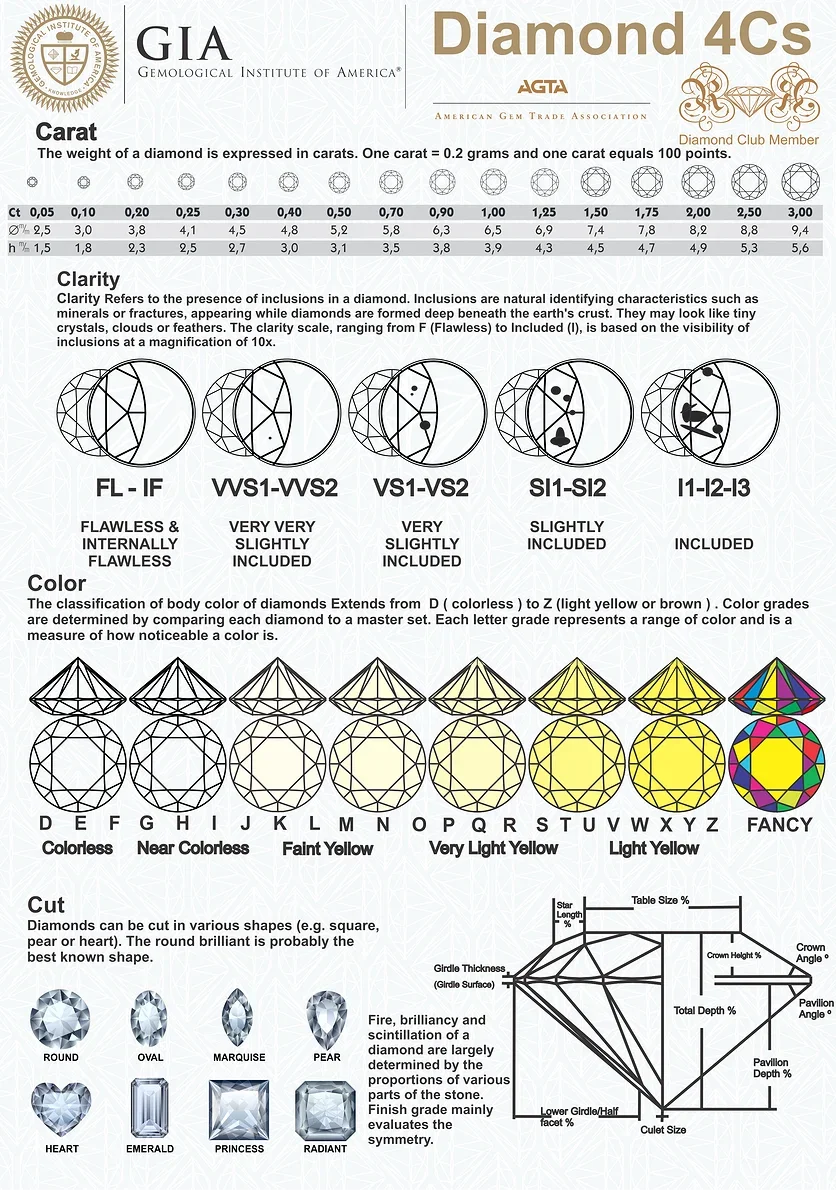
For diamonds, laboratory reports can also document characteristics such as carat weight, colour, clarity and cut. For coloured gemstones, identification reports generally focus on establishing the material's identity and reporting relevant characteristics and detectable enhancements, rather than assigning the same standardised 4Cs grades used for diamonds. It is also important to understand that some treatments cannot always be established conclusively, even using advanced testing. A laboratory report provides valuable independent evidence, but its findings should always be interpreted according to the specific tests performed and conclusions stated. Buyers can also verify report details through the issuing laboratory's official report checking service.
CARING FOR TREATED GEMSTONES
Proper care is essential to preserving a gemstone's beauty and condition. Different enhancements can affect how a stone reacts to heat, chemicals, sunlight and cleaning methods. For example, fracture filled emeralds and rubies may be vulnerable to ultrasonic cleaning, while certain surface coatings can be damaged by abrasion. Pearls, coral and amber are particularly sensitive to chemical exposure and inappropriate cleaning. Even untreated gemstones require care: hardness describes resistance to scratching, but it does not necessarily indicate resistance to chipping, breakage or thermal shock. Before cleaning, repairing or resetting gemstone jewellery, it is important to understand the stone's identity and any known treatments. Where there is uncertainty, professional advice is recommended.
THE PUSHKIN’S PROMISE: CONFIDENCE THROUGH KNOWLEDGE
At Pushkin’s, our team’s Diamond & Gemstone Masterclass training strengthens our knowledge of how to assess gemstones and explain their characteristics clearly.
From natural stones to enhanced gems, we value honest descriptions, careful selection and your confidence in what you own.
Explore the Pushkin’s fine jewellery collection and discover exceptional gemstones selected with knowledge, care and an enduring appreciation for quality.