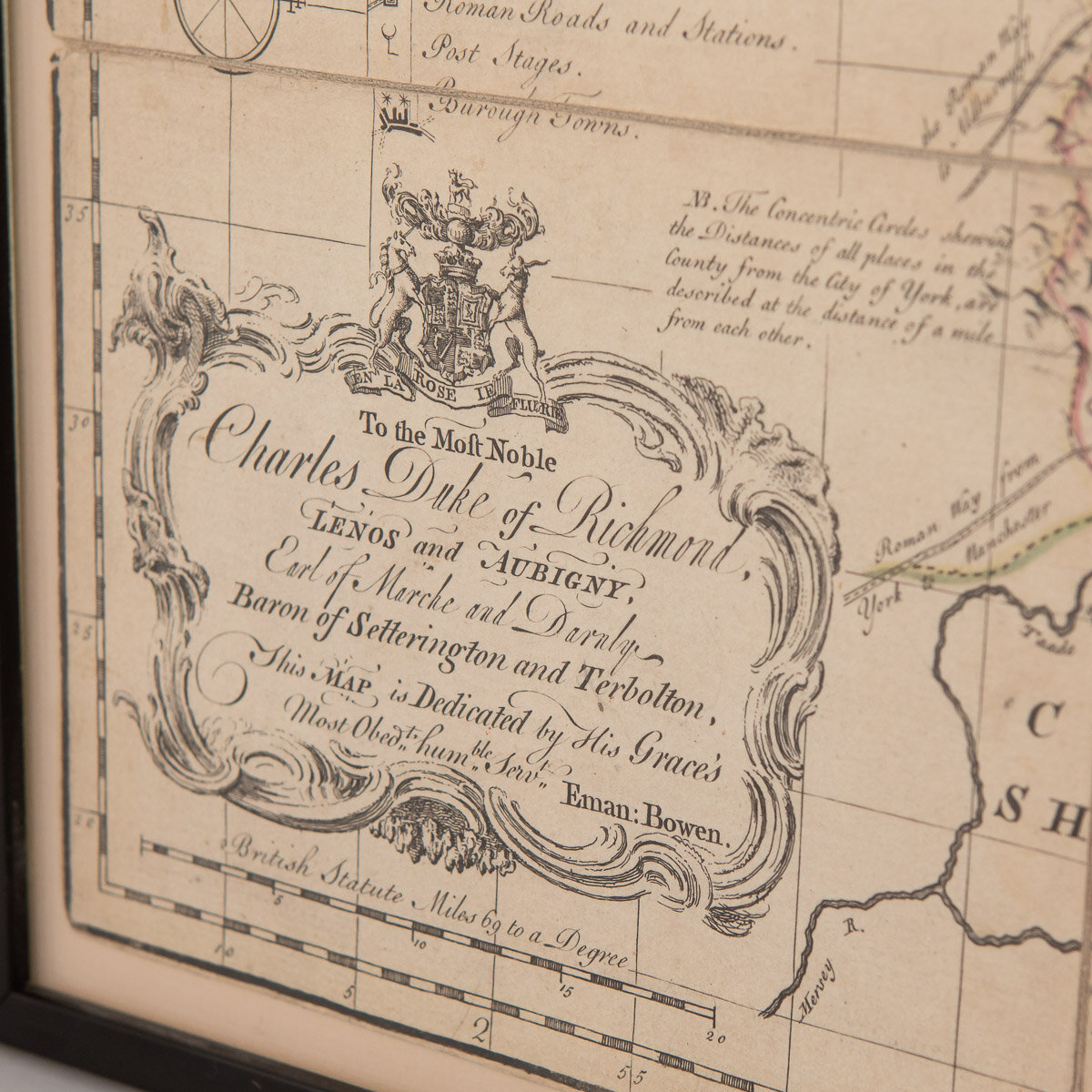
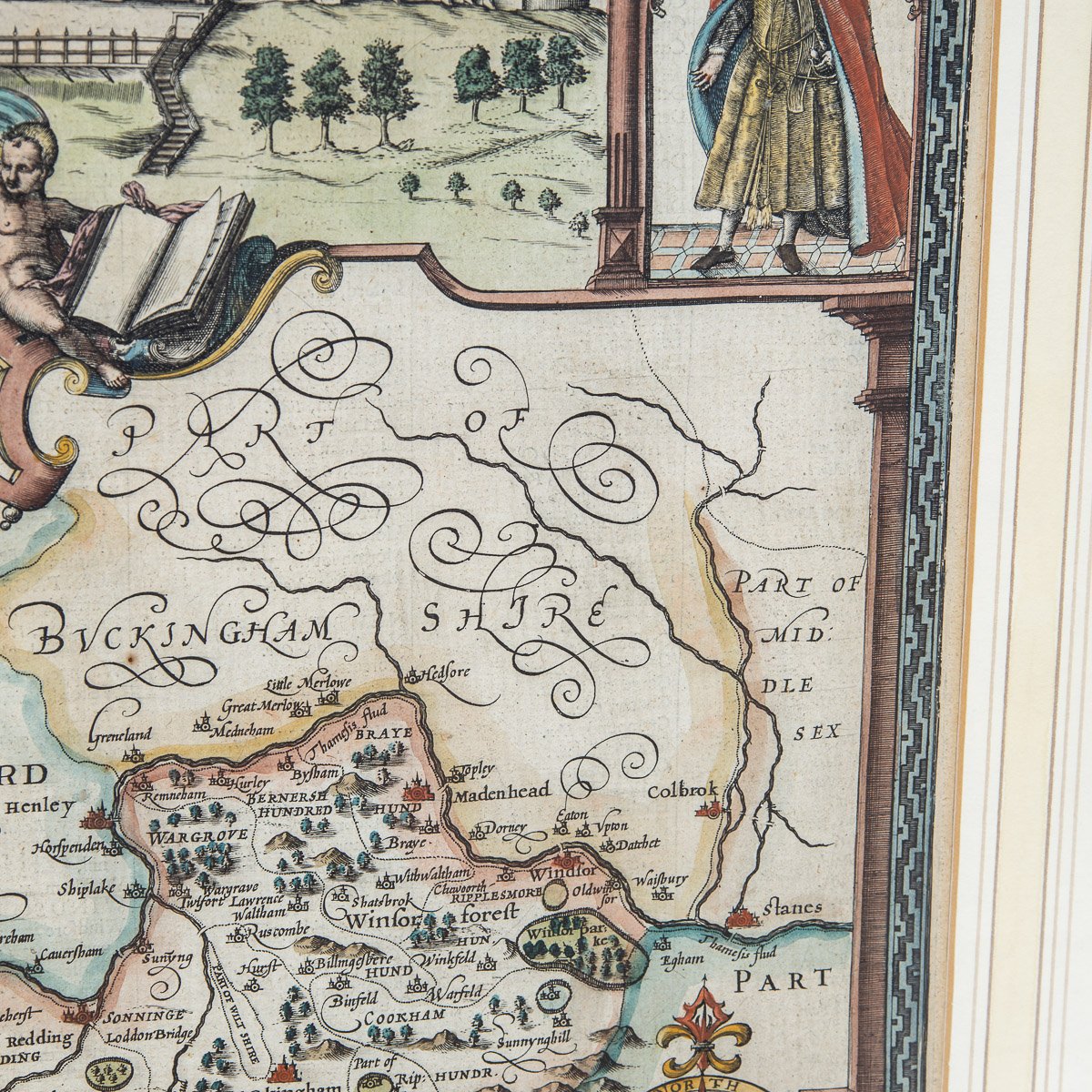
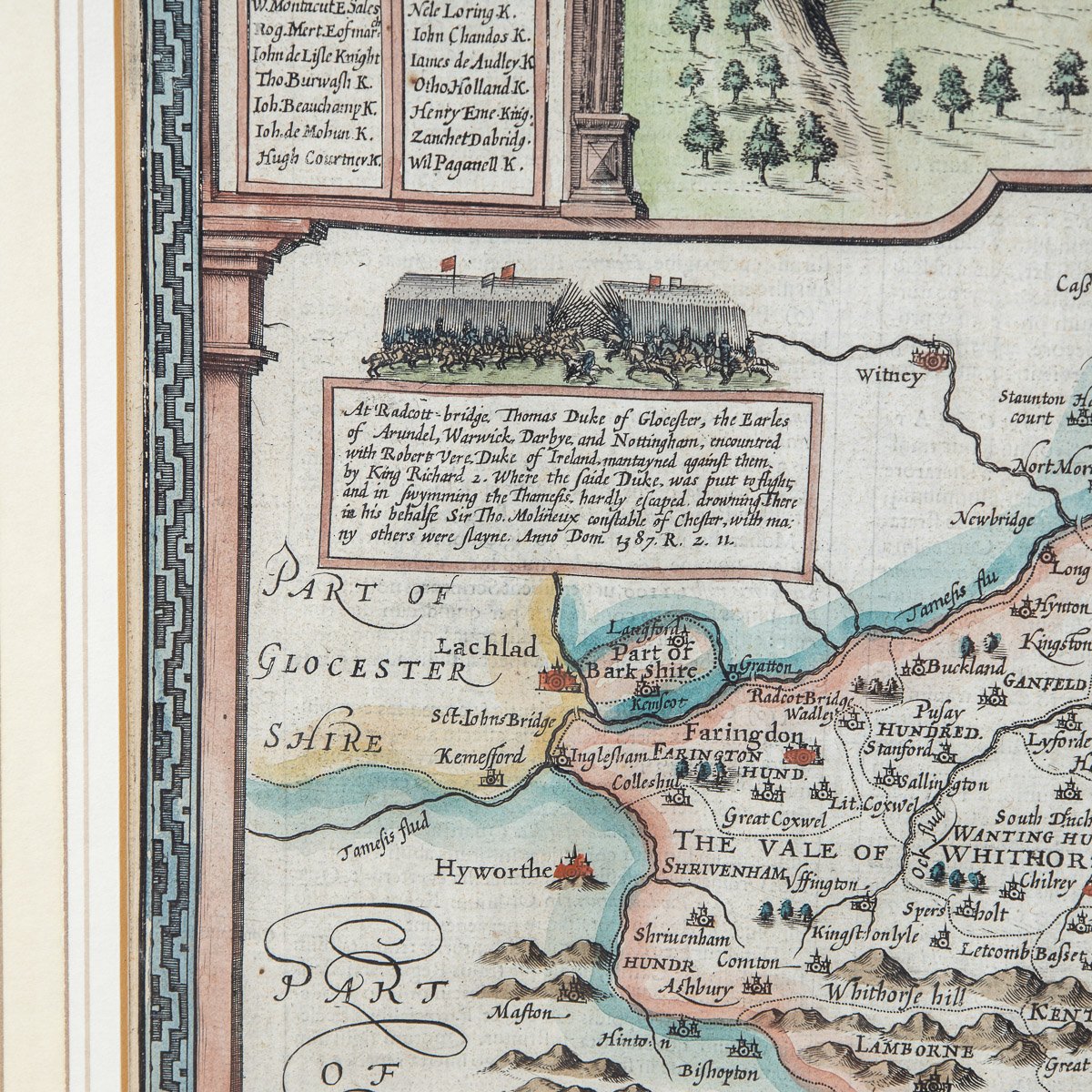
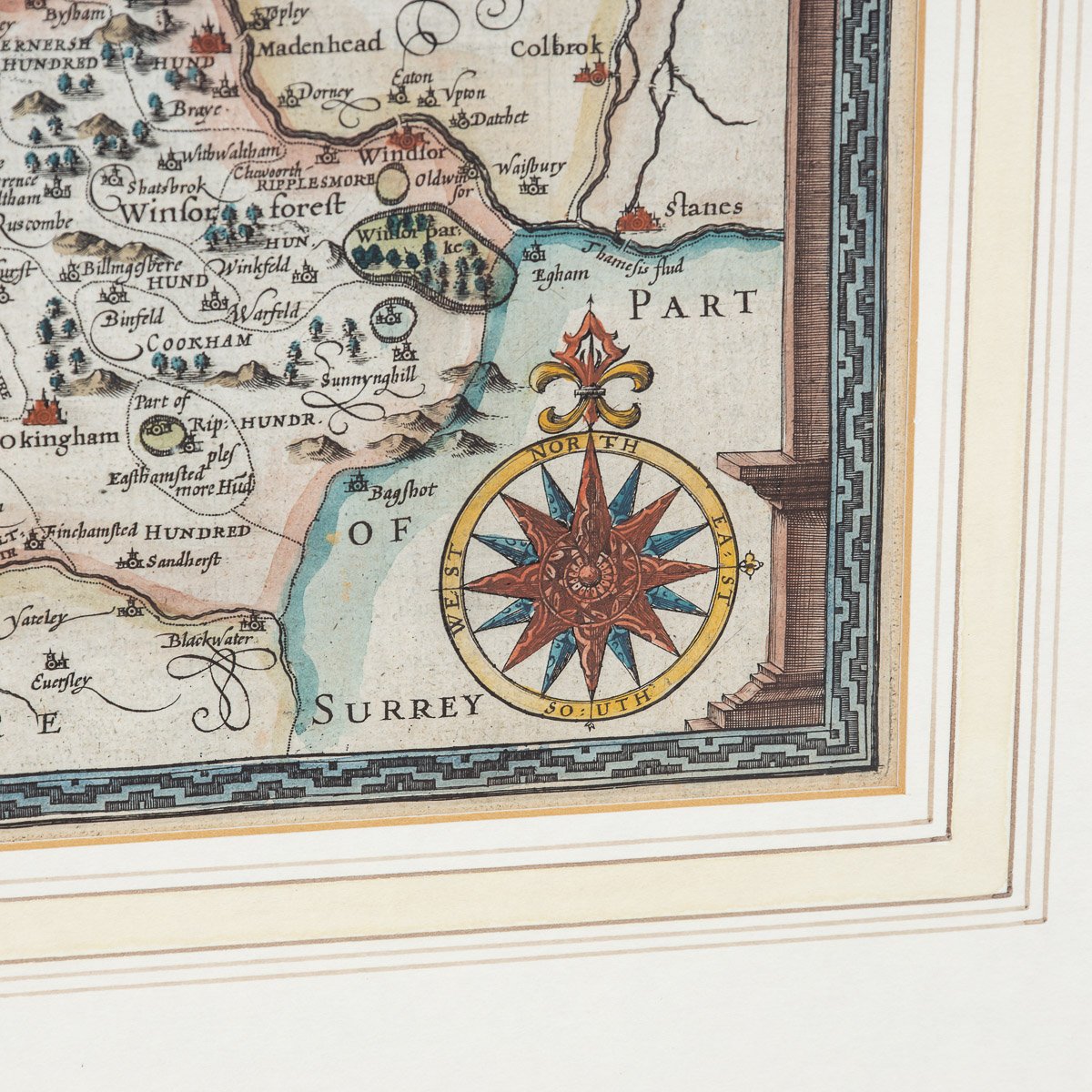
A fine and highly accomplished Georgian silkwork map sampler of England and Wales, worked by Mary Ann Perry and dated 1796. Combining educational purpose with considerable artistic skill, this remarkable piece represents one of the most sophisticated forms of late eighteenth-century needlework, reflecting the importance placed upon geography, literacy, and refined needlework accomplishments in the education of young ladies during the Georgian period.
Executed on a finely woven ground, the sampler depicts England and Wales within an oval reserve, meticulously embroidered with county boundaries, principal towns, cities, rivers, and coastal features. The counties are carefully delineated in coloured silk threads, while place names are worked with extraordinary precision, demonstrating both the technical proficiency and patience of the young maker. The geographical detail is particularly impressive, reflecting the growing popularity of cartographic studies in late eighteenth-century Britain and the influence of contemporary engraved maps used as educational models.
At the centre of the upper section appears the maker's inscription, enclosed within a decorative floral cartouche and reading "Mary Ann Perry 1796", providing not only an exact date but also a direct and personal connection to the young embroiderer responsible for the work over two centuries ago. Such signed and dated examples are especially desirable, transforming the sampler from a decorative object into a tangible record of individual achievement and education.
Surrounding the map is an elegant embroidered floral border composed of delicate trailing vines, leaves, and small blossoms worked in coloured silks. This decorative framework softens the more formal cartographic subject matter and demonstrates the dual purpose of map samplers, which sought to combine academic learning with ornamental needlework. The refined palette and restrained decoration are entirely characteristic of the Georgian taste for elegance and balance.
Map samplers emerged as a distinct category of needlework during the second half of the eighteenth century, coinciding with advances in cartography and increasing interest in geography as a subject worthy of formal study. Young ladies attending boarding schools and academies were often encouraged to produce embroidered maps as part of their curriculum, requiring not only mastery of needlework techniques but also an understanding of geography, spelling, and topographical organisation. As a result, map samplers are frequently regarded as some of the most intellectually ambitious forms of female needlework produced during the period.
The present example is particularly appealing for its depiction of England and Wales, one of the most sought-after cartographic subjects, and for its early date of 1796, placing it firmly within the Georgian era. The quality of the embroidery, the extensive geographical detail, and the survival of the maker's name and date combine to create a piece of considerable historical and decorative significance.
The sampler is presented within an attractive period-style frame which complements the warmth and subtle colouring of the silkwork while providing an elegant display. Today, Georgian map samplers remain highly prized by collectors of needlework, folk art, educational antiques, and early cartographic material, admired for their combination of artistic beauty, historical interest, and personal narrative.
Reference Number: B12336
A fine and highly accomplished Georgian silkwork map sampler of England and Wales, worked by Mary Ann Perry and dated 1796. Combining educational purpose with considerable artistic skill, this remarkable piece represents one of the most sophisticated forms of late eighteenth-century needlework, reflecting the importance placed upon geography, literacy, and refined needlework accomplishments in the education of young ladies during the Georgian period.
Executed on a finely woven ground, the sampler depicts England and Wales within an oval reserve, meticulously embroidered with county boundaries, principal towns, cities, rivers, and coastal features. The counties are carefully delineated in coloured silk threads, while place names are worked with extraordinary precision, demonstrating both the technical proficiency and patience of the young maker. The geographical detail is particularly impressive, reflecting the growing popularity of cartographic studies in late eighteenth-century Britain and the influence of contemporary engraved maps used as educational models.
At the centre of the upper section appears the maker's inscription, enclosed within a decorative floral cartouche and reading "Mary Ann Perry 1796", providing not only an exact date but also a direct and personal connection to the young embroiderer responsible for the work over two centuries ago. Such signed and dated examples are especially desirable, transforming the sampler from a decorative object into a tangible record of individual achievement and education.
Surrounding the map is an elegant embroidered floral border composed of delicate trailing vines, leaves, and small blossoms worked in coloured silks. This decorative framework softens the more formal cartographic subject matter and demonstrates the dual purpose of map samplers, which sought to combine academic learning with ornamental needlework. The refined palette and restrained decoration are entirely characteristic of the Georgian taste for elegance and balance.
Map samplers emerged as a distinct category of needlework during the second half of the eighteenth century, coinciding with advances in cartography and increasing interest in geography as a subject worthy of formal study. Young ladies attending boarding schools and academies were often encouraged to produce embroidered maps as part of their curriculum, requiring not only mastery of needlework techniques but also an understanding of geography, spelling, and topographical organisation. As a result, map samplers are frequently regarded as some of the most intellectually ambitious forms of female needlework produced during the period.
The present example is particularly appealing for its depiction of England and Wales, one of the most sought-after cartographic subjects, and for its early date of 1796, placing it firmly within the Georgian era. The quality of the embroidery, the extensive geographical detail, and the survival of the maker's name and date combine to create a piece of considerable historical and decorative significance.
The sampler is presented within an attractive period-style frame which complements the warmth and subtle colouring of the silkwork while providing an elegant display. Today, Georgian map samplers remain highly prized by collectors of needlework, folk art, educational antiques, and early cartographic material, admired for their combination of artistic beauty, historical interest, and personal narrative.
Reference Number: B12336


 Image 1 of 28
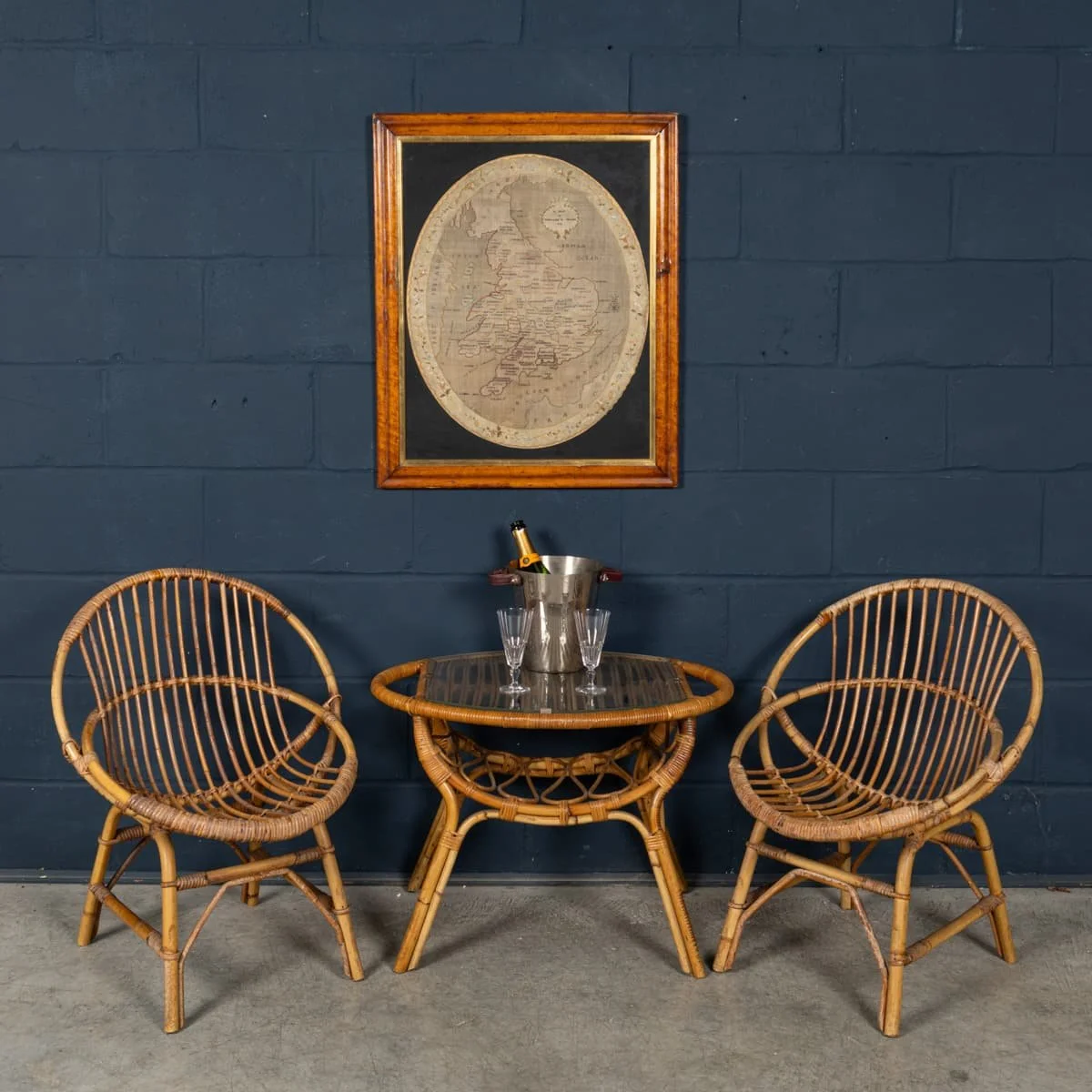 Image 2 of 28
 Image 3 of 28
 Image 4 of 28
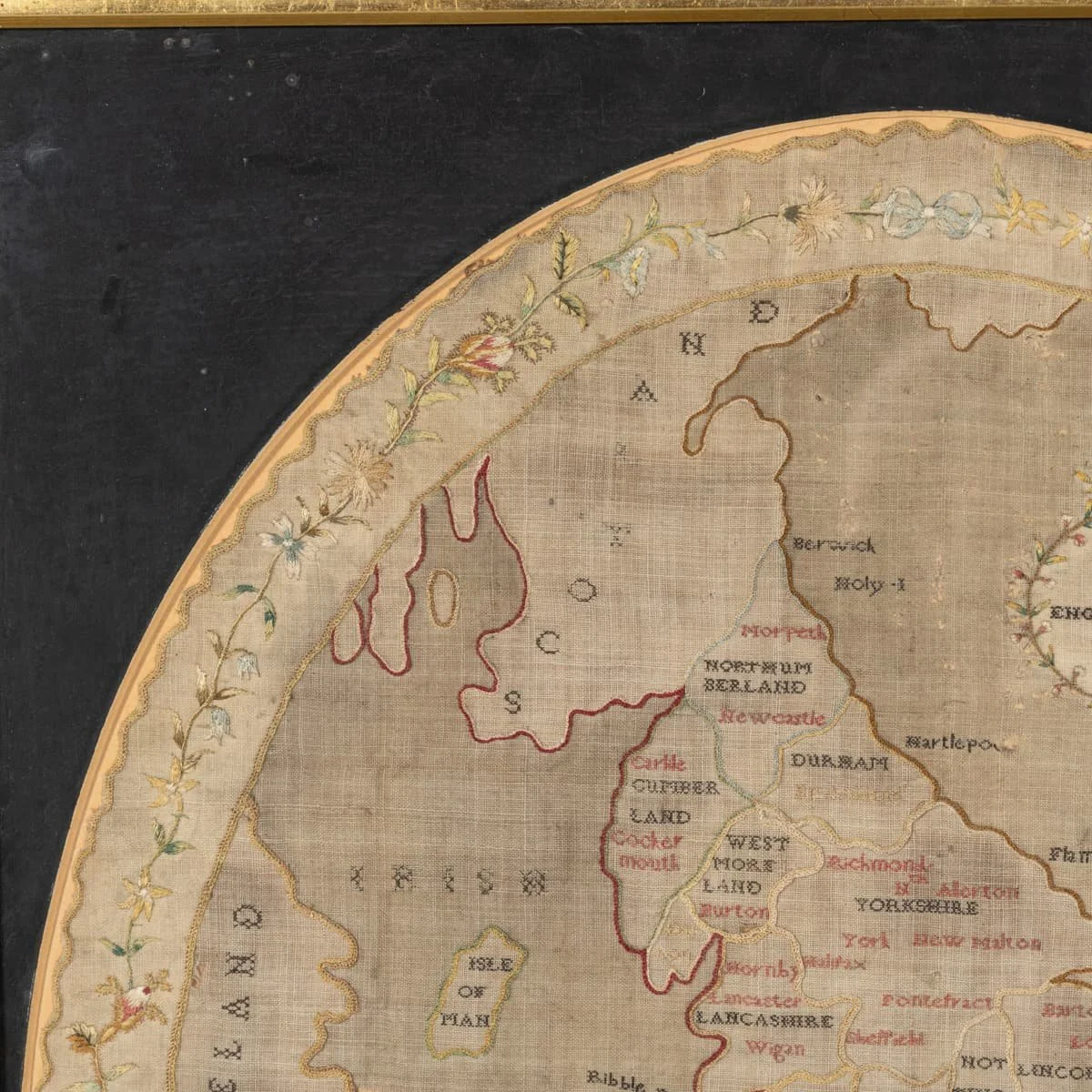 Image 5 of 28
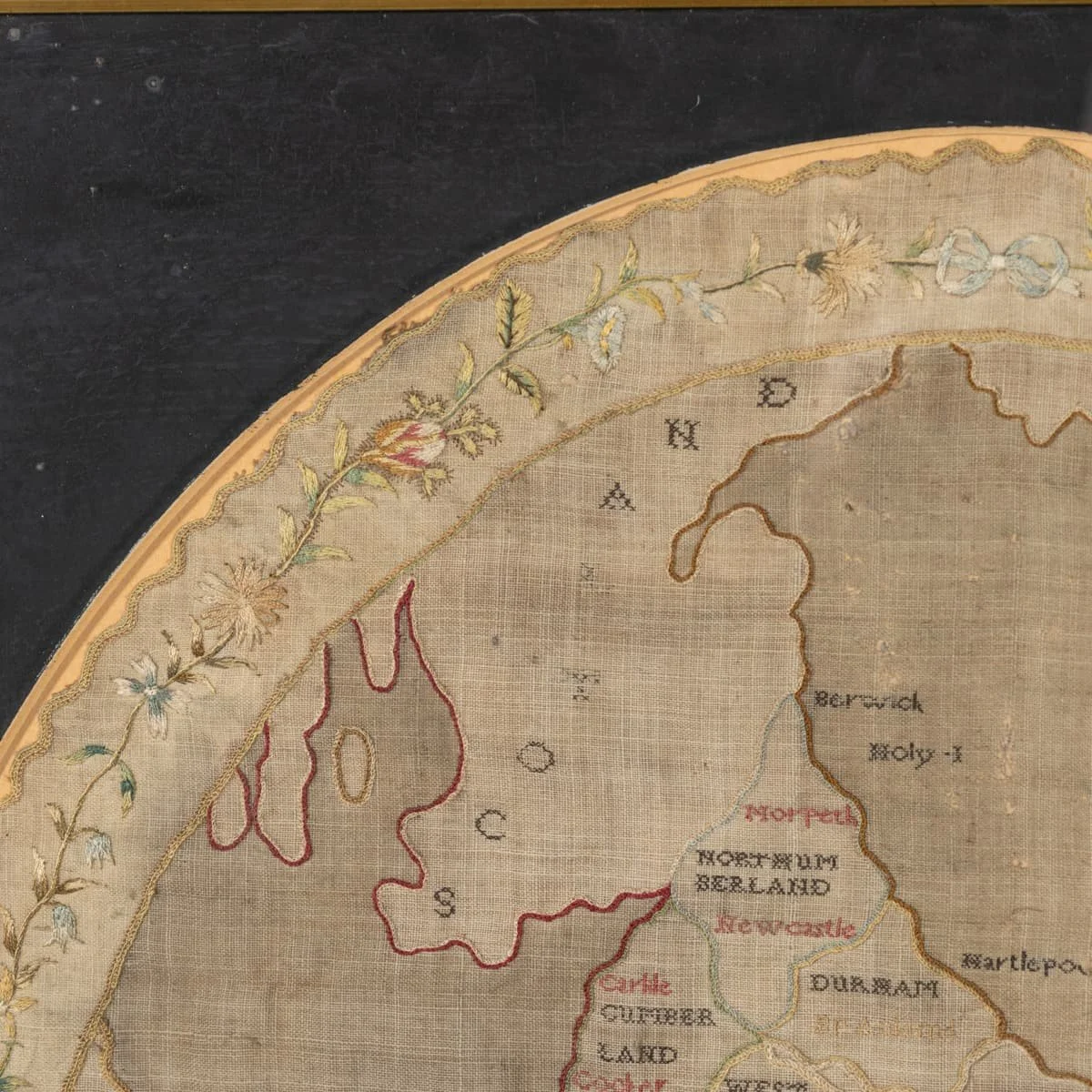 Image 6 of 28
 Image 7 of 28
 Image 8 of 28
 Image 9 of 28
 Image 10 of 28
 Image 11 of 28
 Image 12 of 28
 Image 13 of 28
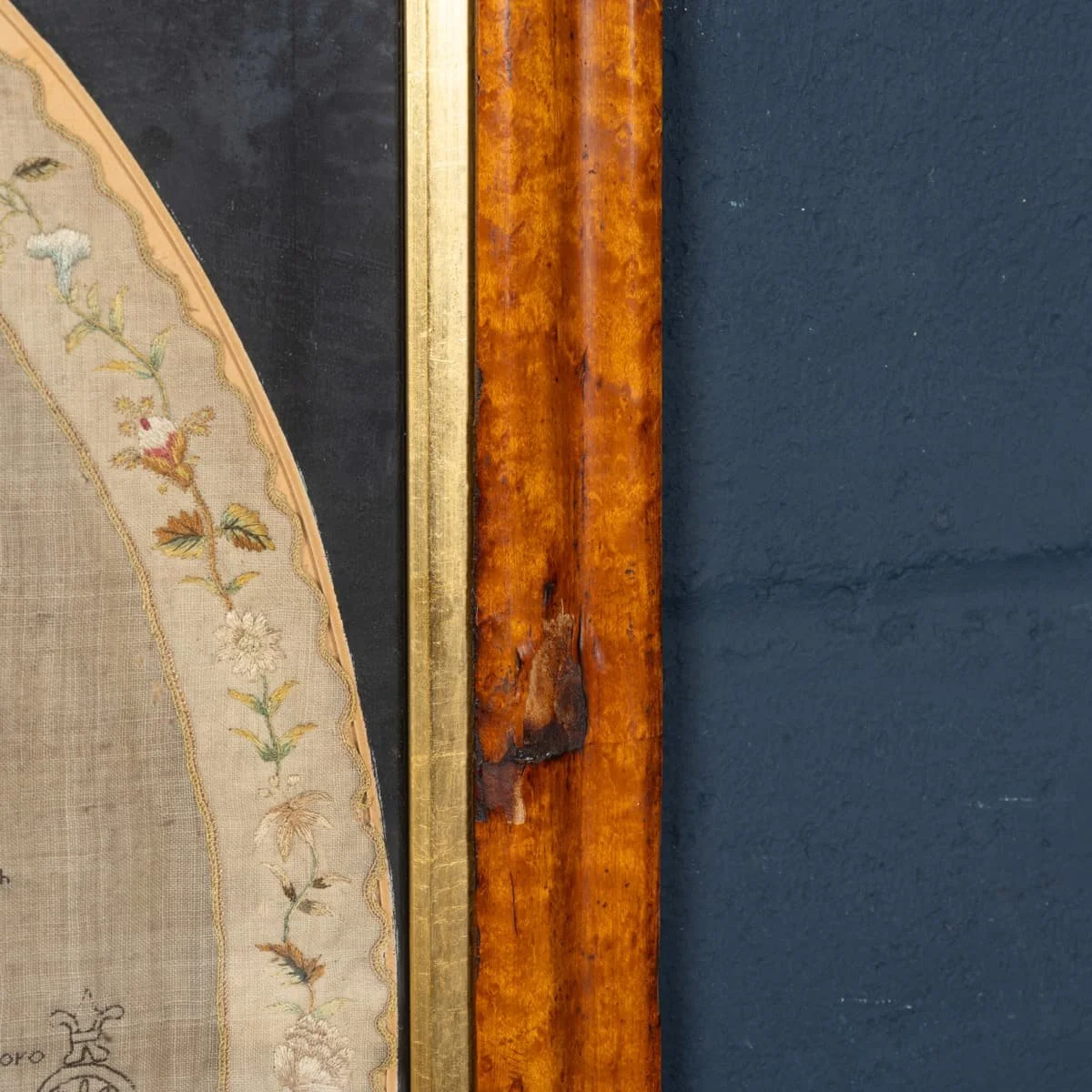 Image 14 of 28
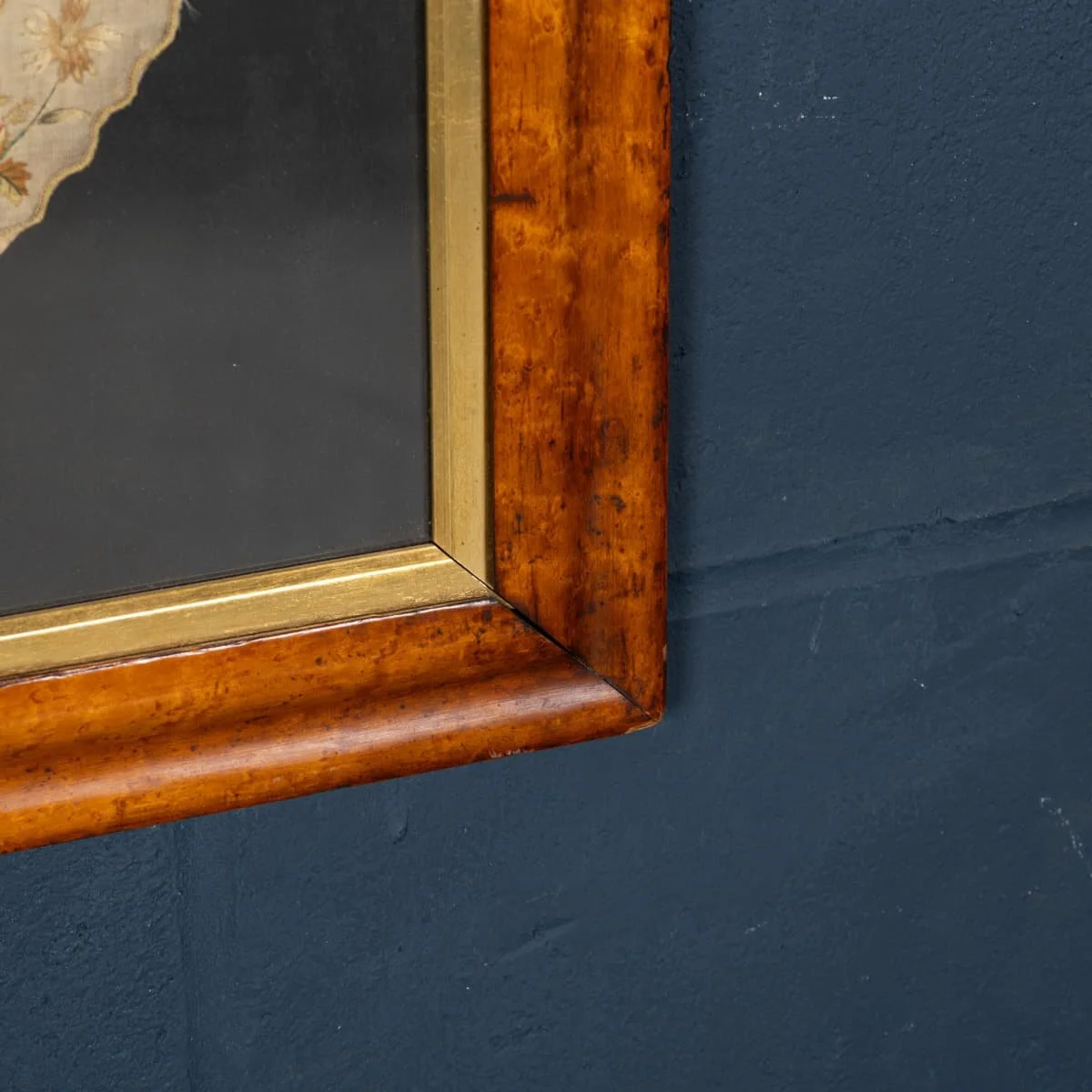 Image 15 of 28
 Image 16 of 28
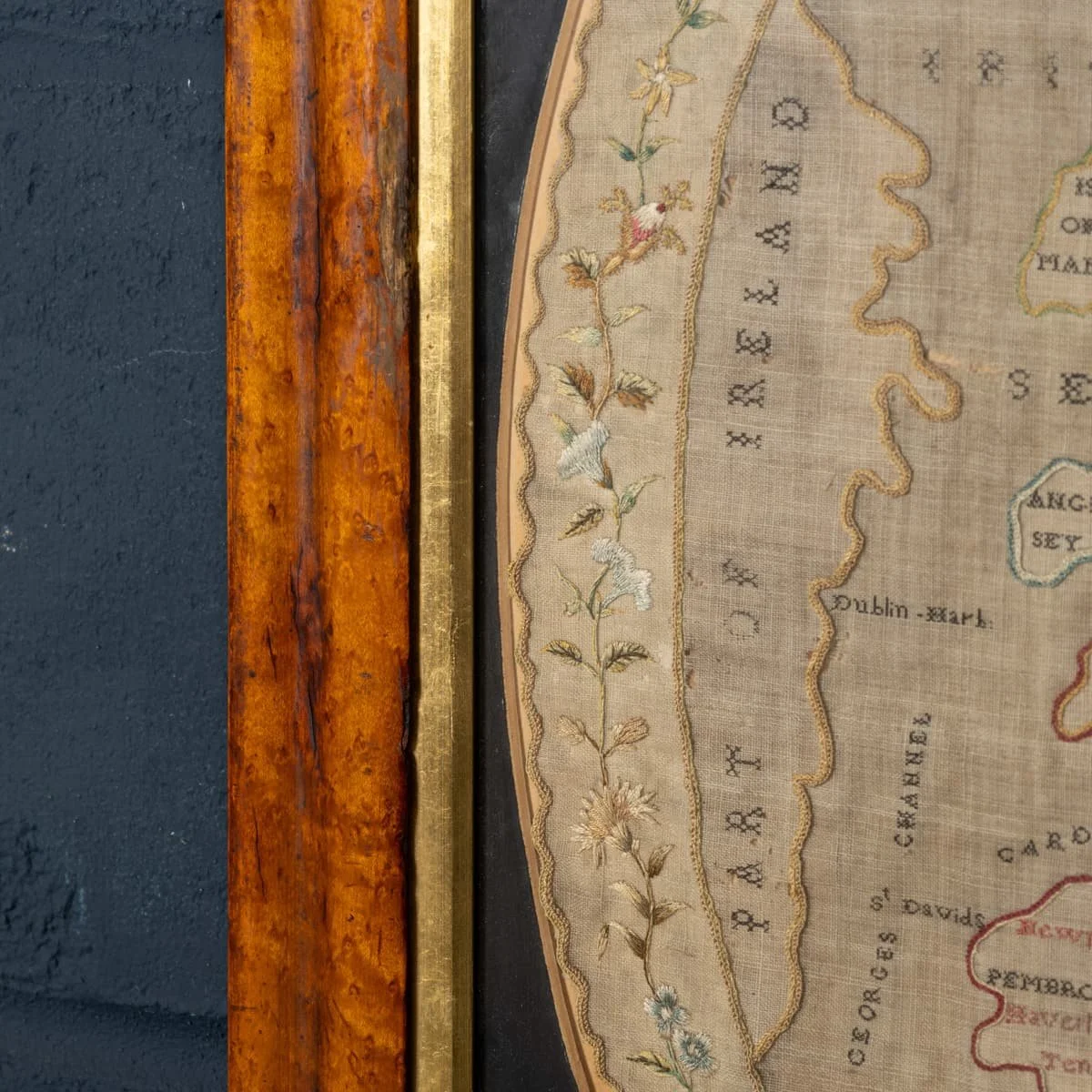 Image 17 of 28
 Image 18 of 28
 Image 19 of 28
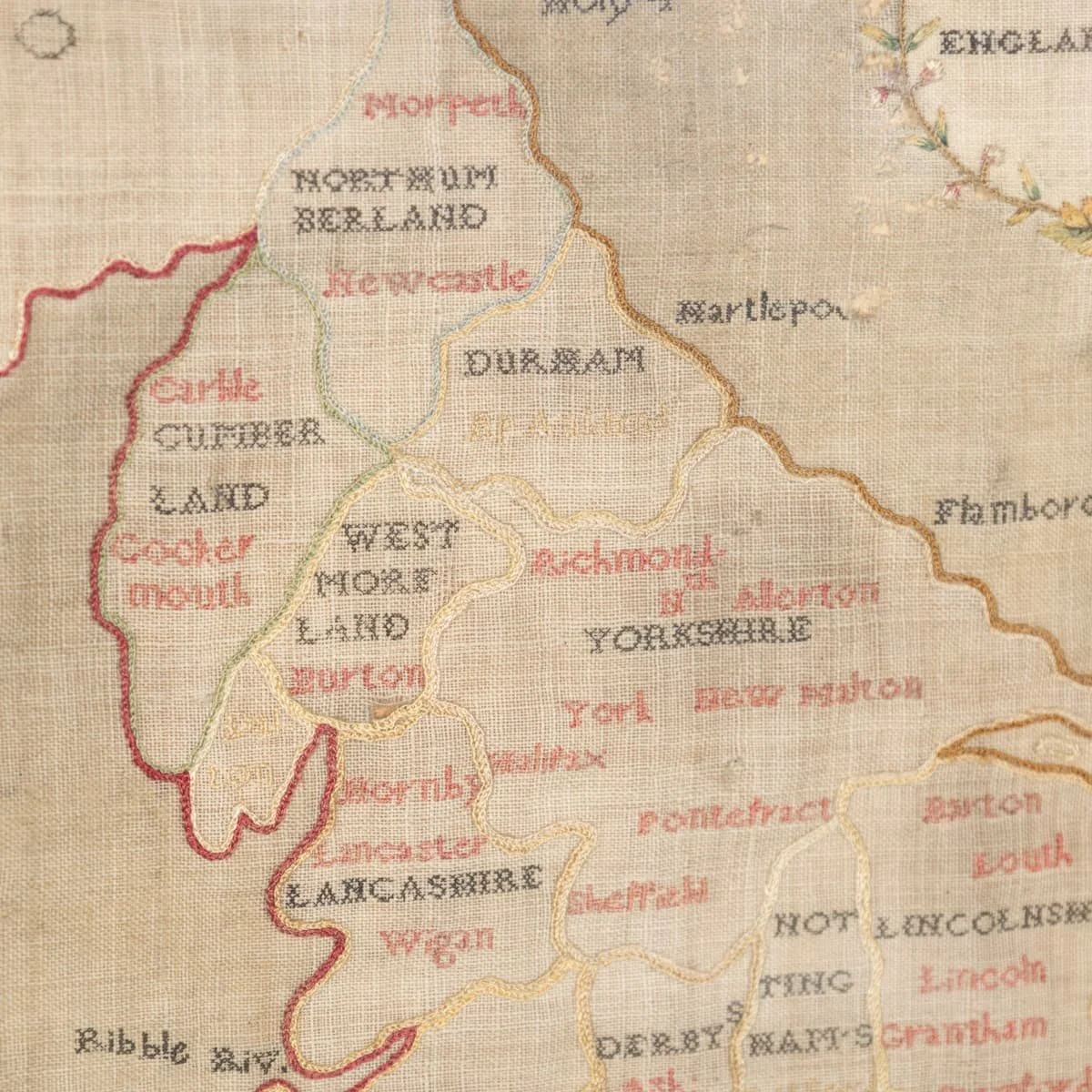 Image 20 of 28
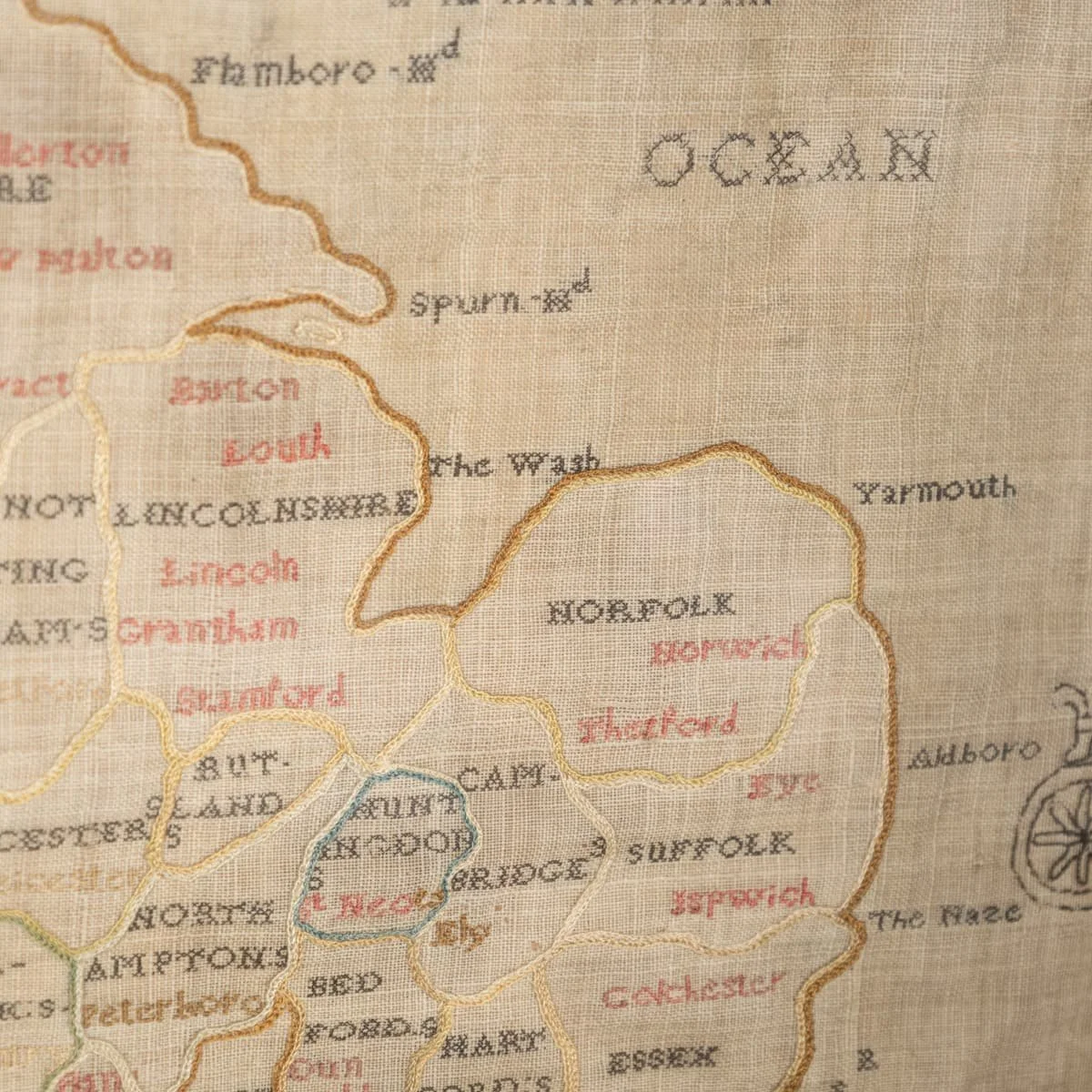 Image 21 of 28
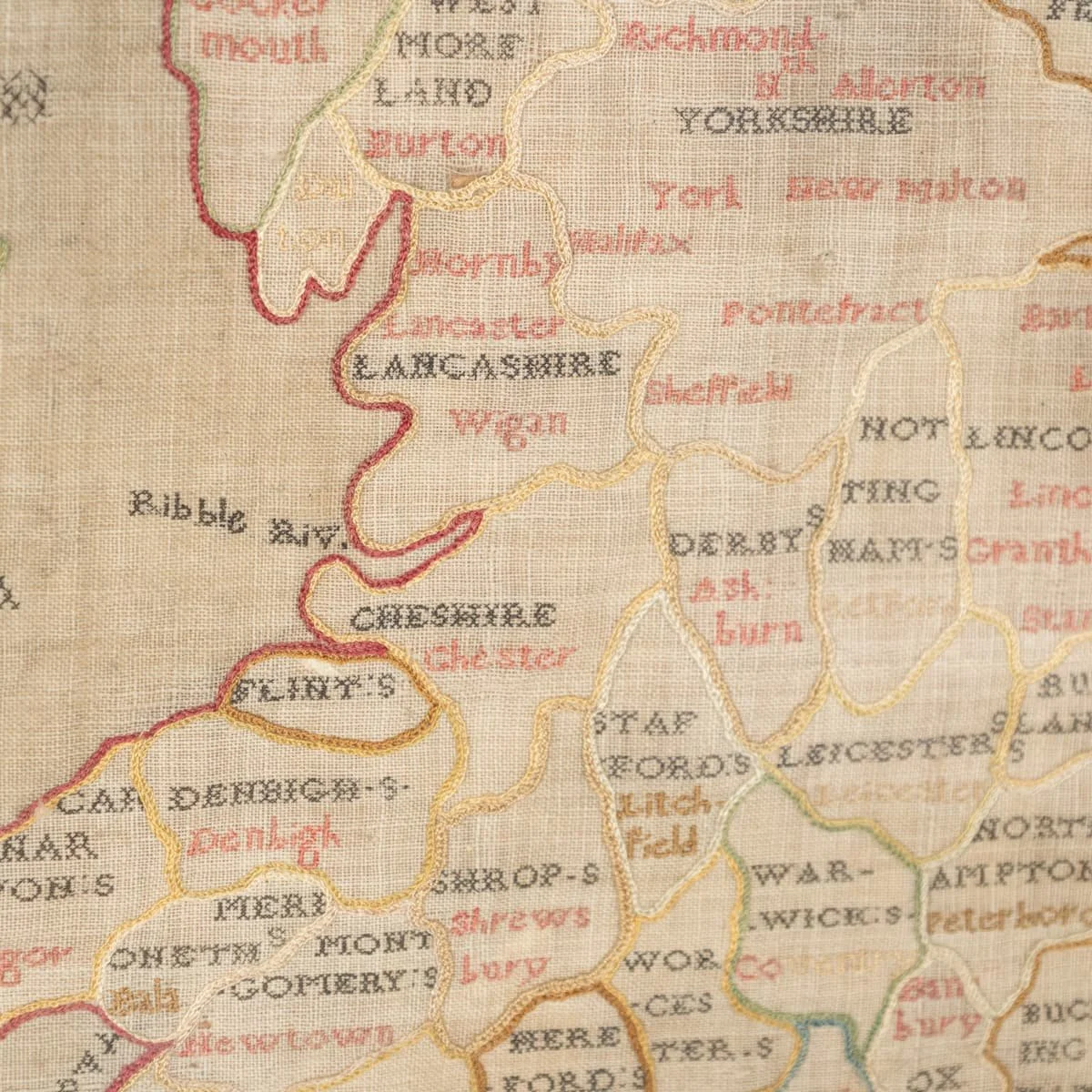 Image 22 of 28
 Image 23 of 28
 Image 24 of 28
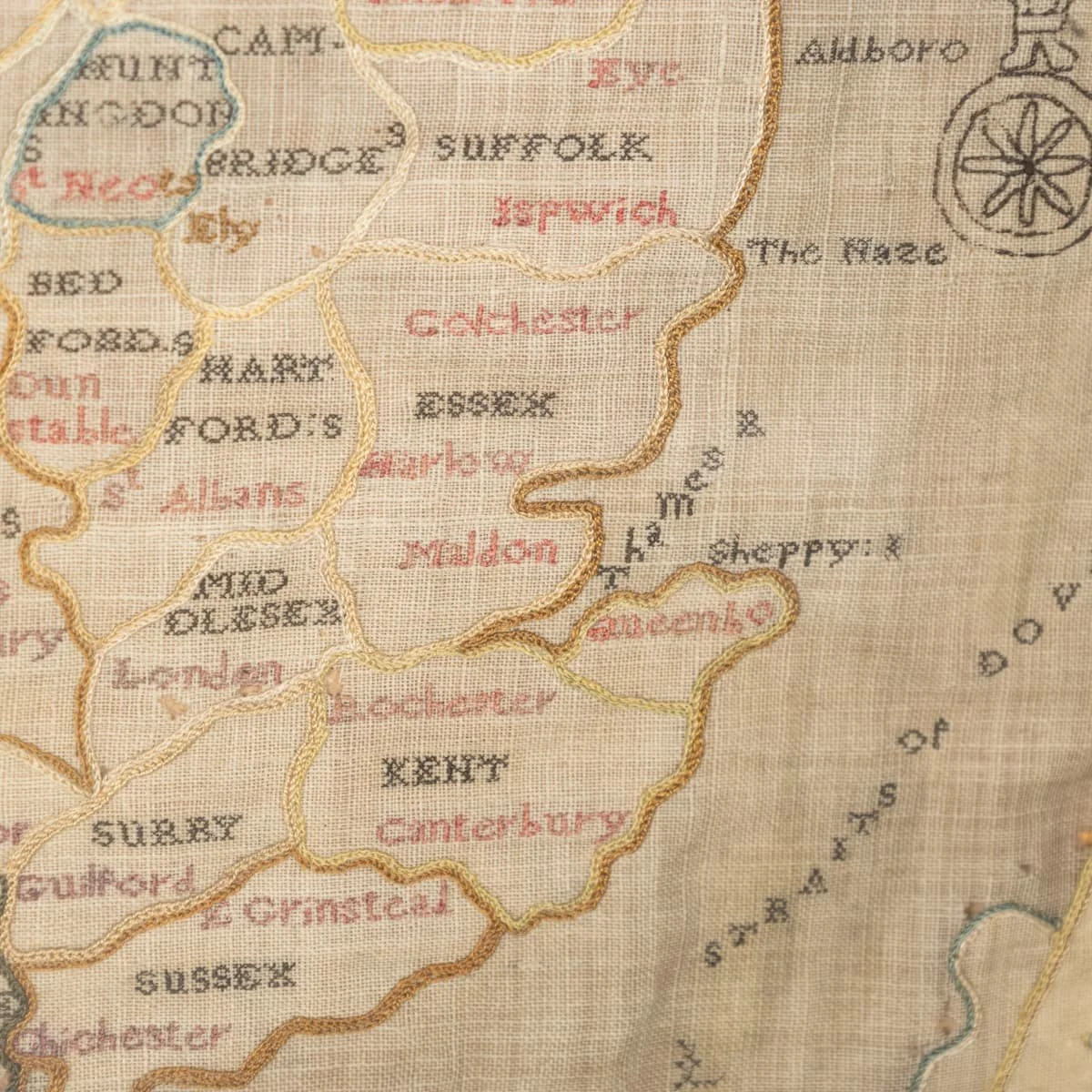 Image 25 of 28
 Image 26 of 28
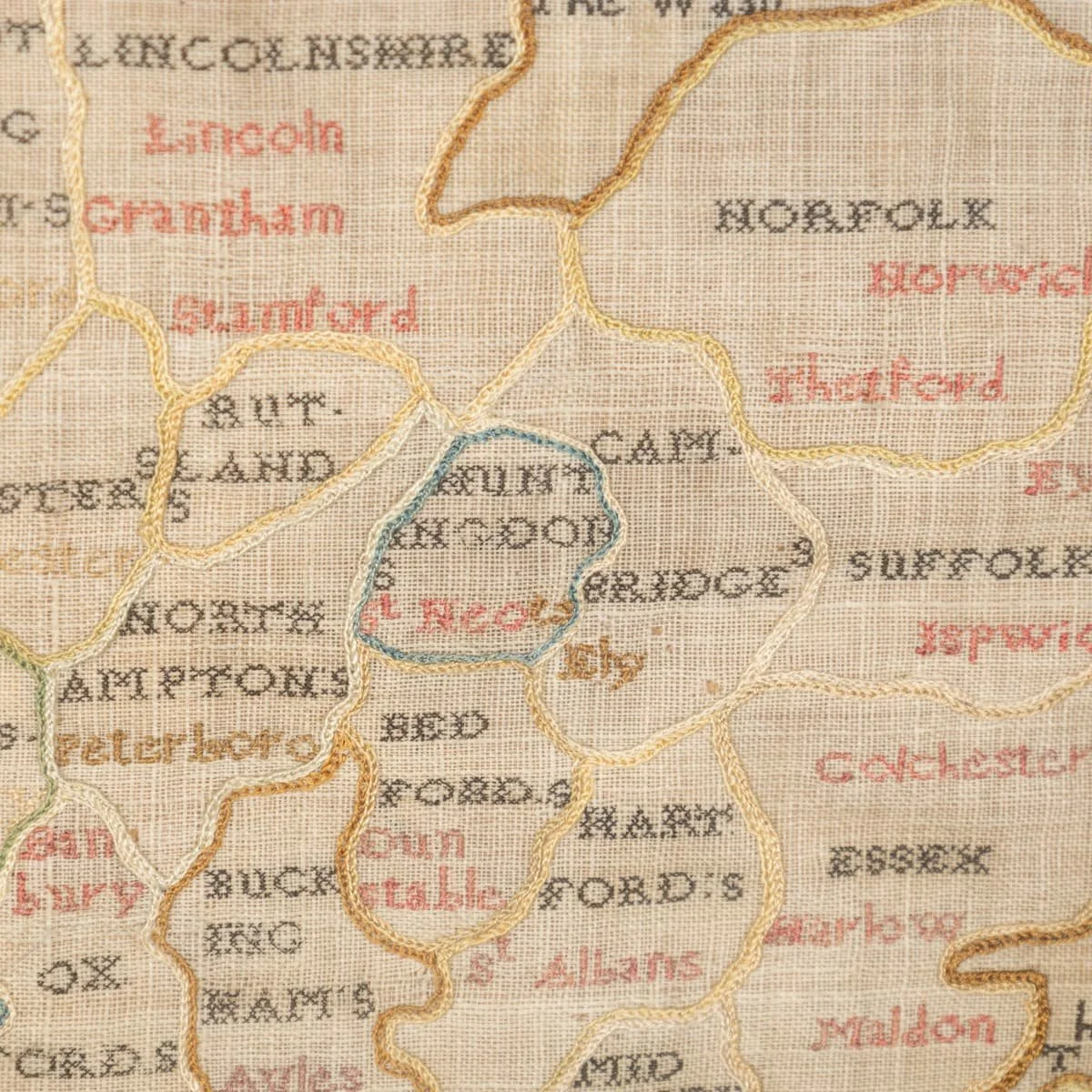 Image 27 of 28
 Image 28 of 28