

Maralunga: The Sofa That Learned to Lean Back
Fifty years on, the most quietly radical thing about Vico Magistretti's Maralunga is still the noise it doesn't make. Push the headrest up, pull it down, and a hidden mechanism inside the cushion does the rest; no levers, no clicks, no visible hardware. Just a sofa that knows when to sit formally and when to sprawl. Designed in 1973 for the Italian manufacturer Cassina and awarded the Compasso d'Oro in 1979, the Maralunga remains one of the most studied pieces of postwar design.

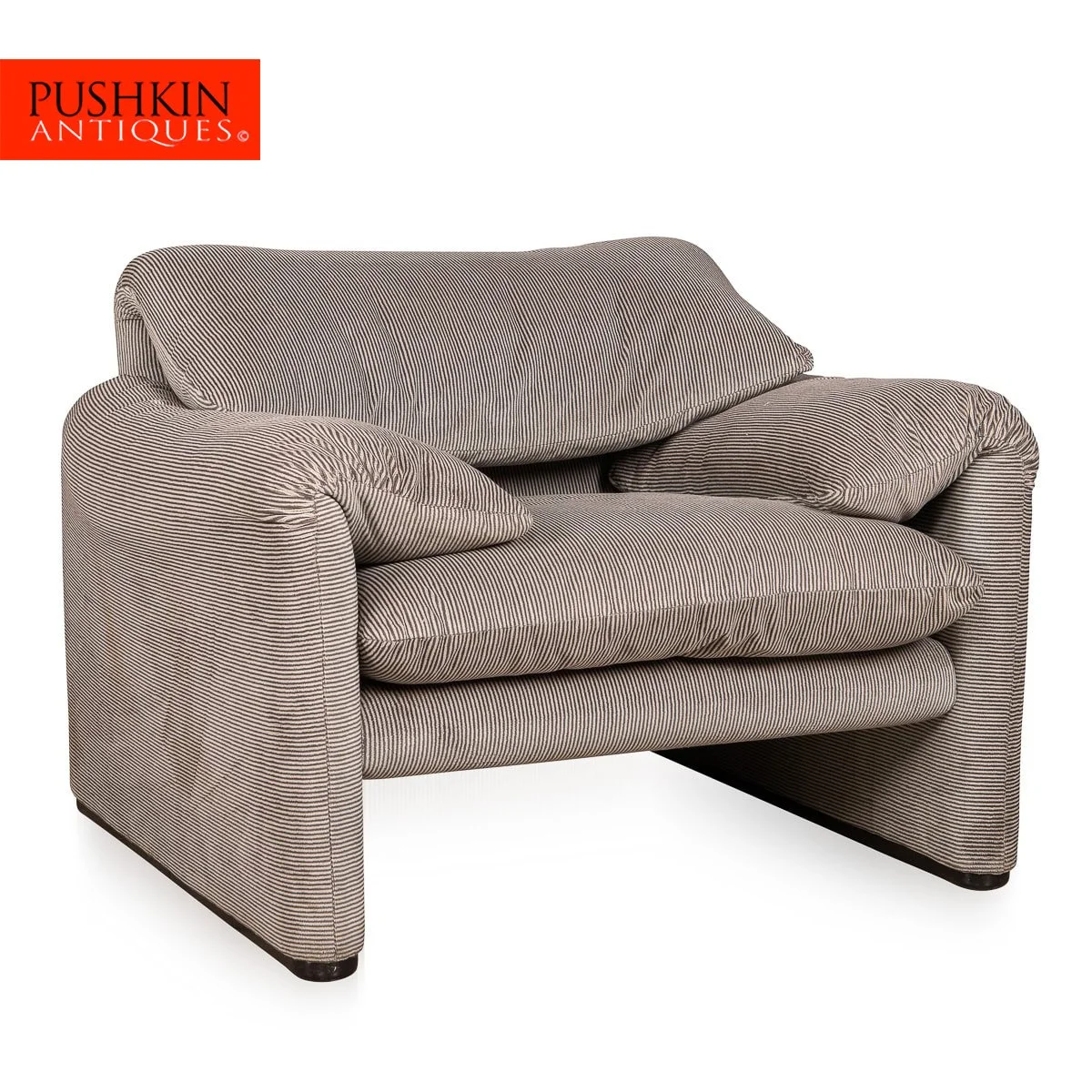
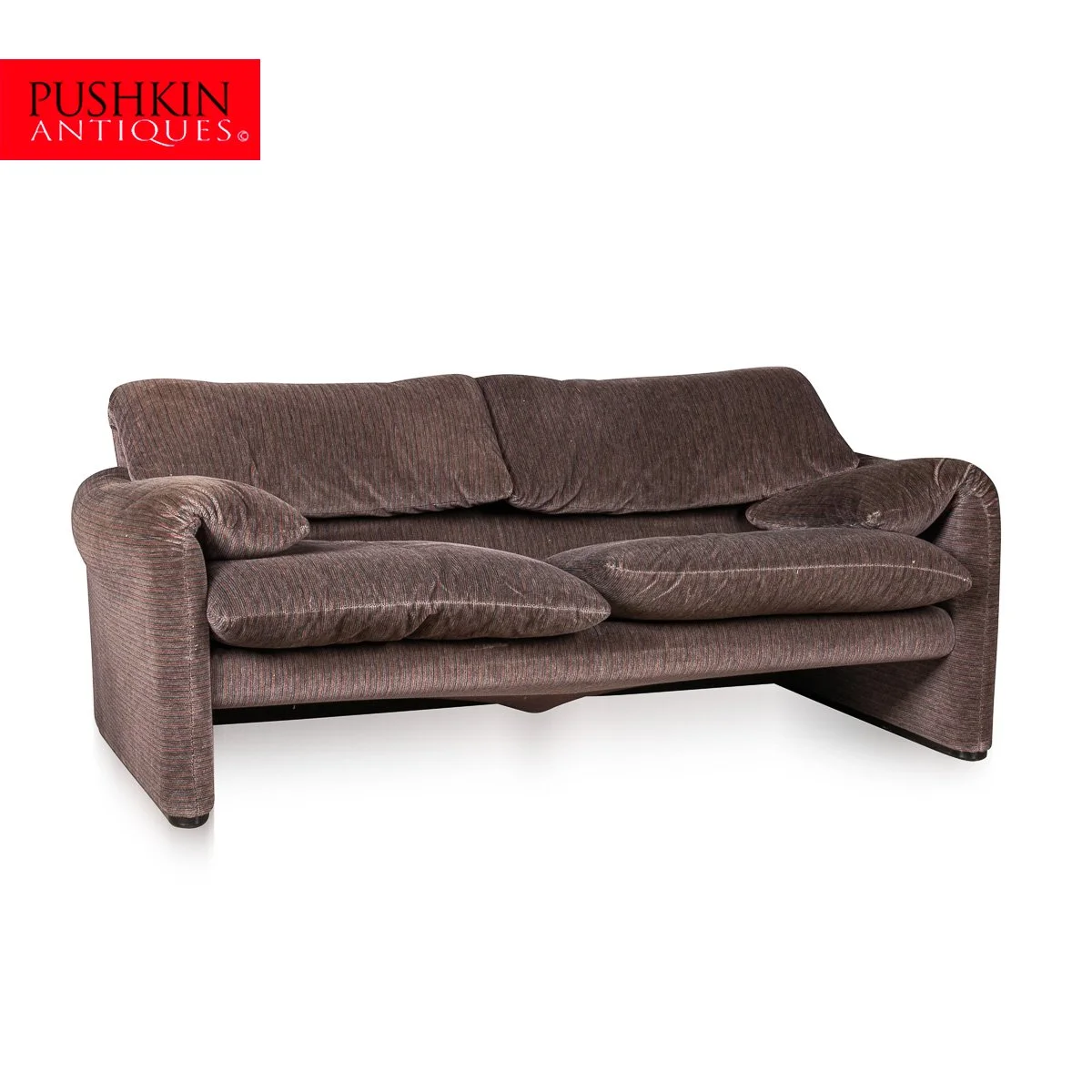
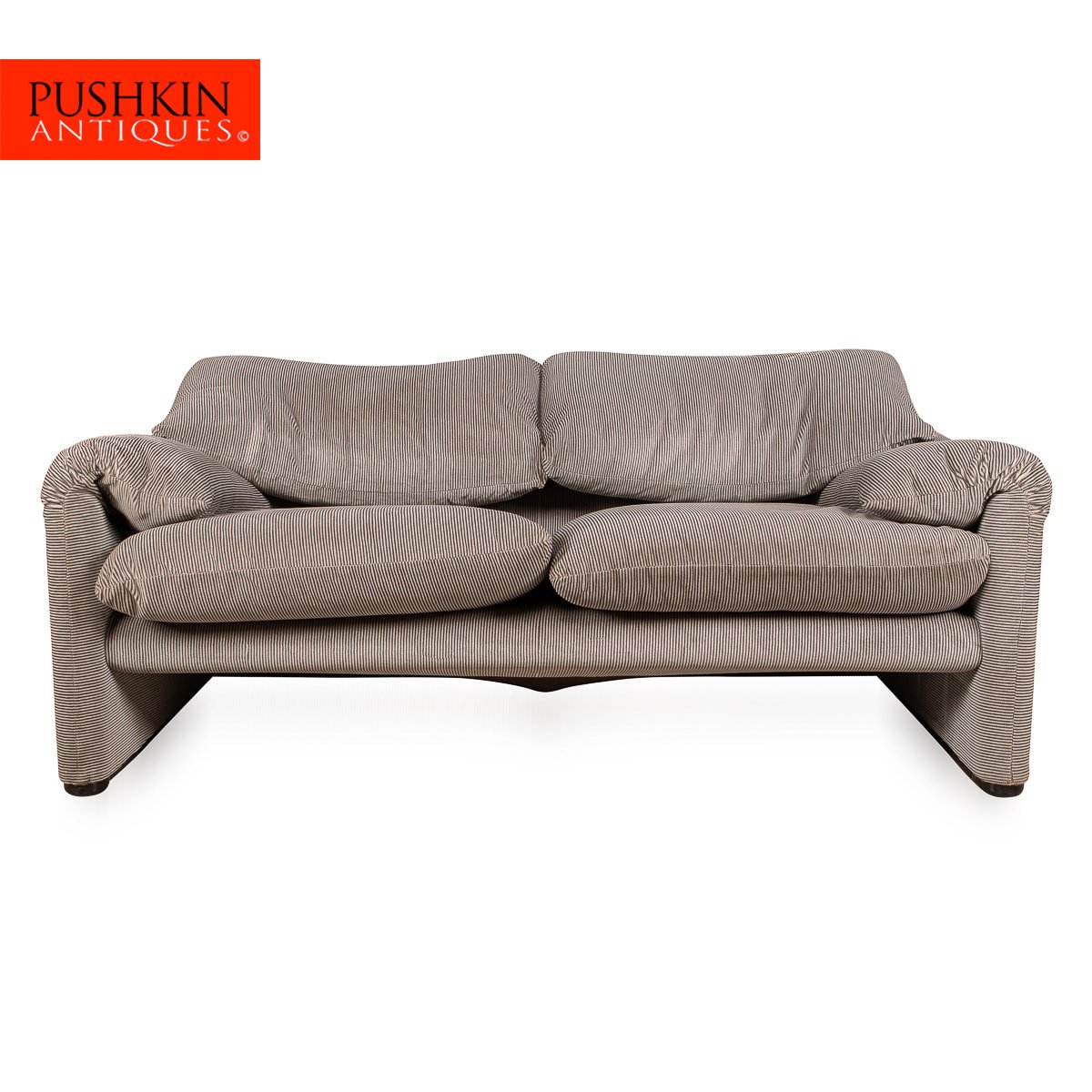
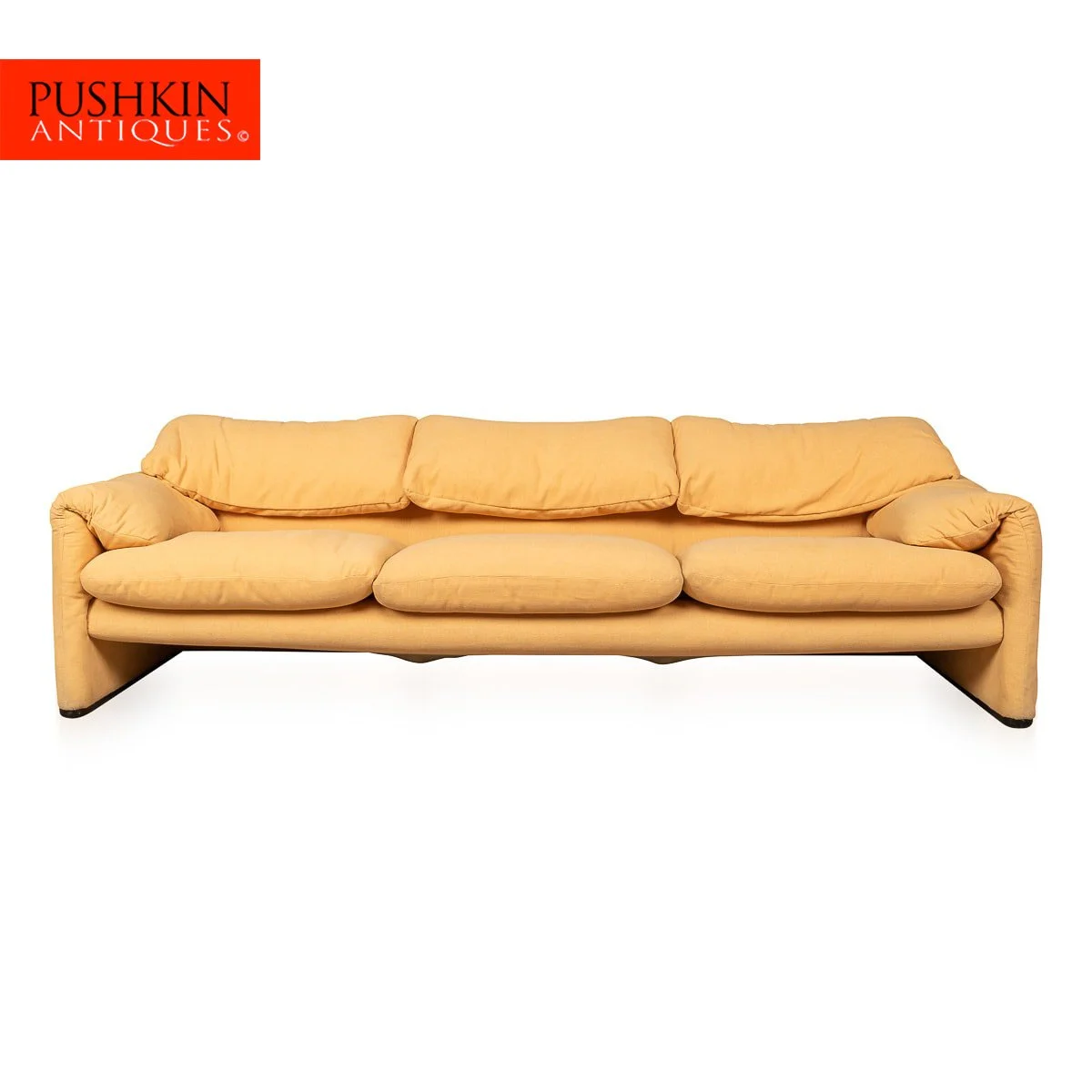
An iconic Italian Maralunga two-seat sofa designed by Vico Magistretti for Cassina, dating from the late 20th century. First introduced in 1973, the Maralunga has become one of the most celebrated sofa designs of the post-war period, admired for its exceptional comfort and understated sculptural form.
Upholstered in supple taupe leather, the sofa features the model's signature oversized loose cushions, generously padded arms, and softly rounded frame. The deep seat and enveloping proportions offer outstanding comfort, while the restrained design allows it to complement both contemporary and mid-century inspired interiors. Retaining its original Cassina manufacturer's label, the sofa is a fine example of the quality and craftsmanship associated with the renowned Italian maker.
Presented in a versatile neutral tone, the Maralunga balances visual softness with architectural simplicity, making it equally suited to domestic and commercial settings. Whether used as a statement piece or paired with matching seating, it remains one of the enduring classics of Italian modern design.
Reference Number: B12375

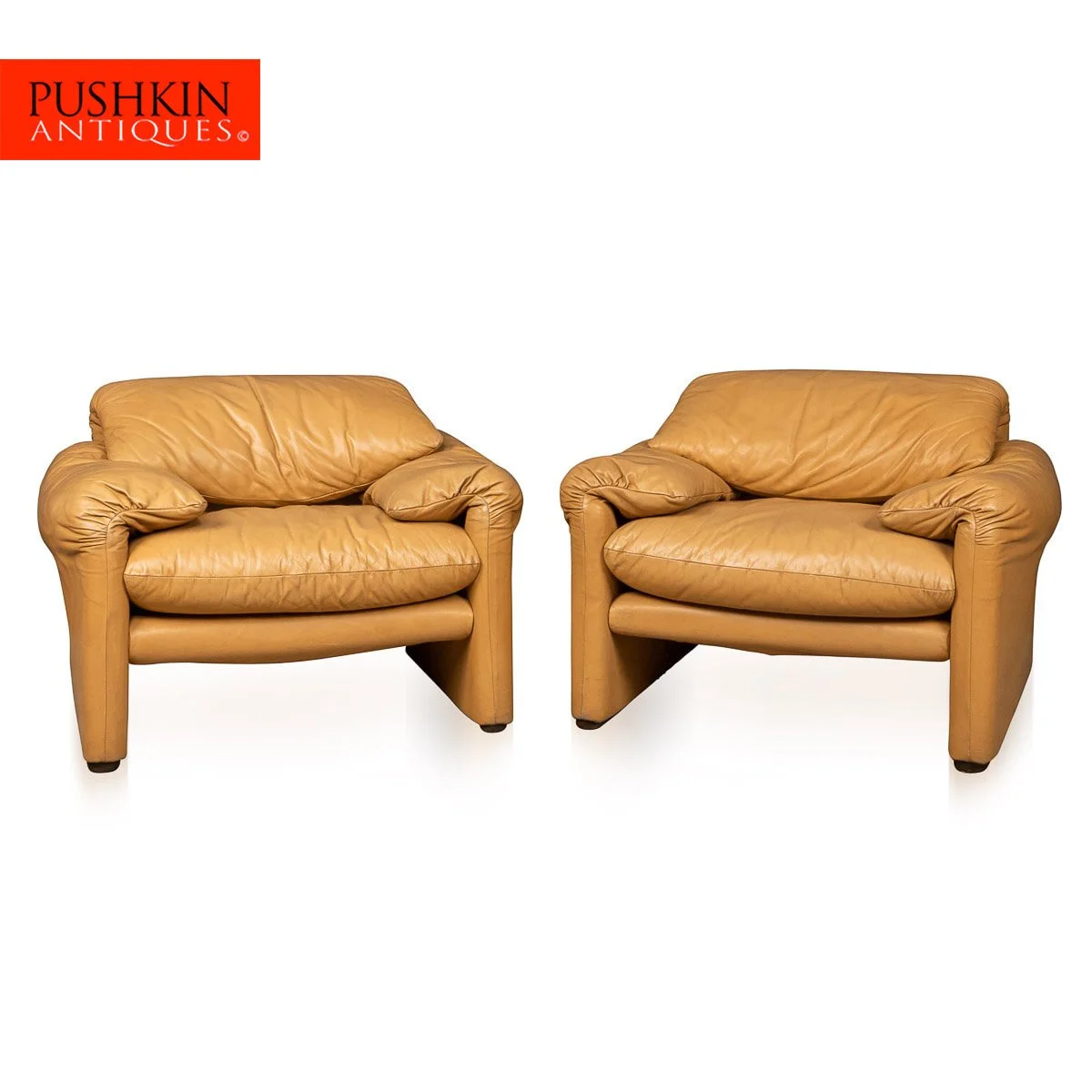
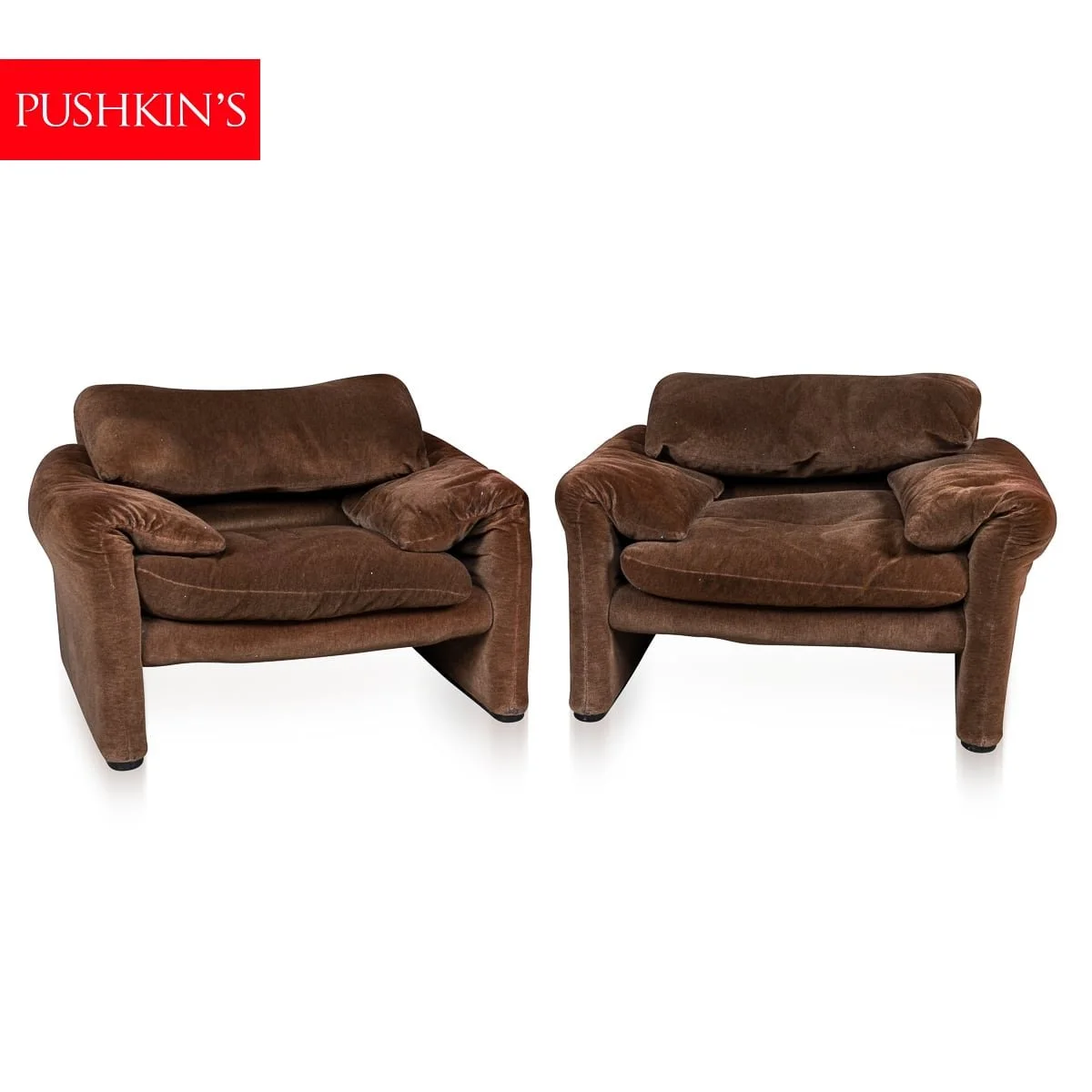
An iconic Italian Maralunga lounge suite by Vico Magistretti for Cassina, dating from the late 20th century. Comprising a matched pair of lounge chairs and a coordinating ottoman, this celebrated design exemplifies the soft, sculptural forms and exceptional comfort that have made the Maralunga one of the defining seating designs of the modern era.
Upholstered in supple taupe leather, each chair features the model's distinctive oversized cushions, generously padded arms, and rounded, architectural frame. Designed with relaxation in mind, the deep seat cushions and enveloping proportions provide outstanding comfort, while the matching ottoman completes the suite as a versatile footstool or occasional seat.
Retaining the original Cassina manufacturer's label, the suite showcases the enduring quality and craftsmanship for which the Italian maker is renowned. The understated palette and timeless silhouette allow it to complement both contemporary and mid-century inspired interiors.
Reference Number: B12376
The genius of the Maralunga is in plain sight, which is exactly where Magistretti wanted it. The backrest and headrest are adjustable: drop them low and the sofa reads as a clean, conversational two- or three-seater, ready for guests; raise them and the same piece becomes a deep, enveloping lounge for reading or dozing. The mechanism that makes this possible is a bicycle chain, sewn into the foam of the cushion and patented by Cassina.
It is the kind of idea that sounds obvious only after someone else has had it. Before the Maralunga, an adjustable headrest was an accessory; a bolt on cushion, a separate pillow. Magistretti made it structural, the defining gesture of the whole piece, and then hid the engineering inside the softness so the silhouette stayed unbroken.
Magistretti himself framed the project in deliberately domestic terms. "With Maralunga I wanted to design an object that exemplified family oriented interior design," he said. "A warm, relaxing, cozy place, where you feel at ease and rediscover the satisfying, protective embrace of old-fashioned reading chairs placed near a fireplace or a window."



Vico Magistretti was born in Milan on 6 October 1920; the son of an architect, and a Milanese architect himself, graduating from the Politecnico di Milano in 1945. His early career ran through urban design and architecture. In the 1950s his focus shifted toward mass produced furniture and lighting, and it is here that his reputation was made. He started designing for Cassina in 1960, and his signature appears on a long list of the company's products. He taught for twenty years at the Royal College of Art in London, was appointed a Royal Designer for Industry, and became an Honorary Fellow of the RCA in 1983. His work is held in the permanent collections of major design museums, including MoMA in New York. He died in Milan on 19 September 2006.

Cassina was founded in 1927 by brothers Cesare and Umberto Cassina in Meda, a small town north of Milan that has been one of Italy's furniture making heartlands for over a century. The company began as a small craft workshop and grew into one of the defining names of made in Italy design, specialising in upholstered furniture built with a level of artisan handwork that its industrial scale never quite displaced.
What set Cassina apart was its early decision to work with leading architects and designers rather than simply manufacture to spec; a model that turned the factory into a kind of co-author. The Maralunga is a textbook example: the bicycle chain mechanism was Magistretti's idea, but it was Cassina that patented it, engineered it into the cushion, and has continued to refine it for half a century. The company's own description of the sofa; "the encapsulation of design brilliance, business insight and made-in-Italy artisan craftsmanship"; is corporate language, but it accurately describes a piece that could not exist without all three.
The Compasso d'Oro it won in 1979 was, as one retailer puts it, given "not for its moment but for the endurance of its idea." That is the right framing. Furniture fashions have cycled through brutalist, postmodern, minimal and maximal in the half-century since the Maralunga appeared, and the sofa has outlasted all of them; quietly, the way a bicycle chain hidden inside a cushion does its work. You push the headrest. It stays. That is the whole invention, and it is still enough.