

The popularity of nautical novelty silver was partly driven by Britain's naval traditions, the growth of recreational yachting and a taste for imaginative craftsmanship. Silversmiths transformed familiar maritime equipment into objects that were both useful and entertaining. A lighthouse that lights a cigar, a ship's wheel that cuts one, and miniature navigation lanterns made entirely from silver. These unusual objects reveal a fascinating side of British silversmithing, when the romance of the sea met the Victorian, Edwardian and 20th Century appetite for novelty.
During the late 19th and early 20th centuries, Britain's maritime identity extended well beyond its naval and merchant fleets. Sailing was also a fashionable pursuit among the wealthy, with yacht clubs and regattas becoming important fixtures of high society. Cowes Week, established in 1826, attracted royalty and prominent yachtsmen, helping to make nautical imagery a symbol of leisure, prestige and adventure. At the same time, Victorian silversmiths were embracing novelty silver: everyday objects cleverly disguised as animals, sporting equipment, miniature buildings and other unexpected forms. Maritime subjects were particularly well suited to this fashion, turning familiar objects from life at sea into luxurious accessories for the dining table, smoking room or gentleman's desk.
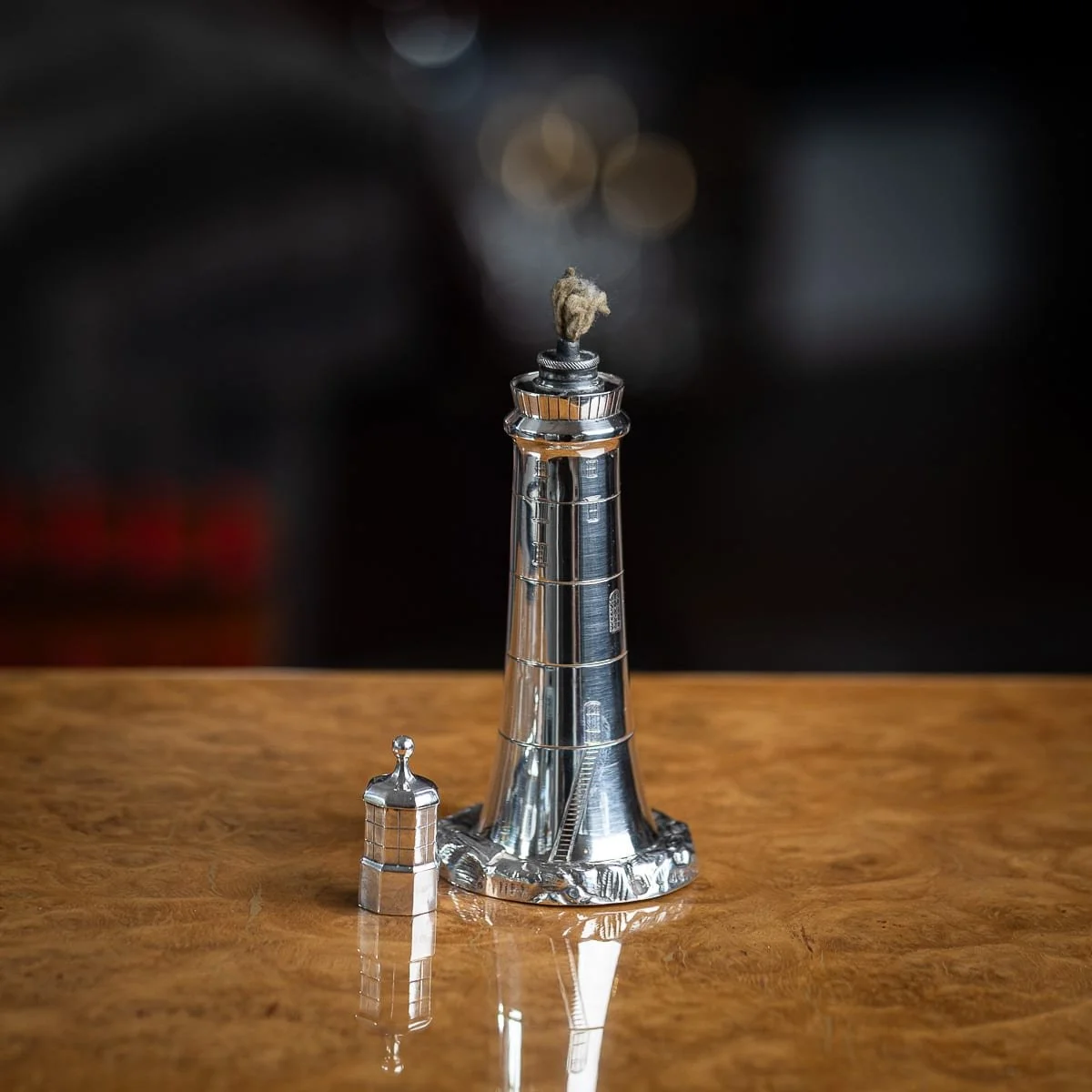
One of the most imaginative examples is an 1894 solid silver lighthouse table lighter, made by Deakin & Francis in Birmingham. Complete with engraved windows, a rocky base, a wick burner and removable snuffer, the miniature lighthouse transforms a symbol of maritime safety into an elegant smoking accessory.
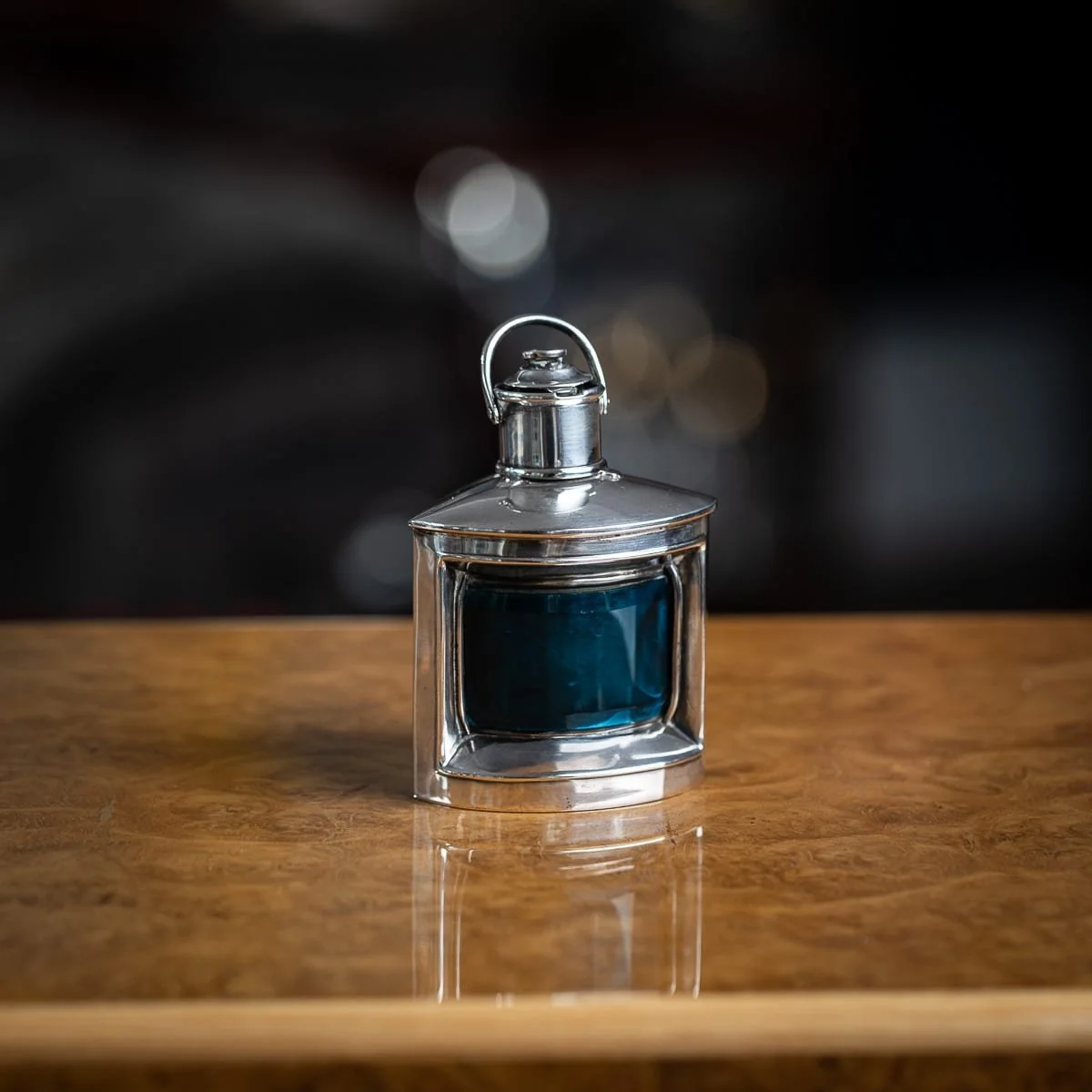
The theme continued into the 20th century. A 1920 silver ship's lantern table lighter, made by Lawrence Emanuel, replicates the curved body of a ship's navigation light, with a deep blue glass lens, carrying handle and concealed lighter mechanism. Equally inventive is a pair of silver navigation light boxes, made by Adie Brothers and hallmarked in 1950 and 1953. Their red and green glass panels represent a ship's port and starboard lights, which allow vessels to determine one another's direction at night. Here, those essential maritime signals become miniature silver containers with hinged lids.
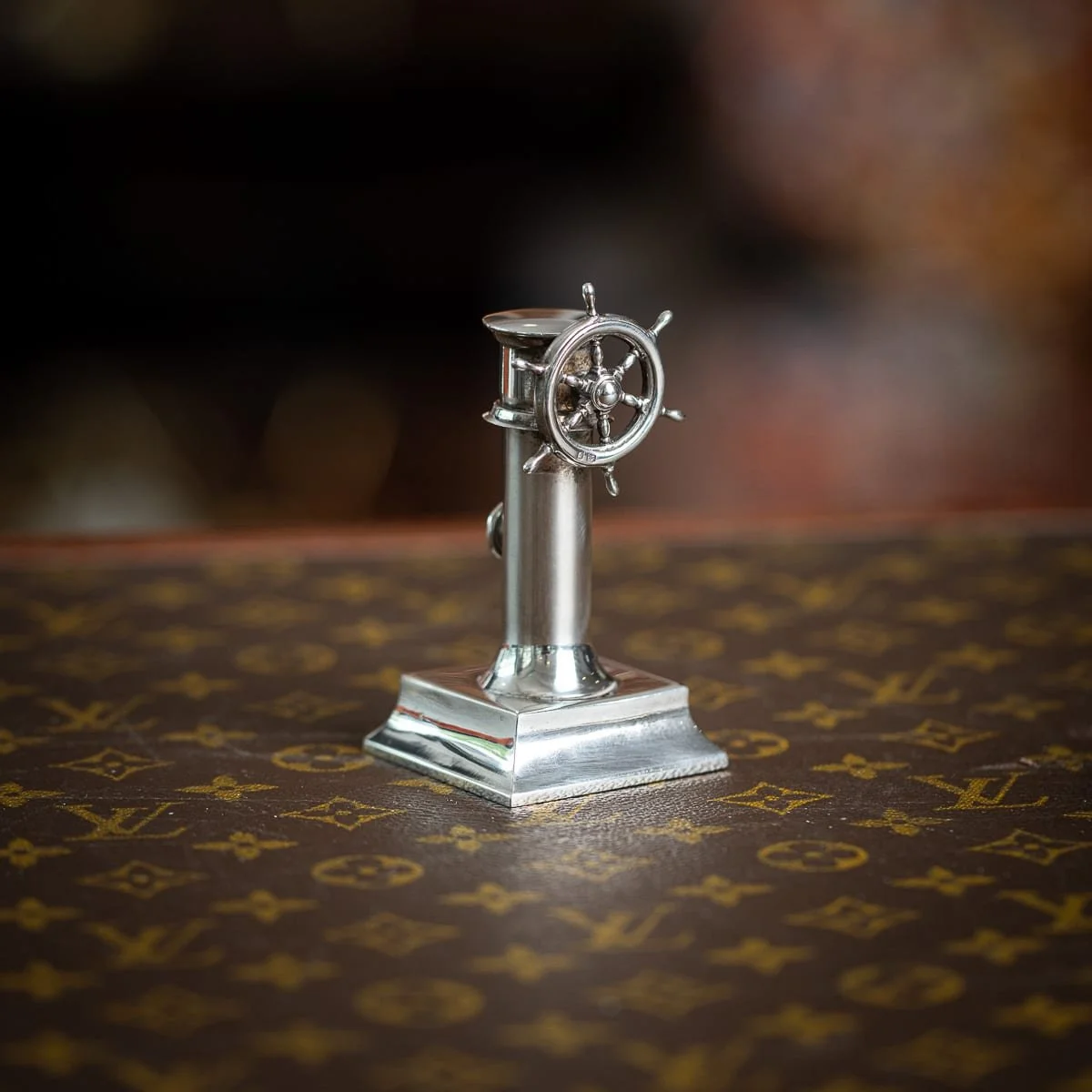
VINTAGE 20thC ENGLISH SOLID SILVER 'CAPTAINS WHEEL' CIGAR CUTTER c.1929
Nautical novelty silver was not confined to lanterns. A particularly ingenious 1929 silver captain's wheel cigar cutter, made by Herbert Simpson Benzie, incorporates a rotating ship's wheel into its design. Pressing the wheel down operates the cigar cutter, while a sliding plate beneath the base collects the cuttings. The maritime connection is especially appropriate: Benzie was based on the Isle of Wight, home to Cowes and its celebrated sailing traditions.
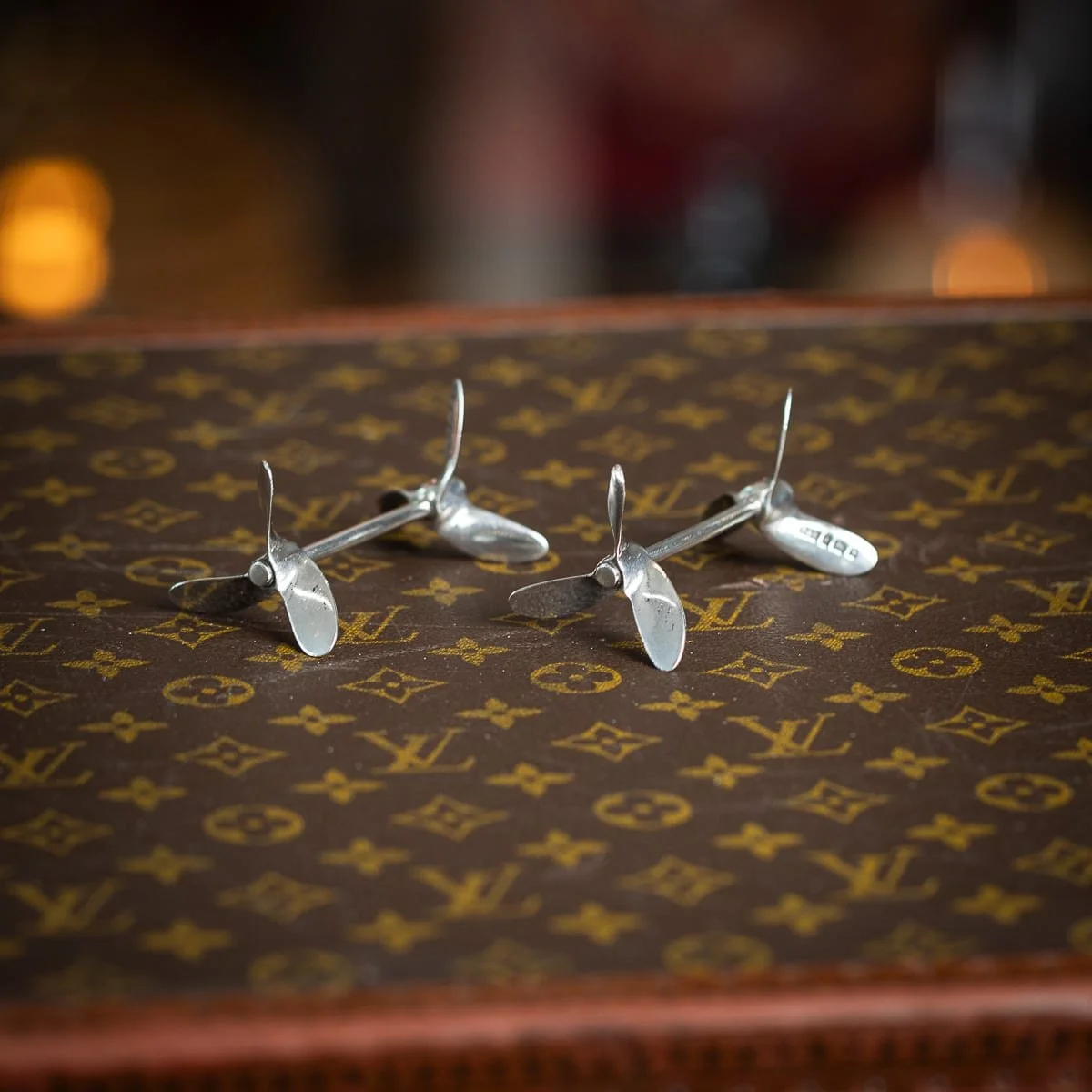
ANTIQUE 20thC ENGLISH SOLID SILVER PAIR OF NAUTICAL PROPELLER KNIFE RESTS c.1901
Even the dining table received a nautical transformation. A pair of 1901 solid silver propeller knife rests, by Barnett & Scott, uses finely cast three-bladed marine propellers to support table knives. Such pieces demonstrate the appeal of antique nautical silverware: useful objects designed to surprise and entertain guests.
Not every maritime silver object was created simply for amusement. Some preserved memories of actual voyages. A remarkable 1904 silver and enamel cigarette case, made by Walker & Hall in Sheffield, bears the inscription "Souvenir of a voyage by Elder Dempster's R.M.S. Jebba", accompanied by a hand-enamelled maritime flag. What makes this seemingly ordinary souvenir extraordinary is the ship's subsequent fate. On 18 March 1907, the Jebba ran aground in thick fog near Bolt Tail, Devon. All 155 passengers and crew were rescued using a breeches buoy system, along with a chimpanzee and three monkeys. The vessel broke up later that year. A silver cigarette case, originally intended as a personal memento, had become a tangible connection to a dramatic episode in maritime history.