

Hung Chong & Co.: The Story of One of China’s Most Prolific Export Silversmiths
Also known as Hung Cheong / Hoong Cheong
Gold and Silversmiths, Nanking Road, Shanghai
Traditionally dated circa 1830–1925
Hung Chong & Co. was one of the best known Chinese export silver firms associated with late 19th Century and 20th Century Shanghai. The company operated as a silversmith, manufacturer, retailer and luxury goods merchant, supplying finely worked silver and decorative objects to Chinese customers, foreign residents, travellers, diplomats and the international export market.
The firm's name appears in several English language forms, including Hung Chong, Hung Cheong, Hung-cheong and Hoong Cheong, reflecting the varying systems used to romanise Chinese names at the time. Surviving pieces are also associated with the Chinese trade name 鴻昌 / 鸿昌.
Although Hung Chong is traditionally dated circa 1830–1925, the firm's precise chronology is uncertain. A contemporary account published in 1908 states that the Shanghai business was established in 1892 by Fok Ying Chew, yet surviving silver and later specialist research suggest that the Hung Chong name may have been associated with silver manufacture or trade considerably earlier. Shanghai directories also show that the company remained active well beyond the commonly quoted closing date of 1925.
Hung Chong in Shanghai
Hung Chong developed during Shanghai's rapid growth as an international trading centre following the Treaty of Nanking in 1842. As foreign trade increased, Shanghai became an important centre for Chinese export silver. The firm's best known premises were at 11B Nanking Road, one of Shanghai's principal commercial streets. Nanking Road became famous for its department stores, jewellery businesses and luxury goods merchants, making it an ideal location for a company such as Hung Chong. Period sources describe the shop as an important destination for visitors seeking gold and silver work, blackwood furniture, embroideries, silk piece goods, ivory carvings, lacquer ware, porcelain and other Chinese decorative objects.
The company appears to have occupied different addresses on Nanking Road over time. Later directories list Hung Chong at 132 Nanking Road and, by 1939, at 238 Nanking Road, suggesting relocation or changes in Shanghai's street numbering.
One of the most valuable contemporary descriptions of Hung Chong & Co. appeared in the 1908 publication Twentieth Century Impressions of Hongkong, Shanghai, and Other Treaty Ports of China.
The account described Hung Chong as one of Shanghai's leading gold and silversmiths and stated:
“The business was established in 1892 by Mr Fok Ying Chew, who sold it in 1906 to the present proprietor, Mr Sum Luen-sing.”
It also provides an indication of the scale of the company. In 1908, Hung Chong reportedly employed fourteen assistants and forty workmen, demonstrating that this was a substantial commercial and manufacturing enterprise rather than a small individual silversmith's workshop. The size of the workforce also helps explain the considerable variety of Hung Chong silver that survives today.
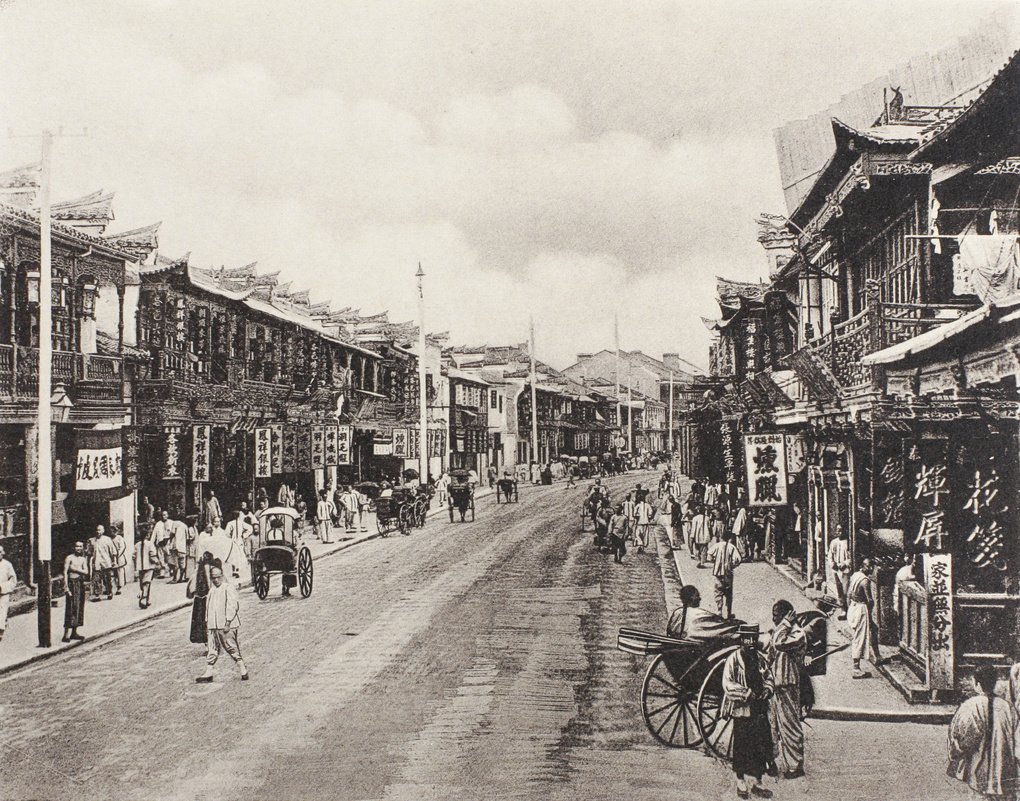
Nanking Road, (Nanjing Dong Lu) Shanghai c.1907
Fok Ying Chew and Sum Luen-sing
According to the 1908 account, Fok Ying Chew established the Shanghai business in 1892. That same year, Sum Luen-sing joined Hung Chong as an assistant. Sum had been born in Macao in 1871, the son of Sum Cheuk Sing. He studied English in Shanghai and initially worked in the shipping industry, first with the “Limpu” Line of steamers and later with the “Kang-yue” Line.
In 1906, after fourteen years with Hung Chong, Sum Luen-sing purchased the business from Fok Ying Chew and became its proprietor. His progression from assistant to owner illustrates the commercial opportunities available in Shanghai's rapidly expanding economy. By 1908, he controlled one of the city's most prominent Chinese luxury-goods businesses.
Although Hung Chong is remembered today primarily for its silver, the company sold a much broader range of luxury goods. Its Nanking Road premises offered gold and silverware, jewellery, blackwood furniture, embroidery, silk, ivory carvings, lacquer ware and porcelain. The business therefore operated more like a high class Chinese luxury emporium than a simple silversmith's shop. Its customers could purchase everyday luxury objects as well as important presentation pieces, wedding gifts, trophies, commemorative silver and elaborate tableware.
Hung Chong silver
Hung Chong is particularly noted for its Chinese export silver, much of which combined Western forms with traditional Chinese decoration.
Surviving examples include; tea and coffee services, trays and salvers, bowls and dishes, goblets and beakers, tankards and ewers, boxes and card cases, jardinières, napkin rings, presentation pieces, and large centrepieces and epergnes. The firm's silver ranges from relatively restrained pieces to highly elaborate works decorated with sculptural dragons, pierced silver work and extensive hand chasing. Common decorative motifs include dragons, flaming pearls, bamboo, chrysanthemums, prunus blossom, birds, flowers, Chinese figures, pavilions, rivers and landscapes. Craftsmen employed techniques including repoussé, chasing, engraving, piercing, casting and applied decoration, producing objects of considerable technical and artistic quality.
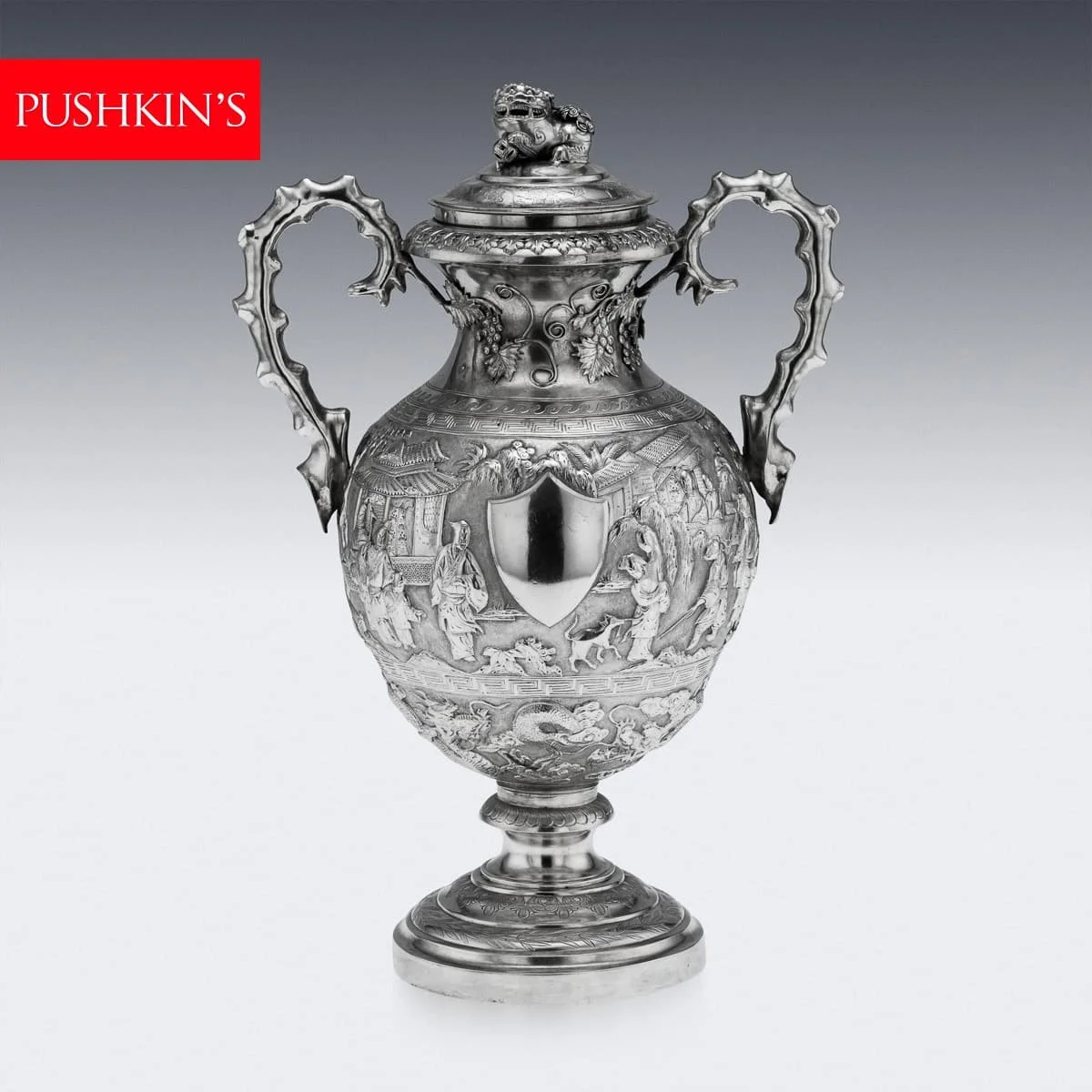


Marks and workshop production
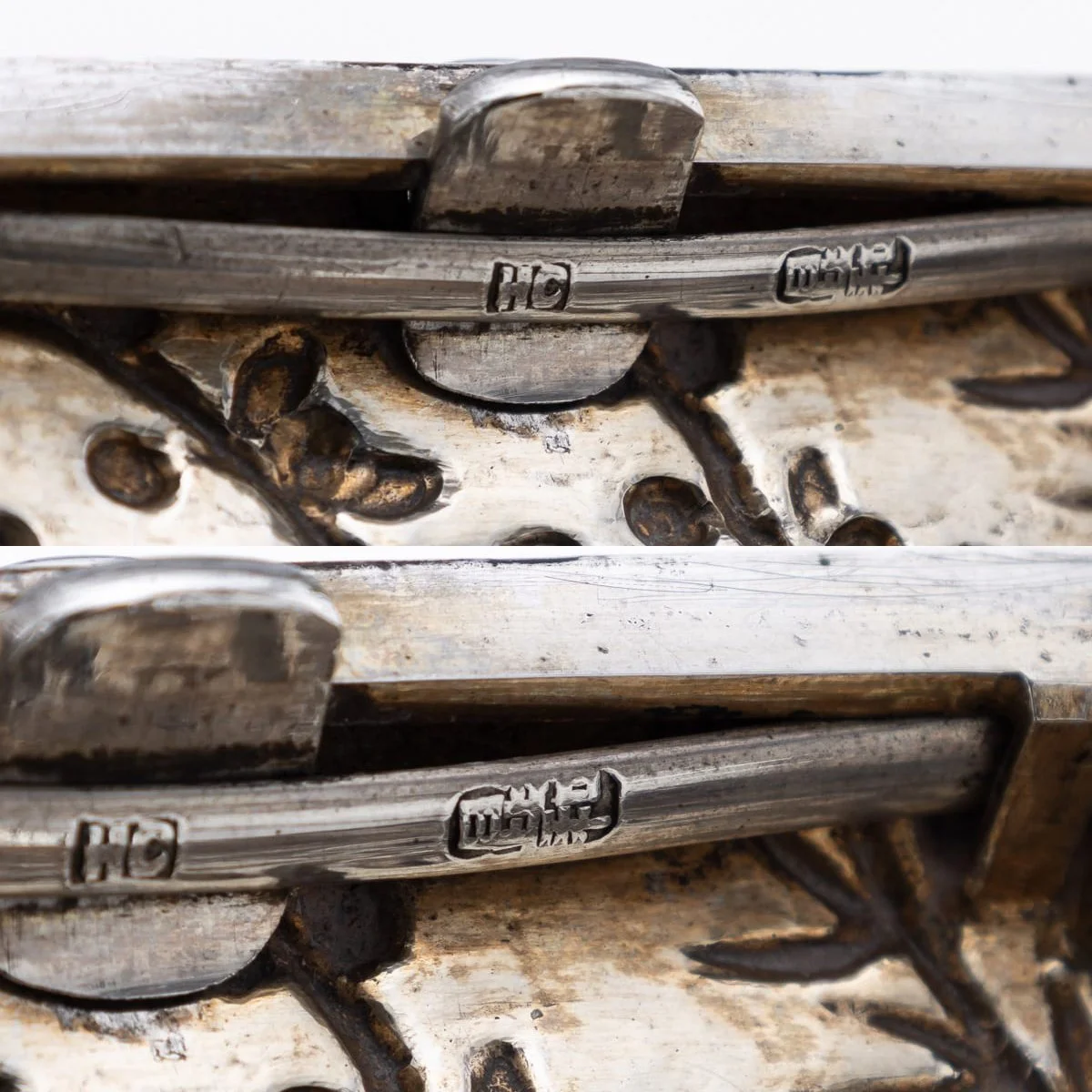
Hung Chong silver may carry marks such as: HC or HUNG CHONG & CO
Chinese characters may also appear alongside the English retailer's mark. Importantly, the Hung Chong mark does not always identify the individual craftsman who physically produced an object. Like many Chinese export silver retailers, Hung Chong appears to have worked with a network of specialist artisans and workshops. Some surviving pieces carry both the Hung Chong retailer's mark and a separate Chinese maker's or artisan's mark. Workshops or craftsmen associated with Hung Chong pieces include names such as Cheung Fat, An Chang, Ren Ji, Lian Xiang Sheng, Hou Xiang and Qi Chang. This suggests that Hung Chong acted as both a manufacturer and retailer, commissioning or coordinating production from skilled craftsmen while selling the finished objects under its own commercial name.


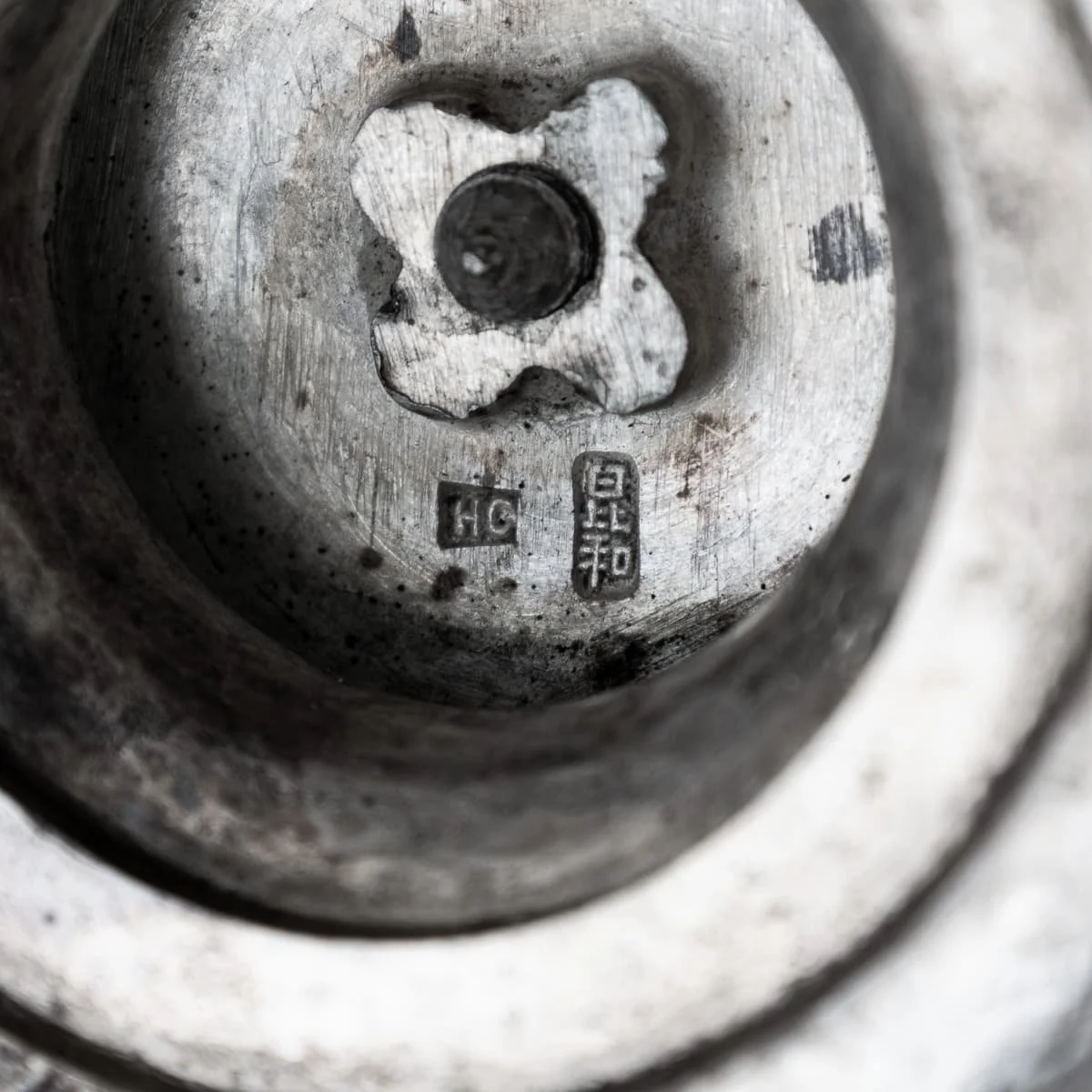

The greatest uncertainty in the firm's history concerns its early years. Collector literature has traditionally given Hung Chong a starting date of approximately 1830, and some pieces carrying early pseudo-hallmark-style marks have been attributed to a period before the Treaty of Nanking in 1842. Other specialist research suggests that Hung Chong may have supplied Western customers in Canton during the mid 19th Century and that silver carrying the firm's marks existed by around 1870–1880. This evidence appears to conflict with the 1908 statement that the business was established in 1892. A reasonable explanation is that 1892 marked the formal establishment of the Shanghai retail concern under Fok Ying Chew, rather than the first use of the Hung Chong name or the beginning of all silver production associated with it. There may therefore have been an earlier workshop, trading business or Canton predecessor operating before the opening of the Shanghai store. However, without surviving company records establishing a continuous history from the 1830s, the traditional early date should be treated with caution.
The traditional closing date of 1925 is also questionable. Shanghai business directories show that Hung Chong & Co. continued operating after this date. A 1931 directory lists the company as: Hung Chong & Co., Gold and Silver Smiths, Dealers in Ivory Carvings, Lacquer Ware and Porcelains - 132 Nanking Road.
The firm continued to appear at this address during the mid 1930s, while a 1939 directory records Hung Chong at 238 Nanking Road. This demonstrates that the company survived well beyond 1925. Some modern research suggests it may have continued into the 1940s, although the precise final date of operation remains uncertain.
(for more information please see A. Von Ferscht, Chinese Export Silver 1785-1940, 4th edition 2015).